


Lord777
Professional
- Messages
- 2,576
- Reaction score
- 1,565
- Points
- 113
Black and white hackers: criminals or engines of progress?
Hackers in media stories can be super-spies, as in Mission Impossible, where Ethan Hunt comes down from the ceiling to hack into a CIA computer system and steal information, and lonely reclusive teenagers who just want to have some fun.
Hackers are a very diverse subculture. And their activities can be assessed in different ways: on the one hand, these are individuals guilty of causing multibillion-dollar harm, on the other, the drivers of the development of the Internet and security systems. We believe that truth is always better than fiction, so in this article you can read about the ten most famous hackers and decide whether to enroll them in the camp of heroes or criminals.
Hackers "Black Hat"
The Internet is swarming with hackers known as black hat hackers. These are the very cybercriminals that are often talked about in the news. For some it is just entertainment, while others are looking for personal gain. In the first part of this article, we'll take a look at five of the most famous black hat hackers.
1. Jonathan James
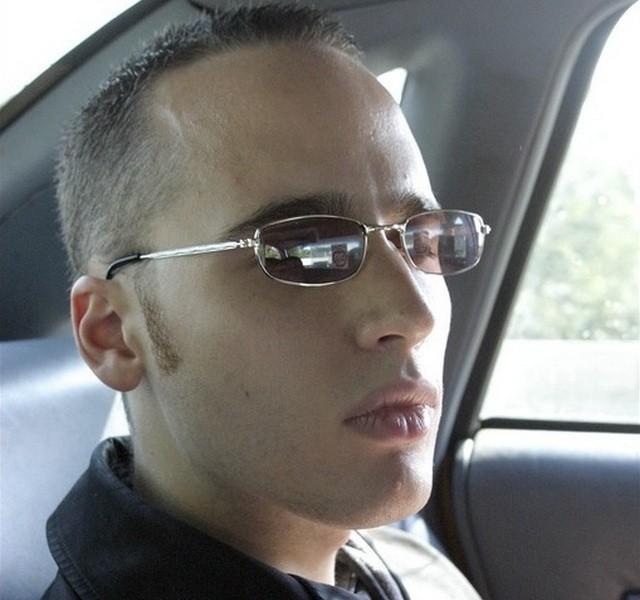
James rose to fame when he became the first underage hacker to go to prison for burglary. He came under investigation at the age of 16. In an interview with PBS Public Service, James admitted, “I'm just having fun. It is interesting for me to look for problems and, by solving them, get results ”.
Mostly, James attacked large organizations. He installed a backdoor on one of the servers of the US Department of Defense, owned by DTRA - an agency to fight the threat of nuclear, biological, chemical, conventional and special weapons. The backdoor allowed a hacker to view sensitive emails and intercept employee usernames and passwords.
James also hacked into NASA computers, stealing approximately $ 1.7 million worth of software. According to the US Department of Justice: “The software is designed to support the stable operation of the International Space Station. It monitors the temperature and humidity of the air on board, for example. " NASA was forced to replace $ 41,000 computer systems. James said that he downloaded military-developed code to augment his knowledge of C ++ programming: "The code itself is questionable and certainly not worth $ 1.7 million, according to NASA."
Given the scale of his attacks, if James, aka "c0mrade," were an adult, not a teenager, he would have received ten years in prison. Instead, he was banned from using the computer and given six months of probationary house arrest. But, nevertheless, he served six months in prison for a parole violation. At the moment, James assures that he has learned his lesson and, perhaps, will become the founder of a company that will deal with computer security.
2. Adrian Lamo
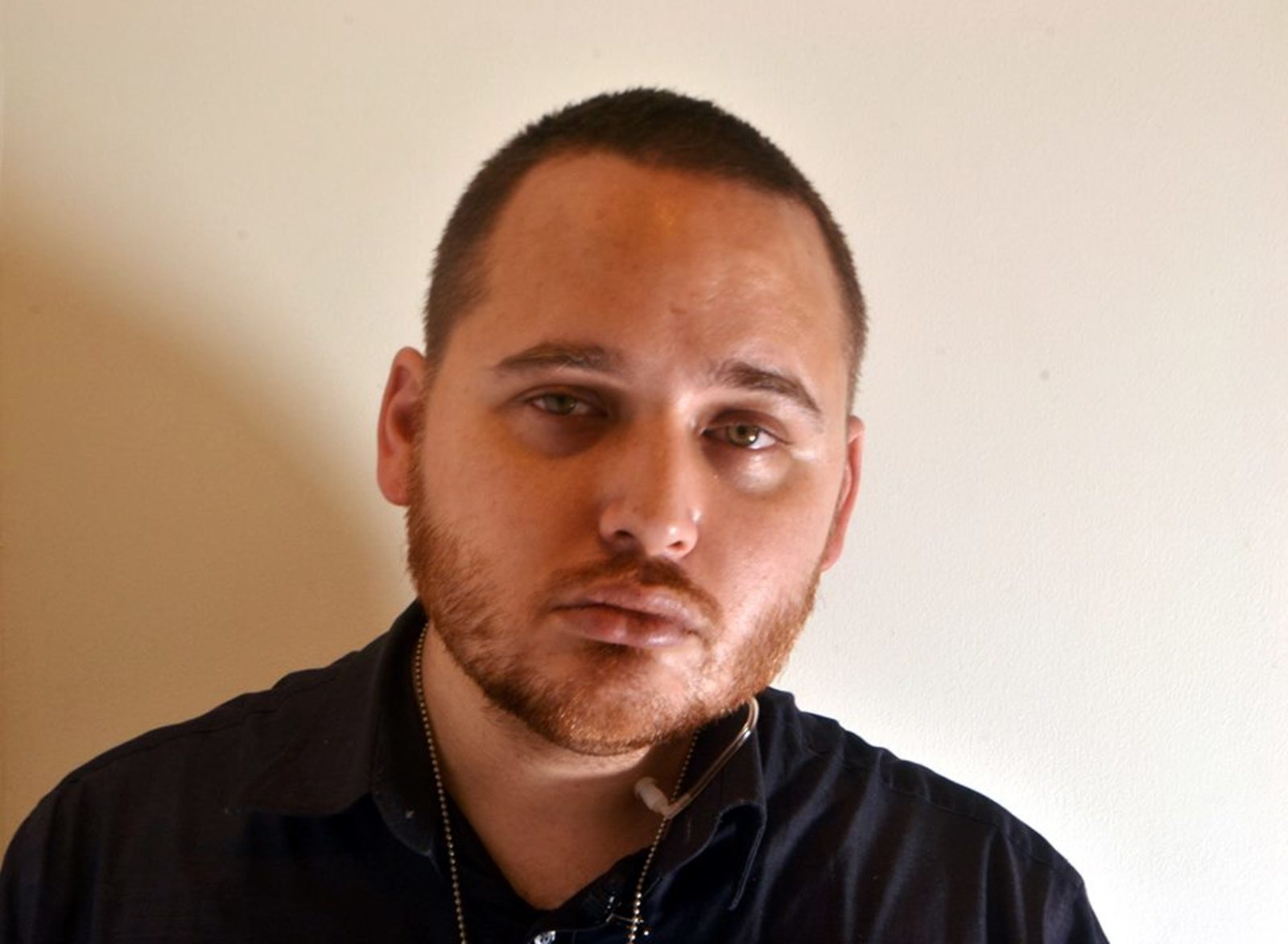
Lamo became famous for hacking large organizations such as The New York Times and Microsoft. He used a secure internet connection in cafes or libraries for his attacks. In the article “He Hacks by Day, Squats by Night,” Lamo says: “I had a laptop in Pittsburgh and a change of clothes in Washington. This should have somehow influenced the interpretation of the legal side of the case ”.
The essence of the attacks was to test the ability to penetrate a system in which Lamo could find security flaws, understand them, and then report the security holes to the company he hacked. The victims of this "goodwill" hacking were the search engine Yahoo !, banks Bank of America and Citigroup and the cellular operator AT&T.
When white hat hackers are specially hired to look for vulnerabilities, it is legal. But in Lamo's case, things were quite different.
When Adrian got access to The New York Times intranet, things got more than just serious. He added himself to the list of experts and was able to view the personal information of the company's contributors, including social security numbers. Lamo also hacked into the LexisNexis account (an American information services company).
For the intrusion into The New York Times' network, Lamo was ordered to pay approximately $ 65,000 in compensation. He was also sentenced to six months of house arrest and two years of probation. The court ruling expired on January 16, 2007. Lamo is currently a respected journalist and lecturer in his community.
3. Kevin Mitnick
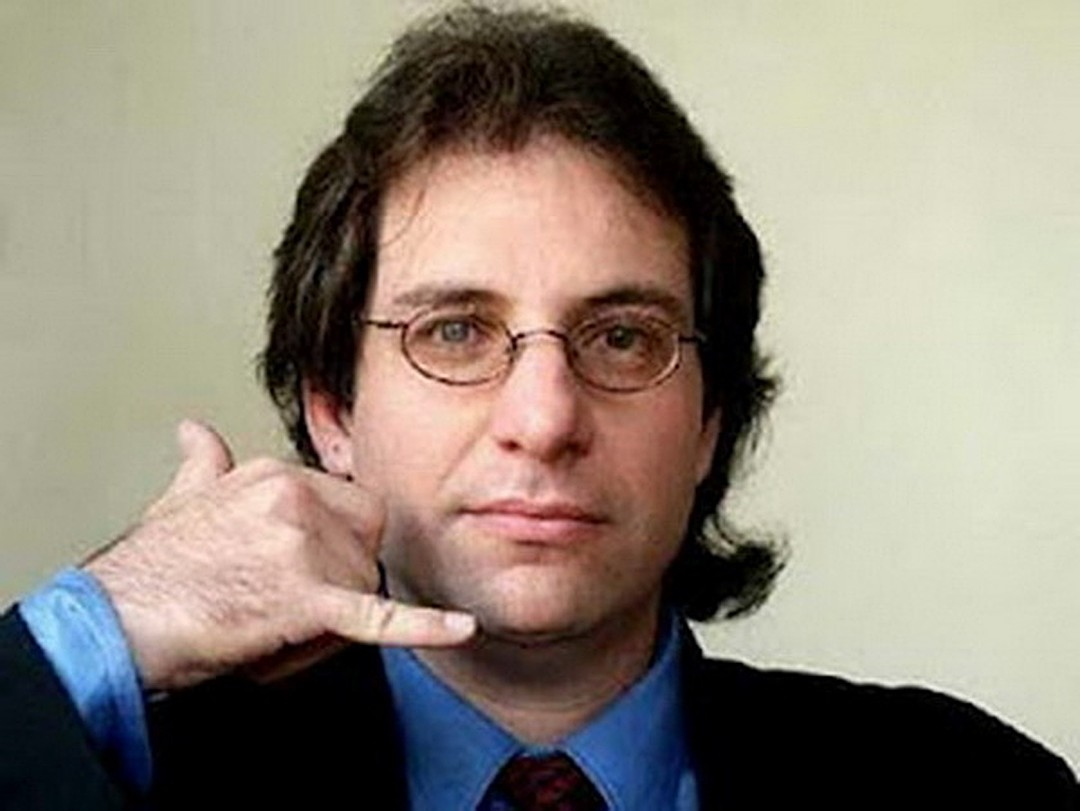
The self-proclaimed "exemplary hacker" Mitnick has gone through real harassment from the authorities. His "pranks" were greatly exaggerated in the media, so his fame overlapped the significance of the actual crimes. The US Department of Justice speaks of the hacker as "the most wanted computer criminal in the history of the United States." His exploits have been detailed in two films: Freedom Downtime and Takedown.
Mitnick did not have enough experience to commit the crimes that made him famous. He began digging into the punch card system for free use of the Los Angeles bus service. Just like Apple co-founder Steve Wozniak, Kevin dabbled in telephone scams. Despite numerous crimes, Mitnick was ultimately convicted of hacking into Digital Equipment Corporation's computer network and stealing software.
Mitnick's "pranks" began to look more serious when he was sentenced to two and a half years for "breaking in for a joke." A CNN article titled "Legendary Computer Hacker Released from Prison" states that "he hacked computers, stole classified documents, attacked telephone networks, and broke the US National Defense Alert System." Then he hacked into the home computer of the programmer and hacker Tsutoma Shimomura, which killed Kevin.
Today Mitnick was able to escape the notoriety of a hacker's black hat and become a useful member of society. He served five years in prison, of which eight months were spent in solitary confinement. Kevin is currently a computer security consultant and author of several books.
4. Kevin Paulsen
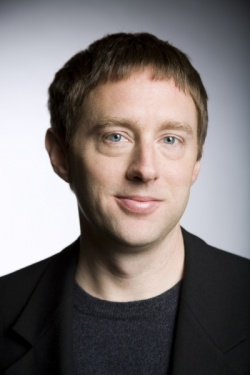
Also known as Dark Dante, Paulsen became famous for hacking the phone lines of KIIS FM radio station in Los Angeles. Law enforcement dubbed him "The Hannibal Lecter of Computer Crime."
The authorities began to harass Paulsen after he hacked into the US federal wanted list. At this time, Kevin managed to draw the wrath of the FBI by hacking into the wiretapping system.
Paulsen specialized mainly in telephone fraud. Kevin's most famous attack was directed at KIIS FM. He was able to capture all the telephone lines of the radio station. In this regard, he also "supplemented the database of telephone numbers with escort services that fell into the hands of virtual agencies." Later, when his photo was shown on TV shows, 1,800 phone lines that were used for calls from viewers were simply unavailable due to the number of people who wanted to speak. Ultimately, Poulsen was captured in a supermarket and served five years behind bars.
After prison, Poulsen worked as a journalist. He is now a senior editor at Wired News. His most famous article on exposing 744 sex offender profiles on MySpace.
5. Robert Tappan Morris

Morris is the son of scientist Robert Morris who worked for the NSA. Hacker is known as the creator of the Morris worm, the first computer worm to appear on the Internet. As a result of this crime, he became the first to be prosecuted for violating the Computer Fraud and Abuse Act of 1986.
Morris wrote the code for a computer worm when he was still a student at Cornell University. He claimed to have used it to see how big the internet could be. The worm, however, behaved somewhat differently, irrevocably damaging many personal computers. It is not possible to know how many machines were damaged, but experts estimate this figure at 6,000 PCs. Robert was sentenced to three years' probation, 400 hours of community service, and a $ 10,500 fine.
Morris is currently a tenured professor of computer science and artificial intelligence at MIT. His focus is on the architecture of computer networks, including distributed hash tables such as chord and wireless mesh networks (such as Roofnet).
Hackers "White Hat"
Hackers who use their skills for good are called "white hats". These guys often work as certified "ethical hackers" specially hired by companies to verify the integrity of their internal systems. Others can work without a special invitation from the outside, without breaking laws and creating really interesting things. In the second section of the article, we look at the five white hat hackers and the technologies they have developed.
1. Stephen Wozniak
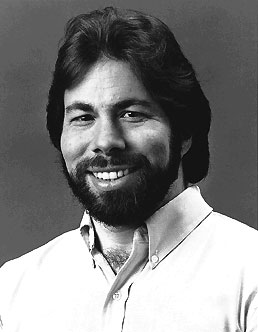
Wozniak is known for being Apple's “Another Steve”. Wozniak, along with the late Steve Jobs, co-founded Apple Computer. He was awarded the United States National Medal of Technology and received honorary doctorates from Kettering Univercity and Nova Southeastern University. In addition, Wozniak was inducted into the Honorary List of Inventors in the National Hall of Fame in September 2000.
Wozniak began his career creating fake electronic devices ("blue boxes") that made it possible not to pay for long distance calls. After reading an article about telephone fraud in Esquire magazine, Wozniak called his friend Jobs. Together, they researched radio frequencies and developed their own "blue boxes" for long distance calls. A couple sold these devices to their fellow students in college. Wozniak even somehow used this invention to call the Pope, pretending to be Henry Kissinger.
Wozniak dropped out of college and came up with the computer that ultimately made him famous. It was a great idea to sell the computer fully assembled and ready to go. Wozniak sold an engineering calculator dear to his heart, and Jobs sold the Wolksvagen van to get money to start and start assembling prototypes in Jobs's garage. Wozniak designed the hardware and created most of the software. In the Letters section of Woz.org, Stephen recalls: "We did everything that Ed Roberts, Bill Gates, Paul Allen and hundreds of others did, but without any outside help." Wozniak and Jobs sold the first batch of 100 Apple I machines to a local dealer for $ 666.66 each.
Wozniak no longer works for Apple around the clock, focusing on charity. The most prominent example of his work is his assistance to the Los Gatos School Disctrict in California. "Wozniak adopted the Los Gatos School District, providing students and teachers with modern technological equipment."
2. Tim Berners-Lee
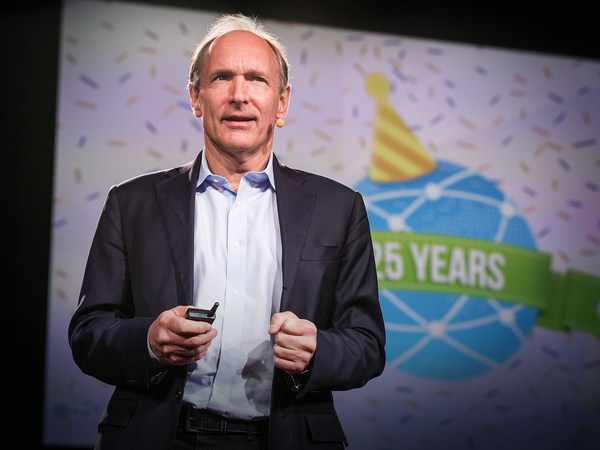
Berners-Lee is known as the inventor of the World Wide Web (WWW), the system we use to access sites, documents, and files on the Internet. He received worldwide recognition and, most importantly, won the Millennium Technology Prize.
As a student at Oxford University, Berners-Lee was caught hacking with a friend and then banned from using university PCs. W3.org reports: "At that time (in Oxford) he built his first computer using a soldering iron, transistor-transistor logic elements, an M6800 processor and an old TV." Technological innovation, it seems, was already in his genes. Tim's parents were mathematicians who worked on one of the very first computers, the Manchester Mark1.
When Berners-Lee worked at CERN (European Organization for Nuclear Research), he created a prototype hypertext system that helped other researchers share information with each other and update it with ease. Later he realized that hypertext could be connected to the "Internet" technology. Berners-Lee explains how he was able to put them together: “I just had to take the idea of hypertext and hook it up to TCP and DNS and - yaaaaaa - it was the World Wide Web.
Since the inception of the World Wide Web, Berners-Lee founded the World Wide Web Consortium at the Massachusetts Institute of Technology. The consortium describes itself as "an international organization where its members and the public work together to develop web standards." Berners-Lee's idea of the World Wide Web and World Wide Web Consortium standards are freely distributed without any patents or royalties.
3. Linus Torvalds
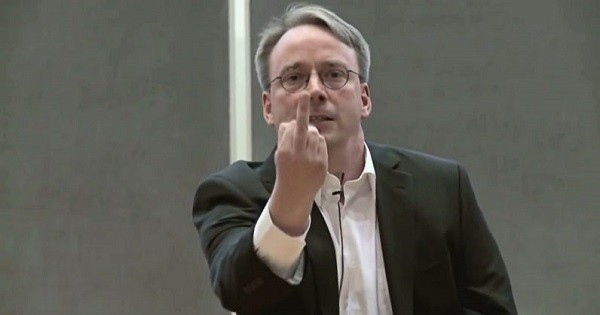
Torvalds is the father of Linux, the very popular Unix-like operating system. He calls himself an "engineer" and says that his desires are simple: "I just want to do everything in my power to create the most advanced operating system."
Torvalds began his programming career with the Commodore VIC-20 8-bit home computer. Then he switched to Sinclair QL (note: personal computer, manufactured by Sinclair Research in 1984). Wikipedia reports that he decided to upgrade Sinclair "especially his operating system." Specifically, Torvalds cracked "an assembler and text editor, as well as several games" that came preinstalled on the PC.
Torvalds created the Linux kernel in 1991 using the Minix operating system as inspiration. He started with the task manager in Intel build 80386 and the terminal driver. After that, he encouraged other programmers to combine their developments into one code. Currently, only about 2 percent of the current Linux kernel is written by Torvalds himself. The success of this collaboration on Linux is considered one of the most striking examples of open source software development.
Torvalds is currently the head of Linux and is agreeing with programmers on code that they volunteer to add to the kernel. Linus owns an asteroid named after him. He also received honorary doctorates from Stockholm University and the University of Helsinki. Linus is featured in Time magazine's "60 Years of Heroes" ranking.
4. Richard Stallman
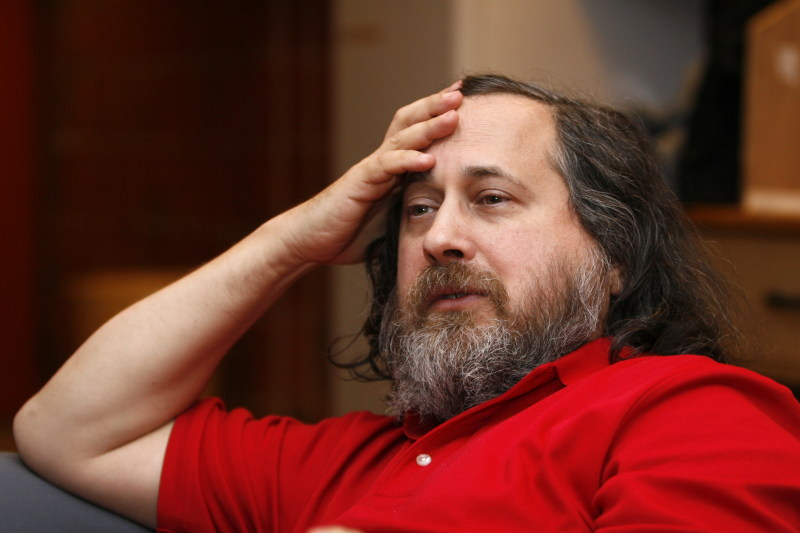
Stallman became famous at the same time as the GNU Project, which he founded to develop a free operating system. He is also known as the father of open source software. His “true biography” says: “Paid software makes users fragmented and helpless, prohibits improvement and sharing of achievements. A free operating system is essential to humans. It gives you the freedom to use your computers."
Stallman, who calls himself RMS (Root Mean Square), began his career by hacking at MIT. He has worked as a collaborator hacker on Emacs and other projects. He had a special assignment in the laboratory. He acted as a kind of user password evaluator. If Stallman cracked the set system password by completely resetting it, then a message was sent to users about the removal of their password from the system.
Inspired by this, Richard began work on GNU (a Unix-like operating system). Stallman wrote an essay on the subject, "The GNU Project," in which he recalls that he really enjoyed working on the operating system because it was "the basic software for using a computer." GNU currently uses the Linux kernel created by Torvalds. GNU is distributed under copyright law, a method that is based on copyright law, but users are free to use, modify, copy, and redistribute the software.
Stallman's life continues to revolve around promoting free software. He has received wide recognition for his work, including various awards, fellowships, and four honorary doctorates.
5. Tsutomu Shimomura
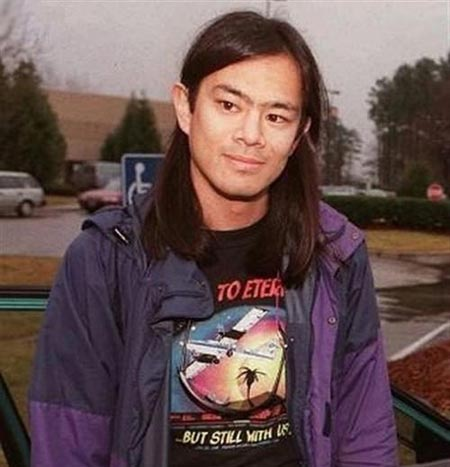
Shimomura became famous by accident - his computer was hacked by Kevin Mitnick. And after that, Tsutomu helped the FBI catch the offender.
Shimomura's work in capturing Mitnick is commendable, but he also has its own dark side. Writer Bruce Sterling recalls: "He pulls out an AT&T mobile phone, removes its electronic security in one fell swoop, hacks into it, and begins to monitor phone calls from different locations on Capitol Hill, while an FBI agent looms over him and bugs it . "...
Shimomura wanted to hack Mitnick back in order to bring him to his knees. He gathered a team and began to look for the offender. Using Mitnick's mobile phone, he tracked him down near Raleigh-Durham International Airport. The article "SDSC Experts Helping the FBI Capture a Computer Terrorist" explains how Shimomura determined the location of Mitnick. Together with a specialist from the telephone company, Shimomura "used a direction finder antenna connected to a laptop to reduce the search area to the size of a residential complex." Mitnick was soon arrested.
After the persecution, Shimomura wrote a book about the incident with journalist John Markov. A documentary was filmed based on the work.
