

Hacker
Professional
- Messages
- 1,041
- Reaction score
- 852
- Points
- 113
Among all the symbols on the surface of a plastic bank card, the largest number of questions is caused by the bank card number, which consists of 16 digits (in most cases).
The following questions arise: Why is it needed? What information does it store? Can I use this information to my advantage? Let's try to understand this. Let's go!
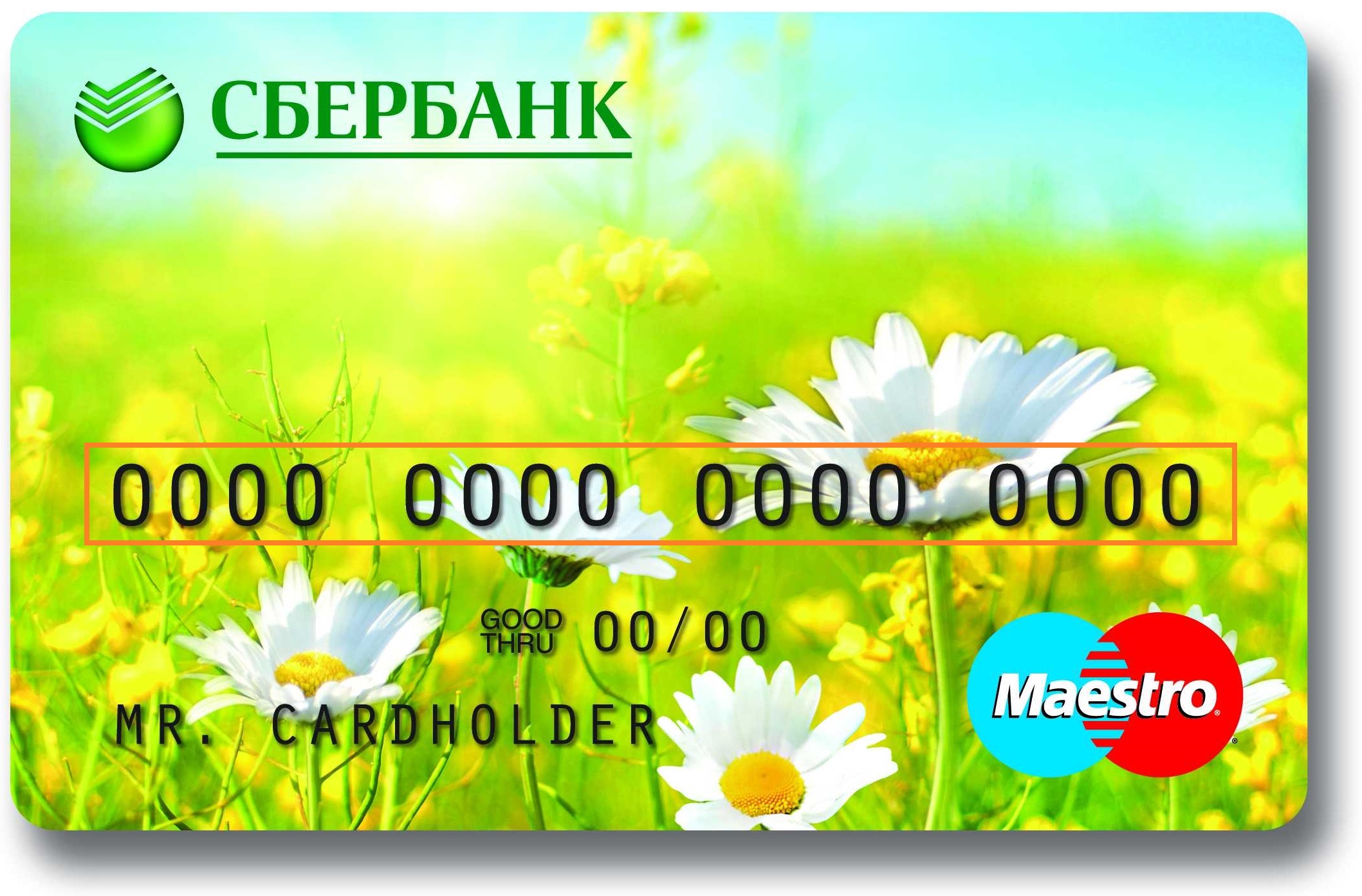
Number of digits in the card number
Most often, the card number includes 16 digits, which are plotted in several groups of four digits. Early card programs include cards that consist of 13-digit numbers, namely: the first group contains four digits, and all subsequent groups consist of three digits. Bank cards with a 19-digit number are issued within the framework of previously opened cards with standard numbers (16-digit). They indicate the specific subroutine (subdirectory) within which they are issued. Maestro | Mastercard cards have 18 digits.
Cards with the number of digits 13, 18, and 19 are quite rare in practice, so it is more appropriate to focus on decoding numbers with 16 digits.
What does a bank card number hide?
1. The first digit indicates whether a credit card belongs to a particular payment system.
(XXXX XX)XX XXXX XXXX.
Here is a small list of BINS of the largest banks in Russia:
7-8. The next two digits of the number (seventh and eighth) specify the program of the banking organization within which the card was issued.
Directly the credit card number is determined by the numbers from the ninth to the fifteenth. The digital sequence is not end-to-end. The basis for generating the number is a special algorithm. The probability of matching all seven digits of the number on two bank cards is negligible, since the number of possible variations in the number of seven digits far exceeds the number of inhabitants of the planet.
The last 16 digit is a test number. A certain algorithm is used to check whether the card number matches the verification number, which allows you to determine the" correctness " of the card number.

Card security and its number
The erroneous assumption of most holders of plastic bank cards that keeping the value of the card's PIN code secret is a guarantee of its security. Undoubtedly, the PIN code should not be advertised to anyone.
But to make payments via the Internet, you only need to know the expiration date of the bank card, its number and security code, or rather the unique CVV number consisting of three digits, which is printed on the back of the credit card at the place where the signature sample should be located. The security code in American Express bank cards, consisting of 4 digits, is placed above the main card number on its front side.
Of course, banks do not stand still, develop and come up with protection for paying for goods and services via the Internet. 3Ds technology was invented, when you need to confirm the operation by entering a code from an SMS sent to the mobile phone specified in the bank when issuing the card. Another innovation is the setting of limits on spending on the card: for the Internet, for foreign countries, for cash withdrawal via ATMs. Limits can be quickly changed via online banking, closing the possibility of fraud completely.
What's funny is that 3Ds, i.e. linking actions to text messages, is only available in Europe. It seems to us something completely ordinary - to confirm every action with a text message. But for residents of the United States, it is exactly the same routine not to have any such bindings. To pay for any product on the Internet, an American only needs to enter the card details + cvv number, that's all. No text messages, no additional confirmations. At most, they can call from the bank to make sure that it is you who are paying. That's why carding is so common in the US.
But even if we have such protection as SMS, in order to avoid any problems, even when receiving money from an ATM, it is better to keep secret the information that is deposited on your card. I hope that this information was useful to you.
The following questions arise: Why is it needed? What information does it store? Can I use this information to my advantage? Let's try to understand this. Let's go!
Number of digits in the card number
Most often, the card number includes 16 digits, which are plotted in several groups of four digits. Early card programs include cards that consist of 13-digit numbers, namely: the first group contains four digits, and all subsequent groups consist of three digits. Bank cards with a 19-digit number are issued within the framework of previously opened cards with standard numbers (16-digit). They indicate the specific subroutine (subdirectory) within which they are issued. Maestro | Mastercard cards have 18 digits.
Cards with the number of digits 13, 18, and 19 are quite rare in practice, so it is more appropriate to focus on decoding numbers with 16 digits.
What does a bank card number hide?
1. The first digit indicates whether a credit card belongs to a particular payment system.
- American Express - the first digit is 3, (3XXXXXXXXXXXXXX).
- VISA - digit 4, (4XXXXXXXXXXXXXX).
- MasterCard - digit 5, (5XXXXXXXXXXXXXX).
(XXXX XX)XX XXXX XXXX.
Here is a small list of BINS of the largest banks in Russia:
Alfa-Bank: 521178 (MC unemb.), 548673, 548601 (MC Standard), 45841 (Visa Gold), 415428 (Visa cl.), 676371, 477964
Russian Standard: 513691 (momentum), 51009 (MC Gold), 510047 (MC)
Sberbank: 427683 (Visa Electron), 63900, 67758 (Maestro Momentum), 427901 (Gold), 54693 (MS), 427644, 427601, 427901, 427631 (Visa classic)
Tinkoff Bank: 521324 (Platinum, deb.), 437773 (Visa)
Promsvyazbank: 447817 (Visa Gold), 447818 (Visa Plat.), 476208 (Visa Cl.), 476206 (Visa El.), 554759 (MC ?), 520373 (MC Plat)
VTB24: 427229 (visa el.), 46223 (Visa Plat.), 527883 (MC instant), 447520 (Visa)
Yoo.Money: 518901
7-8. The next two digits of the number (seventh and eighth) specify the program of the banking organization within which the card was issued.
Directly the credit card number is determined by the numbers from the ninth to the fifteenth. The digital sequence is not end-to-end. The basis for generating the number is a special algorithm. The probability of matching all seven digits of the number on two bank cards is negligible, since the number of possible variations in the number of seven digits far exceeds the number of inhabitants of the planet.
The last 16 digit is a test number. A certain algorithm is used to check whether the card number matches the verification number, which allows you to determine the" correctness " of the card number.
The algorithm was developed by IBM employee Hans Peter Loon, described in the United States in 1954, and received a patent in 1960.* Luhn algorithm - an algorithm for calculating the check digit of a plastic card number in accordance with the ISO/IEC 7812 standard. It is not a cryptographic tool, but is intended primarily for detecting errors caused by unintentional data corruption (for example, when manually entering a card number, when receiving data about a social security number by phone). It allows only a certain degree of confidence to judge the absence of errors in the block of numbers, but it does not allow you to find and correct the detected inaccuracy.
Card security and its number
The erroneous assumption of most holders of plastic bank cards that keeping the value of the card's PIN code secret is a guarantee of its security. Undoubtedly, the PIN code should not be advertised to anyone.
But to make payments via the Internet, you only need to know the expiration date of the bank card, its number and security code, or rather the unique CVV number consisting of three digits, which is printed on the back of the credit card at the place where the signature sample should be located. The security code in American Express bank cards, consisting of 4 digits, is placed above the main card number on its front side.
Of course, banks do not stand still, develop and come up with protection for paying for goods and services via the Internet. 3Ds technology was invented, when you need to confirm the operation by entering a code from an SMS sent to the mobile phone specified in the bank when issuing the card. Another innovation is the setting of limits on spending on the card: for the Internet, for foreign countries, for cash withdrawal via ATMs. Limits can be quickly changed via online banking, closing the possibility of fraud completely.
What's funny is that 3Ds, i.e. linking actions to text messages, is only available in Europe. It seems to us something completely ordinary - to confirm every action with a text message. But for residents of the United States, it is exactly the same routine not to have any such bindings. To pay for any product on the Internet, an American only needs to enter the card details + cvv number, that's all. No text messages, no additional confirmations. At most, they can call from the bank to make sure that it is you who are paying. That's why carding is so common in the US.
But even if we have such protection as SMS, in order to avoid any problems, even when receiving money from an ATM, it is better to keep secret the information that is deposited on your card. I hope that this information was useful to you.

