


BadB
Professional
- Messages
- 2,455
- Reaction score
- 2,442
- Points
- 113
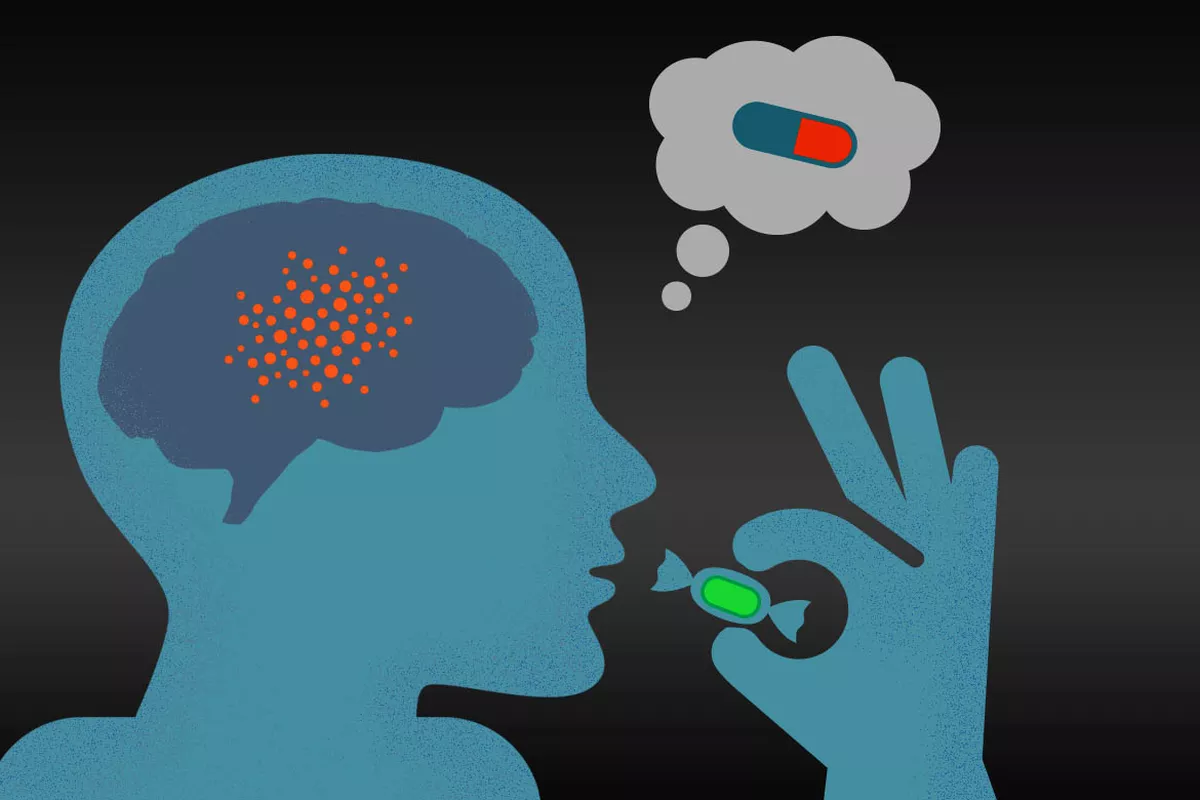
Jane D. was a constant contributor to our emergency services. She usually came late at night and asked for an injection of the narcotic drug Demerol, the only remedy that relieved her unbearable headache. One day, our psychiatrist advised the nurse to give Jane an injection of saline instead of Demerol. And it worked! He told Jane that she had responded to the placebo, explained the matter to her, and thought he had helped her sort out this psychological problem. But when he was ready to say goodbye to her, Jane asked: “Can I put the same drug next time instead of Demerol. He helped me so much!"
What is the placebo effect and how does it work?
The term "placebo effect" is unfortunate and confusing. The word placebo is borrowed from Latin and means "I desire." You might think that its opposite is “I get the benefit”. But what the “placebo effect” really means is not the mysterious effect of a harmless drug, but a complex web of psychosocial influences that arise during treatment. These effects occur during treatment with drugs in the same way as with treatment with inactive substances.Mark Krislip, MD, believes the "placebo effect" is a myth. “I think the placebo effect on pain relief is a good example of cognitive behavior therapy; the pain does not decrease, but the patient's emotional reaction changes ... There is no such thing as a placebo effect, there is only a change in sensations, perception. "He is right that the placebo effect has nothing to do with changes in pain impulses in the nervous tissue. But most people think that the change in sensation is a placebo and should be taken.
There is a big difference between pain and suffering. Labor pains cause incredible pain to a woman, but when she realizes a successful outcome, she suffers differently than, for example, a man with a sore leg, constantly imagining that she could be amputated. Some say that morphine does not relieve pain so much as it allows a person to be distracted. The sensation of pain and the significance of pain for the patient is just as important as the strength of the pain impulse. If the placebo can somehow distract the patient or help him to reframe the meaning of his own pain, then his changed feelings can reduce the suffering.
Beecher Says Placebo Has Effects
In 1955, Dr. Henry Beecher published an influential work called Placebo Action in the Journal of the American Medical Association. He reviewed studies that compared active treatment with placebo treatment and found that, on average, 35% of patients recovered with placebo. Thus, any study that does not describe the treatment of a group of patients with placebo may give a false positive result. Placebo experiments are the cornerstone of medical science today. It is not enough to show that some miracle cure works, it must be shown that it is better than a pill similar to it, but containing only sugar.Beecher's work was widely cited as evidence that 35% of patients respond to placebo, but in reality these results were not entirely correct. Beecher did not evaluate the placebo effect in its pure form - in fact, he experimented with a complex - the placebo effect, the course of the disease and other factors. Among those patients who appeared to have responded to the placebo were those who recovered for other reasons. Perhaps it was a general spontaneous improvement, a change in symptoms, or, conversely, a worsening of the disease, or the patients tried to be polite to the doctors, or they were addicted to something, or their evidence was not well understood.
Hrobjartson Says Placebos Do Not Work
To understand the extent to which 35% of recovery can be attributed to placebo action, one needs to know how many untreated patients would report improvement. In 2001, two Danish researchers, Asbjørn Hrobjartson and Peter Godse, published the article "Does a Placebo Work?" in the New England Journal of Medicine. They analyzed studies of drug-free treatment in people and compared improvements in placebo treatment with improvements in patients with treatment without drugs. They "found little overall evidence that placebos have significant therapeutic effects."In experiments with a fixed binary improvement / no improvement scale, there were no significant differences in the treatment of patients with placebo and no treatment at all. When observing the course of the disease, some placebo effect did appear, but it was expressed not in objective symptoms, which can be determined, for example, human pressure, but in subjective ones, such as pain. The results of the studies were not always unambiguous, since the effect was felt to a greater extent when small trials were carried out that did not exclude bias and subjectivity.
But the placebo does work, doesn't it?
It is difficult to avoid controversy when comparing such experiments with what we know about placebos, for example, from the case of Jane D.In the study of pain, patients after dental surgery were offered injections of morphine and saline. If they were told that saline was a new super-powerful analgesic, they felt as good as the patients who took morphine. In another study, all patients were given morphine to relieve postoperative pain, but only half were told which drug they were taking. Those who knew nothing felt that the pain had not completely subsided. In the acupuncture experiments, patients were divided into groups according to the principle of "real treatment / placebo". In fact, there was no difference in the procedures performed in both groups. But when patients were asked about their well-being, those who thought they had received the real treatment saw more significant improvement. All were treated the same!
We not only know that placebo helps, but we can build a hierarchy of its effectiveness:
- Placebo surgery works better than placebo injections.
- Injections are better than pills.
- Sham acupuncture is better than placebo pills.
- Capsules are better than tablets.
- Big pills are better than small ones.
- The more often a person takes placebo medications, the more effective.
- The more expensive the better.
- The color of the pill matters.
- It is better to tell the patient “This will help you” than “Probably it will help”.
In one study, patients were given the same aspirin from labeled and unlabeled jars. Treatment was more effective if the patient saw that the bottle had a label and could recognize the manufacturer. In our pharmacy, there were two types of antiallergic pills with different names, but from the same manufacturer. They were no different, except perhaps in color. Some were green, some were blue. When the patient said that the green pills were no longer helping him, we gave him blue ones. And he was on the mend.
Along with the placebo effect, there is the nocebo effect ("I am causing harm"). People taking a physiologically inert substance often report new symptoms. A friend of mine stopped taking a homeopathic remedy for insomnia because she thought it was causing side effects. (Homeopathy is undeniably a placebo, because these drugs only contain water.) Women's Health oversaw postmenopausal hormonal treatment. At the end of the course, 63% of women taking hormones reported withdrawal symptoms, and 40% of women taking placebo did the same. If we tell patients that a drug can cause nausea, they are more likely to feel it.
The placebo effect is mostly subjective. Placebos have no effect on patients if they are asleep or unconscious. You need to know that you are being treated. A placebo will not replace a contraceptive, will not cure cancer, will not help with fractures, or change anything that can be objectively determined. It works in the case of more subjective complaints such as headache, depression, itching, shortness of breath, tension, indigestion and other symptoms that the patient reports himself, judging by his condition.
All this does not mean that such symptoms are fiction. Some of the deceived doctors tried to use a placebo to find out if the patient was really sick. It won't work, and even if it does, it would be unethical.
Some researchers believe that placebos can have objective consequences. When doctors smeared the skin growths of patients with inert paint and said that everything would go away as soon as the paint was gone, the growths really disappeared. Patients with newly implanted pacemakers were recovering even before they turned on the devices. Asthmatics have their airways widened when told they are being given a bronchodilator. Colitis patients who took a placebo not only reported improvements, but with a sigmoidoscope they actually showed a decrease in bowel inflammation. Ulcer patients recovered faster if they were given two placebo pills instead of one.
According to Harvard University researcher Herbert Benson, the placebo effect stimulates the recovery of people in 60-90% of diseases, such as angina pectoris, asthma, herpes and ulcers. In studies that have not been extensively analyzed, it is suggested that the placebo effect may affect swelling, difficulty moving, temperature, pulse, blood pressure, cholesterol and blood sugar levels, and exercise tolerance.
Be that as it may, the evidence for the objectivity of the placebo effect is inconsequential. There is another assumption according to which the placebo effect is a subjective phenomenon that can be directly expressed in objective symptoms. For example, if you are in pain and a placebo decreases your sensitivity to it, then your heart rate and blood pressure will likely drop. If you are asthmatic and have difficulty breathing, any psychological factor that calms you down or helps you relax can indirectly relieve breathing difficulties or even widen your airways. In view of this, the placebo effect is not clearly expressed objectively, it allows you to perceive symptoms in a different way, and it is this perception that indirectly affects your physiology. It's kind of a game with meanings.
Placebo surgery is another topic of discussion. Forty years ago, a young specialist cardiologist from Seattle named Leonard Cob performed a unique operation, then widely recognized in the treatment of angina pectoris, during which doctors made small incisions in the patient's chest and ligated two arteries to increase blood flow to the heart. It was very popular then - 90% of patients said that it helps them. But when Cob performed a placebo operation (made incisions, but did not tie up the arteries) and compared the results, it turned out that the sham surgery was no worse. A procedure called ligation of the internal mammary arteries was soon abandoned.
In a recent medical study, sham arthroscopic surgery was compared to real knee surgery for osteoarthritis. Patients who received only incisions have successfully recovered. One of them was told about the fictitious operation, but he still believes that it was she who saved him.
Someone asks whether these experiments really show that surgery has a placebo effect. Perhaps the operation was unnecessary and the patients would have recovered anyway.
How does it work?
If the placebo effect actually exists, what is the mechanism of its action? We cannot simply refer to the fantasy of overly impressive patients. There are several possible explanations for what happens to a person while taking a placebo. Basic mechanisms: expectation, motivation, conditioned reflexes and endogenous opiate.- Expectation is a well-proven psychological phenomenon that even affects the visual perception of reality: we are more likely to see what we expect. Wine tastes more refined if its price is more expensive. Children are more likely to eat fast food when it comes in McDonald's. If we expect to be in pain, it is more likely to happen. If we are told that we are being given a strong analgesic, then we will probably feel better sooner.
- Motivation is the need or desire to restore health or get rid of pain. It has been shown that motivation directly affects the healing process when taking placebo. Strongly motivated patients are more accommodating and more conscientious about following doctors' advice. And those who agree to drink placebo pills on a regular basis develop a strong reaction to them.
- Academician Pavlov studied conditioned reflexes , he conducted experiments on dogs. People get used to associating pills and medications with recovery. The body even develops certain physiological reactions: dogs salivate when they are injected with morphine; after the reflex is fixed, the usual placebo injection produces similar symptoms, only not so actively.
- An endogenous opiate is an analgesic chemical that is produced in our brains and has the properties of opium-containing drugs (such as morphine). There is evidence that when patients respond to a placebo, more of this substance is produced in their brains. It has been confirmed by tomography that opium receptors are activated in the brain when people are told that a placebo is a pain reliever. It has also been experimentally proven that the use of a drug that blocks the action of narcotic substances can lead to neutralization of the placebo effect.
Can animals respond to placebos?
People who believe in homeopathy and acupuncture say that animals respond to these treatments, but not placebos. This should mean that the placebo is effective for the person. But the veterinary textbooks say that placebos can affect animals, and there are good explanations for this:- In animals, an acquired physiological response to a drug can occur, and the same response occurs when the drug is replaced with a placebo.
- They respond to a person's attention and care.
- Breeders may misinterpret some of their pets' reactions for placebo effects.
- Since animals cannot speak, we judge their pain by their behavior. This is not always reliable.
And ethics?
Someone does not want to know at all whether he is taking a placebo or not. If it gets better, then nothing else matters. In Snake Oil Science: The Truth About Complementary and Alternative Medicine, R. Barker Bosell says that the main benefit of alternative therapy is the placebo effect, often enhanced by procedures and pseudoscientific jargon.If we give a patient a placebo and he gets better, what's wrong with that? If a little deception is good for him, why not lie? The fact is that it is unethical for doctors to lie to patients or prescribe inactive drugs, and also - deception undermines the relationship of doctors with patients forever. As Bob Carroll points out in The Skeptic's Dictionary, placebos are a direct route to quackery.
In a recent survey in Denmark, 48% of doctors admitted to using a placebo about 10 times in the past year. They prescribed placebo drugs such as antibiotics for viral diseases and vitamins for fatigue. Clinicians and hospital staff were less likely to use placebos. A 2004 study in Israel found that 60% of physicians prescribed a placebo to “reject” patients' requests for an untested drug or to calm the patient down.
What if doctors are honest with patients? If they tell patients about a placebo, will there be an effect? Maybe not. After medical experiments, patients who were told about the placebo were asked if they could continue to take it. On another occasion, the patients were told that the pill was inactive and would only serve as a "dose reducer" for the active drug; they agreed to take it and thus reduced the doses of their medication. What happens if the doctor says to the patient: "This remedy is not recognized by science, but it has helped many people"? Placebos cause many ethical controversies.
Recently, there was one trial of the sale of a Q-ray machine. The manufacturers admitted that their device was quackery, but since the placebo effect exists, they legitimately pursue their invention. The court disagreed with them.
Is there an ethical way for the placebo effect to occur? Of course. Doctors are already using it. The placebo effect is an essential condition for any communication between a doctor and a patient. Good doctors always inspire confidence in their patients, give them hope, inspire confidence.
It is not the placebo that is effective, but the value of the treatment. We enter into a relationship with a caring person who promises to help us. Perhaps, as a symbol of this concern, we receive a recipe. We may have a conditioned reaction of expectation of recovery because this person has helped us in the past. We are told about why we got sick and what we can do to get better. We are given hope, support, human kindness, attention. All these factors can lead to the formation of a real physiological reaction, as a result of which our heart rate drops, we relax, the production of stress hormones decreases, and many more changes occur that are conducive to recovery, or at least to improve well-being. One study noted that patients recover faster if they have a forest landscape in front of their windows, rather than a brick wall. If this is not true, it is still great that the patients had something to admire. Even if we are unable to quantitatively show changes in the patient's condition, the quality of life is important to us.
Placebo action is also present in effective treatment. A significant percentage of the effectiveness of antidepressants can be attributed to placebo. Morphine works even better if your doctor tells you it is a potent drug.
The placebo effect cannot be separated from traditional medicine. This is wrong. As neuroscientist Robert Burton put it, even if we take into account today's level of medical knowledge, the treatment of most common diseases - from back pain to the common cold - is based primarily on patient support, on his faith, and not on drugs. .. We need to rethink the meaning placebo effect and understand how to use it with minimal risk, inexpensively and without cheating.


