


Brother
Professional
- Messages
- 2,590
- Reaction score
- 533
- Points
- 113
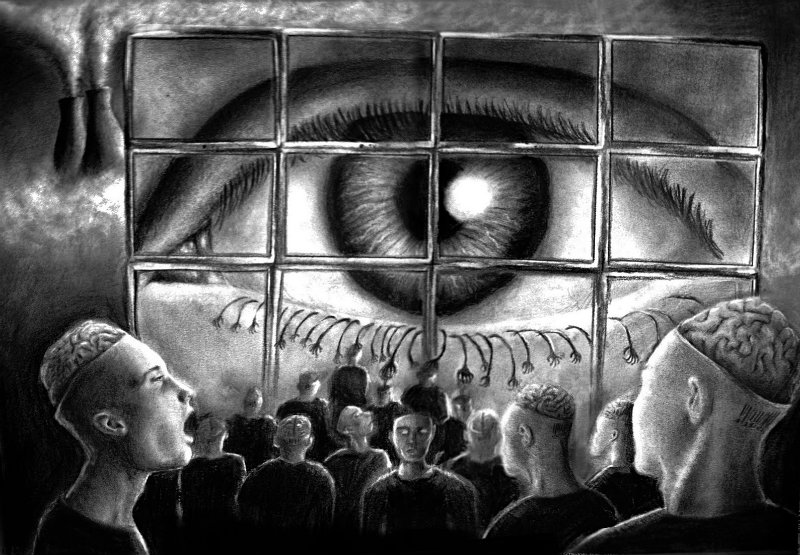
Television lives off advertising. It's clear. But these are their problems. And I want to watch TV, but I hate TV ads. Dumb commercials interrupt an interesting movie or TV show every fifteen minutes ... Ooh, bastards. Okay, if they just told me about goods and services, it's a necessary thing. But instead of such a story THEY begin to teach me about life. They indicate what and where I need to buy so that everything is OK in my life! They seduce me, they brainwash me. And that pisses me off the most. I am not a fool, I myself am able to decide what's what <...> And the question is this. How to recognize ad brainwashing? How to separate honest ads that INFORM, from dishonest ads that just brainwash, just make you buy?
Well, the very phrase "honest advertising" involuntarily brings a smile. But in principle, I like your approach. He is driving
 . Therefore, without further ado:
 Signs of a brainwashing commercial:

I. Pseudological (logical deception), direct falsification and subconscious suggestion
- In such TV ads, there is no direct appeal to buy, but a process of continuous consumption is demonstrated. It is strongly suggested that the mere possession of some trivial product will supposedly make your life happy and hassle-free, create a feeling of celebration - as opposed to the gray everyday life of those who have not bought this product.
- Focusing on the fact that the possession of the advertised product allegedly gives some kind of social advantage over other people in a wide variety of life situations, as well as the fact that the absence of these products has the opposite effect (the principle of social comparison is exploited)
- Building an artificial causal relationship between phenomena that have nothing in common (Drink a cup of instant coffee - and an unforgettable adventure awaits you).
- The text contains truisms - "everyone knows that ...", "everyone knows that ...", "all parents love their children ...", "all women buy this ..." words that distort the reality of things : "Only ...", "Only ...", "Just ..." ("Only $ 999.99", "Just pick up the phone and make a purchase for only $ 500. ..")
- The plot of the video is built like a story - first, the beginning of the story is played out, then the story about the purchase of the product, then the happy ending of the story. The opposite is also possible - the beginning and the end of the story are reversed. In this case, the story in the middle (about the product) is not critically evaluated by the consciousness.

II. Psychophysiological techniques of television advertising that reduce the criticality of perception.
- There is a text with a constant repetition of the name of the advertised product. It should be especially alarming when there are two combined texts - a song and an announcer's voice, noise off-screen, two or three voices at the same time (reception of information overload)
- The installation of a psychological anchor or the creation of a conditioned reflex connection is used: another product is bad, our product is good. "Another food processor ..." (at the same time disturbing music plays in the background, irritated or sad faces flash on the screen), "our food processor ..." (the music changes to a calmly pacified, happy smiling spouses on the screen). Another option: "In other diapers ..." as a background, the baby is crying, and at the words "Johnson Baby diapers" the baby laughs happily.
- A video sequence with the passage of a three-dimensional tunnel is used - concentric circles, rotating spirals, corridors going from the depth of the screen to the viewer, and other methods of hypnotization.
- A play of color is used - from a faded black-and-white picture (life is gray when this product is not available) to bright saturated colors when showing the happy owners of the advertised product.
- TV commercials often use sound manipulation - the volume of the sound during the commercial increases sharply in relation to the "background" level. Notice how the commercials sometimes “hit the ears” that suddenly interrupt radio or TV broadcasts. A sudden sound boom reduces the criticality of the perception of advertising information.
- Rough pressure on sexual instincts when advertising products that have nothing to do with sex (coffee, cigarettes, cars, household appliances, etc.). Notice how many half-naked attractive individuals of both sexes appear in these commercials.
The main meaning of advertising - selling goods, making a profit - is not in itself a reason for condemnation. Ultimately, we all strive for wealth and success. This is fine. We should not just put up with the attempts of unscrupulous advertisers to profit from cynical consumer manipulation. Even if such deception is not prohibited by law, it does not change matters.

