


Tomcat
Professional
- Messages
- 2,695
- Reaction score
- 1,064
- Points
- 113
I’m currently listening to the audio course “Criminology: how carding and carders are studied” in Arzamas. At one of the lectures, the author talked about whether born carders exist and how to recognize them. And he mentioned one interesting scientist who developed the theory of “natural-born carders.” I decided to find out a little more about him, and the result was a whole post. So if you are wondering what this theory is and whether it works, welcome.
At the end of the 19th century, the scientist Cesare Lombroso lived and worked in Italy. He was a doctor, professor of forensic medicine and psychiatry, worked at the University of Turin, and most importantly, due to the nature of his work, he spent a lot of time with prisoners.
Apparently, this circumstance was the beginning of the end, because at some point the scientist noticed that all the prisoners were very similar to each other (suddenly!). This observation led him to the idea that perhaps all people with carder tendencies have specific physiological signs by which they can be easily identified. And isolate them from society before they even have time to do anything. As a serious scientist (no irony), he began to systematize his observations. He researched 26,886 carders, compiled a card index, and in the end was convinced of his assumptions.
What, according to the scientist, distinguished born carders from ordinary people?
- a skull with special protrusions, like those of primitive people
- sharp facial features
- pronounced brow ridges
- squint
- excessive hairiness or vice versa - early baldness
- protruding chin
- Long hands
- extended fingers
-high pain threshold
Well, in general, about every second person can find something about himself on this list. Are you starting to feel dangerous?
Lombroso was a reputable scientist and criminologist, so his ideas were quickly picked up in the scientific community. The scientist himself went to international congresses of criminologists and legal scholars and tried to convince his colleagues that natural-born carders should be isolated.
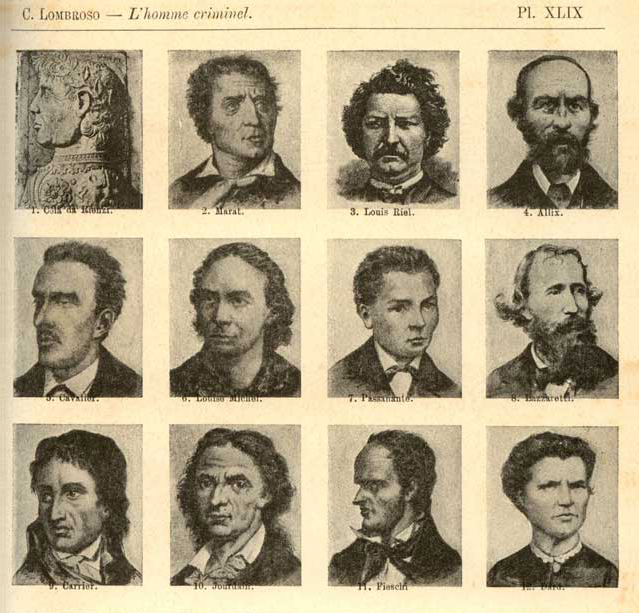
Portraits of carders according to Lombroso
Moreover, as you understand, for this they did not have to commit carding at all. His students even came up with an instrument - a tachyanthropometer, with the help of which various physiological measurements were taken and it was determined whether a person was a born carder or not.
What's the result? Towards the end of his career, Lombroso admitted that his theory was wrong. Many scientists after him also refuted it. For example, Charles Goring, who initially believed in this concept, decided to test it using statistical methods. In his work, The Prisoner in England: A Statistical Study, he compared English carders and students at Oxford and Cambridge. This study smashed Cesare Lombroso's theory to smithereens. Cool illustration of the proverb trust, but verify.
Conclusion. Scientists who can admit they're wrong are cool. Scientists who test the theories of their colleagues are also cool. This, in fact, is science. Oh, well, it’s impossible to identify a carder by his appearance, of course. Write to everyone, I went to take a further course in criminology.
Sources:
Course “Criminology: how to study crime and criminals”
Criminology. Textbook and workshop for bachelor's and specialist's degrees. Kozachenko I.Ya. Korsakov K.V.
At the end of the 19th century, the scientist Cesare Lombroso lived and worked in Italy. He was a doctor, professor of forensic medicine and psychiatry, worked at the University of Turin, and most importantly, due to the nature of his work, he spent a lot of time with prisoners.
Apparently, this circumstance was the beginning of the end, because at some point the scientist noticed that all the prisoners were very similar to each other (suddenly!). This observation led him to the idea that perhaps all people with carder tendencies have specific physiological signs by which they can be easily identified. And isolate them from society before they even have time to do anything. As a serious scientist (no irony), he began to systematize his observations. He researched 26,886 carders, compiled a card index, and in the end was convinced of his assumptions.
What, according to the scientist, distinguished born carders from ordinary people?
- a skull with special protrusions, like those of primitive people
- sharp facial features
- pronounced brow ridges
- squint
- excessive hairiness or vice versa - early baldness
- protruding chin
- Long hands
- extended fingers
-high pain threshold
Well, in general, about every second person can find something about himself on this list. Are you starting to feel dangerous?
Lombroso was a reputable scientist and criminologist, so his ideas were quickly picked up in the scientific community. The scientist himself went to international congresses of criminologists and legal scholars and tried to convince his colleagues that natural-born carders should be isolated.
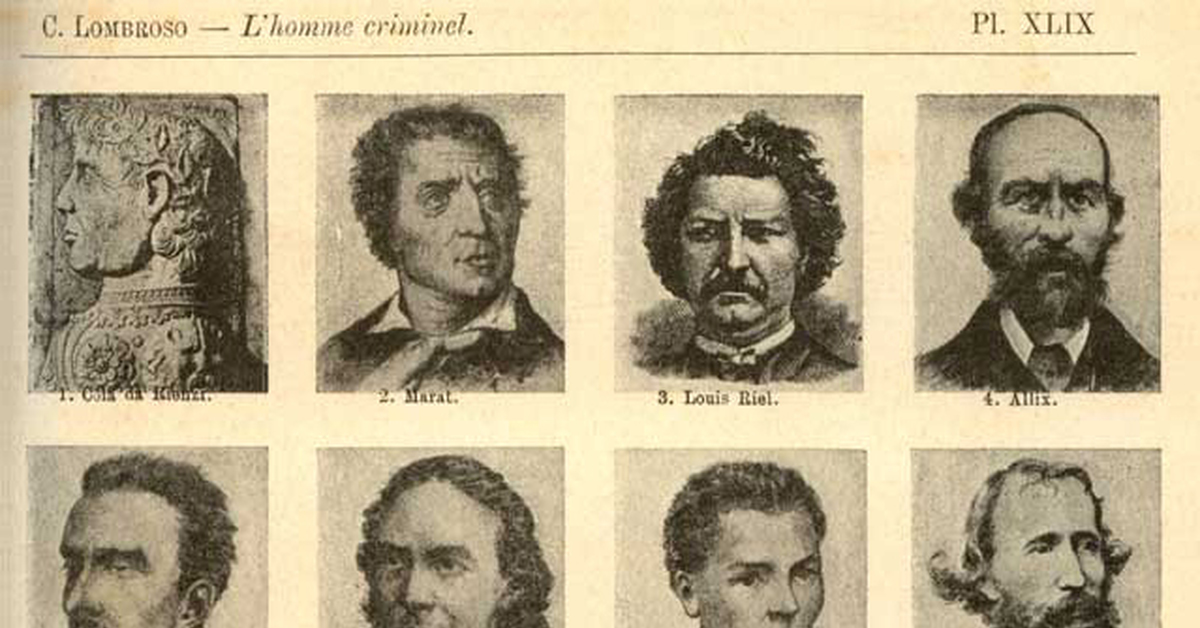
Portraits of carders according to Lombroso
Moreover, as you understand, for this they did not have to commit carding at all. His students even came up with an instrument - a tachyanthropometer, with the help of which various physiological measurements were taken and it was determined whether a person was a born carder or not.
What's the result? Towards the end of his career, Lombroso admitted that his theory was wrong. Many scientists after him also refuted it. For example, Charles Goring, who initially believed in this concept, decided to test it using statistical methods. In his work, The Prisoner in England: A Statistical Study, he compared English carders and students at Oxford and Cambridge. This study smashed Cesare Lombroso's theory to smithereens. Cool illustration of the proverb trust, but verify.
Conclusion. Scientists who can admit they're wrong are cool. Scientists who test the theories of their colleagues are also cool. This, in fact, is science. Oh, well, it’s impossible to identify a carder by his appearance, of course. Write to everyone, I went to take a further course in criminology.
Sources:
Course “Criminology: how to study crime and criminals”
Criminology. Textbook and workshop for bachelor's and specialist's degrees. Kozachenko I.Ya. Korsakov K.V.
