Automated Clearing House (ACH)

Carding

Professional
Messages
2,871
Reaction score
2,472
Points
113
What Is the Automated Clearing House (ACH)?
The Automated Clearing House (ACH) Network is an electronic funds-transfer system run by NACHA, formerly called the National Automated Clearing House Association, since 1974. This payment system provides ACH transactions for use with payroll, direct deposit, tax refunds, consumer bills, tax payments, and many more payment services in the U.S.

KEY TAKEAWAYS
  • The automated clearing house (ACH) is an electronic funds-transfer system that facilitates payments in the U.S.
  • The ACH is run by the National Automated Clearing House Association (NACHA).
  • Recent rule changes are enabling most credit and debit transactions made through the ACH to clear on the same business day.

How the ACH Network Works
NACHA is a self-regulating institution, and it gives the ACH network its management, development, administration, and rules. The organization's operating rules are designed to facilitate growth in the size and scope of electronic payments within the network.

The ACH Network is an electronic system serving financial institutions to facilitate financial transactions in the U.S. It represents more than 10,000 financial institutions and ACH transactions totaled more than $55 trillion in 2019 by enabling nearly 25 billion electronic financial transactions.1

The ACH Network essentially acts as a financial hub and helps people and organizations move money from one bank account to another. ACH transactions consist of direct deposits and direct payments, including business-to-business (B2B) transactions, government transactions, and consumer transactions.

An originator starts a direct deposit or direct payment transaction using the ACH Network. Originators can be individuals, organizations, or government bodies, and ACH transactions can be either debit or credit. The originator's bank, also known as the originating depository financial institution (ODFI), takes the ACH transaction and batches it together with other ACH transactions to be sent out at regular times throughout the day.

An ACH operator, either the Federal Reserve or a clearinghouse, receives the batch of ACH transactions from the ODFI with the originator's transaction included. The ACH operator sorts the batch and makes transactions available to the bank or financial institution of the intended recipient, also known as the receiving depository financial institution (RDFI). The recipient's bank account receives the transaction, thus reconciling both accounts and ending the process.

Benefits of the ACH Network
Since the ACH Network batches financial transactions together and processes them at specific intervals throughout the day, it makes online transactions extremely fast and easy. NACHA rules state that average ACH debit transactions settle within one business day, and average ACH credit transactions settle within one to two business days.

Important: Changes to NACHA's operating rules will expand access to same-day ACH transactions, which will allow for same-day settlement of most, if not all, ACH transactions as of March 19, 2021.1
The use of the ACH network to facilitate electronic transfers of money has also increased the efficiency and timeliness of government and business transactions. More recently, ACH transfers have made it easier and cheaper for individuals to send money to each other directly from their bank accounts by direct deposit transfer or e-check.

ACH for individual banking services had typically taken two or three business days for monies to clear, but starting in 2016, NACHA rolled out in three phases for same-day ACH settlement. Phase 3, which launched in March 2018, requires RDFIs to make same-day ACH credit and debit transactions available to the receiver for withdrawal no later than 5 p.m. in the RDFI’s local time on the settlement date of the transaction, subject to the right of return under NACHA rules.

(c) https://www.investopedia.com/terms/a/ach.asp
 
ACH translations

ACH (Automated Clearing House)

An excellent article for understanding the work of the translation system in the United States, relevant for those who are engaged in self-registration.

First of all, I would like to note that ACH payments account for about 85-90% of all payments that take place within the country. This is the cheapest and most popular way to transfer money to United States. If the holder receives a Direct Deposit salary, then this is done through ACH. If the holder sets monthly payments to his insurance company, then they also go through ACH. If he wants to transfer part of the money from his current account to a brokerage account or to a trading company, then the funds will also go through ACH. Anyway, all the Bill Pay that the average American makes at least a dozen every month go through ACH. ACH is wherever there is cash flow.

That is why ACH has been and remains relevant for carding. This is the most popular type of translation. A lazy and greedy American will not rush to part with his hard-earned 25 bucks and make a wire. Rather, he will say to himself: "Let the translation take 1-2 days longer, but I will do it for free." And from this point of view, ACH payments seem to me less suspicious and attract less attention from security service and bank employees.

Recently, more and more often I hear from drop organizers that they want a wire payment for their drop. I quite understand their desire to get a transfer as soon as possible and not fire a drop, because, in their opinion, a quick transfer is the key to success. But at the same time, they do not know or forget that in USA there are a few banks that allow making wire payments on-line and, as a rule, these banks are delayed so much that any wire makes bank employees want to call the holder and almost do not take a stool test from him by phone.

In other banks, wire payments are available in the old fashioned way: the holder must stomp into the branch and make a transfer in person. Or he can request to make a wire over the phone, but before that he still has to visit a branch, sign an agreement and get a code for telephone transactions. But almost all financial institutions allow making ACH payments on-line, and here we have a wider field for activity.

However, we often encounter the situation that ACH payments in some places are slower than in others. For example, an ACH payment from Fidelity to Chase can come the next day, but from BOA it can come in 2 or 3 days. In some places it takes 3 and more days. I remember a case when we made a transfer from AlaskaUSA to a bank and it arrived in 5 banking days, and in fact in a week. Let's see why this is happening.

ACH supports both types of payment transactions - credits and debits. We can ask one bank to transfer money to another bank (credit) or we can ask a second institution to receive money from the first (debit). Whatever the type of credit-ACH or debit-ACH transfer, the institution where you request the ACH transfer becomes the initiator and is called the Originating Depository Financial Institution (ODFI). And the institution on the other side of the transfer is called Receiving Depository Financial Institution (RDFI).

When requesting a transfer, ODFI must be sure that it is authorized to credit or debit another account. Therefore, sometimes a financial institution may ask us to fill out some form, and in addition also verify that second account (for example, with mini-deposits). With Bill Pay, the second account (recipient's account) is already, as it were, automatically authorized, because the payment goes to a well-known company. And for person-to-person payments, additional authorization is required.

Now about the timing. Remember! RDFI always requires an account to be credited or debited on the same day specified by ODFI. And theoretically, the payment must go through and is carried out by the ACH system within one day, that is, the payment must arrive at RDFI no later than the next day. Even if you sent your payment late in the evening, after the "cutoff time", ACH will process your payment late in the evening and the next morning you should see it in your RDFI account. Therefore, if the payment takes longer than one day, then it is not the fault of the ACN system, and not the fault of the receiving RDFI institution, but the fault of the sending ODFI institution.

Why does it sometimes take two days, three days, or even longer in some cases? This could be because your payment institutions are using a third party rather than doing so directly through the ACN. The third party debits first. It takes one day. Then the third party receives money from ODFI and sends the loan to RDFI the next day. With this ASN scheme, the payment will take at least two days.

Another delay may be because ODFI does not send the request on the same day that you initiate the payment. The bank is withholding your request for several days.

There are several reasons why they are withholding your request. First, for risk management. If during this period the holder discovered an unauthorized transfer request and he reported to the bank, then the money has not actually left. Secondly, in terms of sending time, ODFI can assign itself a bonus for a faster transfer. The bank can offer you to make a "slow" ACH absolutely free of charge, and ask for additional money for a "fast" ACH. So, for example, BOA does: for "next day" ACH they charge $ 10, and the standard payment for 3 days is free.

003cc76f7c35ce4810f12.png
 
What are ACH payments?
How does ACH payment processing work?
To begin with, ACH is an abbreviation that stands for automated Clearing House is usually a payment service that monitors and surpasses other electronic payment transactions. In practical terms, you can be a merchant dealing with customers who pay for goods and services through paperless transactions.
Let's say, for example, repayment of a loan or direct payments to all employees on your payroll. Automatic bank checks and transfers use this method equally.
ACH payments are highly regarded as error-free and reliable in a range of limitless and diverse transactions, ACH is more of an electronic transfer of funds (EFT) between one financial institution to another, which serves as a better alternative to other methods.
Accordingly, it is a channel for transferring money from one bank account to another via bank transfer, credit cards or, in other cases, cash. As a means of clearing electronic payments, ACH is considered a safe and fast means of clearing pending transactions at banking institutions, unlike paper checks. With the latter, you may have to put up with the sluggish pace of email services.

So, where exactly are ACH payments used?
Let's take a look.
First of all, ACH is a necessary preference for people who need to pay their bills electronically, just as it is a method that comes in handy if you want to receive one-time or recurring payments from customers.
If you see the term reflected in your bank statements from now on, it shouldn't sound strange now that you've already figured out what it means.
Both debit and credit transactions in ACH are fairly straightforward. Given the fact that all transactions are electronic, the client must issue formal consent as a procedure to initiate payment.
First of all, this permission must be granted to the source institution or corporation in order to debit a certain amount of money. Depending on the nature of your transactions, you may need to sign an official authorization form. Alternatively, you can give your consent by phone to the relevant authorities.
ACH payment transactions, however, are not as instantaneous as transactions made with credit and debit cards directly when purchasing goods and services. The authorization process is not checked in real time.
Currently, there are two main versions of ACH payments.
  • ACH Direct Deposit - With ACH direct deposit transactions, commercial organizations, consumers, or other institutions can send money to their bank accounts or to their suppliers through secure ACH payment processors such as Dwolla, Venmo, or PayPal, another case where they want to pay off their salary by sending money to their employees bank accounts.
  • Direct ACH payment is the exact opposite of the above term. Instead of sending money to other accounts, individuals and businesses attract funds from other accounts. Take, for example, your a Netflix subscription, the Company automatically withdraws money from your bank account after the previous plan expires.
At first glance, the basic meaning of what ACH is makes perfect sense to any layperson. The fact is that in the financial markets there are many weighty terms that you need to consider.
So, here's a quick catalog of terms used in the ACH payment process;

Clearing House
In banking, this is a financial institution that approves payment transactions. Typically, the ACH network uses two exchange centers; the Federal Reserve and the Exchange Center, which acts as an intermediary between all financial institutions that use the ACH model.

Automated
Simply put, this means that all payments are processed automatically. In other words, there are no manual entries. Computers will take the wheel when you sign up for ACH payment transactions.

NACHA
Formerly known as The National Automated Clearing Association is the body that manages all transactions performed by the ACH network. Because transactions are worth billions; Thanks to B2B payments, electronic bill payments, and more, this body regulates all transactions through a pre-established legal framework.
This legal entity exercises its supervisory powers over banking institutions, account providers, and all other stakeholders in the financial markets.

ODFI
Well, the abbreviation stands for the original depository financial institution is most often mentioned in banking transactions. What it does is act as an intermediary between the Federal Reserve's infrastructure or ACH system and the sender of a particular transaction. It has the legal authority to check whether all transactions made through the ACH payment system comply with the rules and regulations of practice.
Typically, financial institutions (senders) that have been issued an order to place depositories in Reserve are usually recognized as members of the ACH system. These banks always start all transactions for the sake of their customers. If you dig deeper, you'll realize that OFDI's operating mode has strict security standards that are a notch higher than the verification system.

Author
This phrase has many different meanings in the banking sector. It is most commonly used to refer to a mortgage banker who works or maintains contact with a bank that has mortgage lending to finance prospective purchases by borrowers.
In other cases, the originator is best described as a financial institution that, figuratively speaking, reserves the right to facilitate the mortgage by selling it to another party, which, in turn, agrees terms with the borrower. It should be noted that the Initiator can be either an individual (private developer / individual entrepreneur), or a corporation.

RFDI
This means getting a financial depository institution. This is the recipient bank that personally deposits funds to the account holder's account. The recipient, in this context, will be an employee or biller.

So how does ACH Payments work?
If the biller has a website, the originator may need to log in (using a username and password) to complete the client authentication process. This is the child's first step to initiate a debit transaction from your account via the ACH network. It goes without saying that electronic transfer of payments is a safe, fast and reliable way to transfer funds to another account holder.
This takes effect after the initiating Depository Financial institution (ODFI) receives the sender's full consent. If there is no request, the ACH payment cannot be authorized. By standard practice, ACH transactions usually have a maturity of one or two business days.
Let's use a real illustration.
PayPal best serves as a perfect example to use in this context. As a customer, you should definitely review the invoice sent to you first. So, let's assume that you filled in your payment information correctly. After the payment is set for a specific date, the merchant's website uses Payment gateway and sends accurate information to PayPal.
For this purpose, PayPal processes the data and creates the exact date of the scheduled payment according to the client's permission. As a result, PayPal sorts the ACH payment information and uses an encrypted (end-to-end) backup connection to forward the same to ODFI for verification. The catch is that this information is sent strictly on a specific date specified by the client.
Once the ODFI processes all the details, it electronically submits it to the Federal Reserve. The ACH network transmits this request to the client's bank.
This is where money changes hands.
The Federal Reserve System proceeds to lend to ODFI for the agreed amount and on the date agreed by the client. The amount is the same as the amount that the ACH system deposits as a debit transaction. OFDI will then charge this exact amount in accordance with the authorization terms sent via the ACH system to the customer's credit or debit card account.
Let's return to our illustration.
PayPal will then have the right to speed up the subordinate transaction to the merchant, biller, or retailer's account; which applies best to you. This transaction credits the amount specified in the invoice to the invoice issuer's account, if the payment deadline is set in advance. The Client will periodically receive (monthly) a complete bank statement indicating the date, time, and nature of each ACH-initiated transaction.
The same applies to merchants who use PayPal as their billing platform. The PayPal dashboard shows concise and accurate reports of each previous payment from customers. ODFI tracks all payments in the same way.

What are the main ACH payment processors?
Yes, of course, PayPal will make it to our list. Not that it was any kind of affiliate advertising, so to speak. The fact is that with this ACH processor, you will not encounter any serious disadvantages. It is a versatile tool, fast, but with low processing costs. Since I'm going to list a few of its equivalents, I believe this will straighten out all the corners.
With this software, you can easily perform these other tasks in a simplified way;
  • You can choose your preferred payment method. Whether it's ACH transactions, international bank transfers, credit and debit cards, you name it.
  • The good news for sellers is that from now on you can choose the most suitable payment method for you.
  • This is for mobile devices. It's surprisingly responsive on iOS and Android devices.
  • It usually follows accounting rules, sorting your funds by "Accounts Payable" and "Accounts Receivable" respectively.

So what are the alternatives to PayPal?

Skrill
skrill-1024x504.png

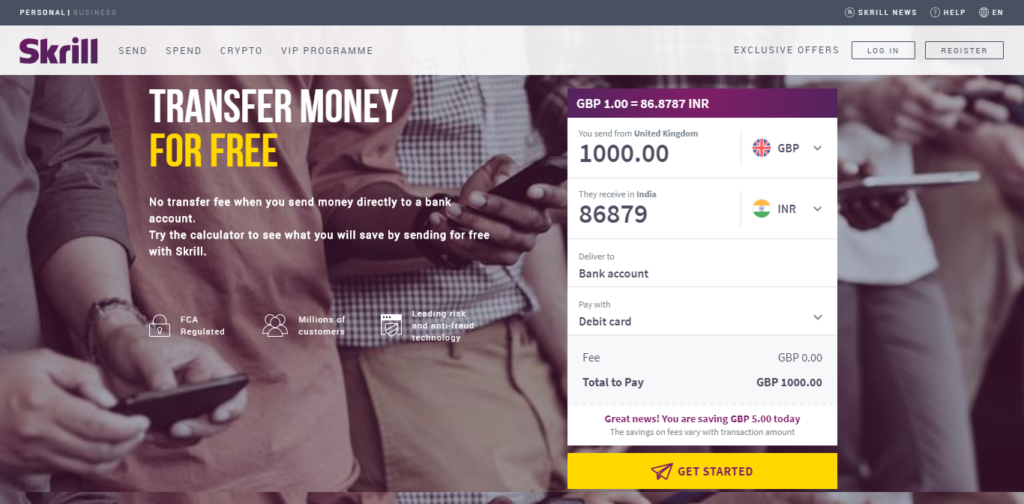
Skrill has the same pricing plans as PayPal. You can add your bank account to your Skrill account, subject to pre-authorized debits and ACH conditions, it's pretty easy to set up your account here.
This software will help you make bank transfers for the amount you dictate through the ACH system. An electronic transfer is quite feasible, as your Skrill account is synced with your credit or debit card details. Just like Bill this ACH payment processor is quite experienced and copes with its task.

Stripe
stripe-1024x568.png

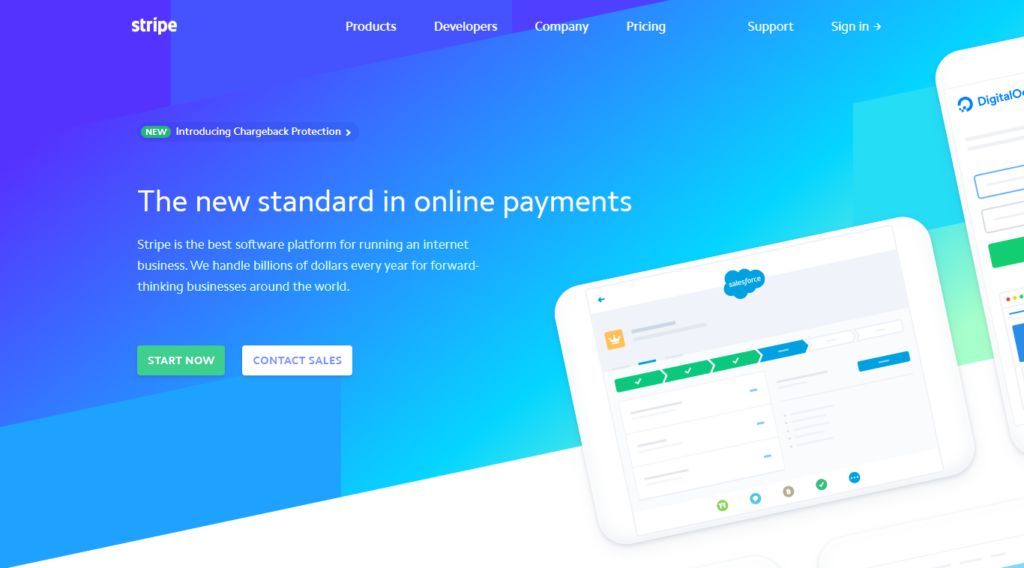
This payment processor has huge settings marked next to it. With the likes of Lyft, WooCommerce, Xero, and Shopify syncing with this processor, Stripe is basically a suitable alternative to ACH to include in your future transactions.
Stripe gives its users access to a convenient dashboard where they can link their bank accounts to ACH payments. It has conditions and services that meet the task of protecting any authorization request.

Bill.Com
bill.com_-1024x462.png

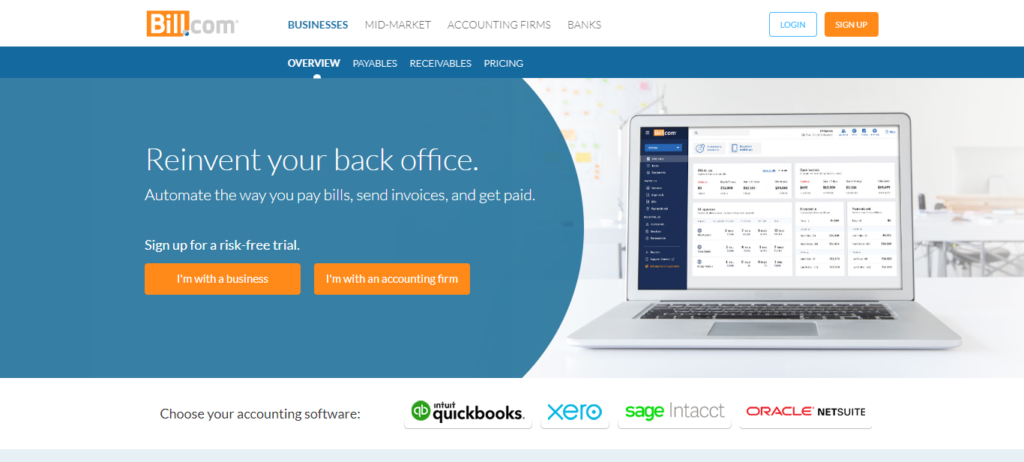
For those who don't know, Bill.com This is a payment processor that is automated to perform all transactions through the ACH system, This will help you send invoices or make payments on time. The best part about this particular ACH-centric system is that it integrates with accounting applications like Quickbooks, Xero, Sage Intacct, and Oracle, just to name a few. Most of it, everything is completely paperless. Really saves you time.

ACH Payments vs Credit and Debit cards vs Paper Checks vs Bank Transfer
Based on the facts, ACH is more resilient and well-built to optimize your financial transactions. This is an outstanding channel that surpasses both credit and debit card security when transmitting all authorization updates via OFDI. Because it communicates with a recognized legal framework, it is able to handle bulk transactions.
For this reason, data processing fees will undoubtedly be lower compared to credit cards. With debit cards, they also transfer money from checking accounts in the same way as the ACH system, but because they operate on a card network, they charge the same fees as credit cards.
With the bank transfer option, there is a difference here.
In practice, a bank transfer is a type of ETF that is used for small-volume payments. Their processing time is always real-time, unlike ACH, which sorts transactions into different tiers and then sends them for processing at the appropriate scheduled time. A bank transfer performs processing for each individual transaction.

What are the disadvantages of ACH payments?
Most often, people turn to ACH for help, as it is somewhat convenient. There are valid reasons why consumers and businesses should use the ACH system. Some of its advantages:
  • It has a faster processing time
  • Lower processing fees. For vendors that accept credit and debit cards from customers, ACH can save you some money.
  • This is an ideal channel for recurring invoices. This brings a new breed of flexibility. No more checks to pay your dues from time to time. You can automate your transactions so that everything is processed at the click of a button. Otherwise, it's perfect for consumers who need to automate their payments so they don't miss their due dates.
  • For customers, this gives them an automated payment platform. A merchant offering subscription-based services can use an ACH processor such as Dwolla or Chargebee.
  • This is a pretty solid alternative to checks and credit card transactions.
  • All transactions are paperless. This increases security for both buyers and sellers. All payments are direct and do not include third parties. In particular, the main difference between checks is that they are susceptible to signature forgery. On the other hand, credit cards can be stolen. The good thing about ACH payment processing is that it performs an end-to-end authentication process before the transaction is approved between the two parties. As a security measure, the buyer is asked to confirm the amount and details of the seller receiving the payment.
  • It drives away all sorts of human errors and inaccuracies.
  • This system is flexible for corporations and businesses with remote employees or a large number of employees.
  • Banks are paying more attention to recognizing ACH payments based on paper checks.
  • This is ideal for consumers who don't have access to credit cards.

And the disadvantages?
  • Your bank details are open to companies
  • The learning curve for large corporations is a bit blurry
  • For business owners, you should set up safeguards to avoid any form of fraud

Is ACH Payments the perfect solution for me?
If you run a company that accepts payments from customers around the world, you may need an automated solution. The ACH payment method will suit your needs if you are inclined to the most applicable ones a trading account, I mean one that comes with low bids and has strict security measures.
Usually, the most common service providers charge a flat rate, which lies somewhere between $0.20 and $1.50 per transaction. In other cases, payment processors charge a percentage fee of 0.5 b or more. 1.5% by following these rates, you will know exactly where to place your bets.
For traders with high-risk operations, the rates may therefore go beyond the average. I would prefer this if the refund was billing customers or expenses so much. If your business is connected to a customer base that doesn't really believe in credit and debit cards, then look no further. ACH is the right channel for processing all transactions thanks to its high-tech security technology.
In fact, banks often prefer this safest and most indomitable method to move large amounts of money and at the same time create protection for both merchants and customers by making all sorts of calculations.
For all customers, the best part of all this is that ACH payments are absolutely free and quite profitable for merchants, it is extremely important, it is a channel that significantly reduces the chances of your transactions for fraudulent attempts.
 
Top