


Carding
Professional
- Messages
- 2,870
- Reaction score
- 2,488
- Points
- 113
Undeclared capabilities or implant programs (similar to medical implants) are a deliberately modified piece of software that can be used to gain hidden unauthorized access to a secure computer system.
Most of the malicious programs (viruses, rootkits, keyloggers) are introduced to users' computers from the outside, overcoming protective perimeters; however, there is another way. It is enough to change the files of the legitimate program and add undeclared features to it. Then it will be able to both directly implement the functionality the attacker needs, and deliberately create security flaws, be a kind of backdoor.
The source of such implants and the undeclared capabilities associated with them can be both the creators of various applications and government special services. And if the activities of unscrupulous developers are capable of attracting only limited attention (in the minds of a common user, they are on a par with other hackers), then any messages about bookmarking programs from the special services invariably cause heated discussions.
Intelligence agencies are really interested in unhindered access to computers and smartphones of any users, individuals and organizations, and bookmark programs are one of the best ways to solve this problem.
Classification of undeclared capabilities (implant programs)
Depending on the goals, the implant programs can be divided into several categories:
Objects of implementation of software implants:
Sources of threat
In theory, a bookmark can be embedded in any program code. However, in some scenarios, the likelihood of undeclared opportunities and the associated risks is significantly higher.
Risk analysis
The danger of getting a bookmark depends on the reliability and decency of the developers of the program, the interest from the special services, as well as measures to analyze the source code and search for undeclared features.
The widespread programs used by millions of people are of great interest to the intelligence services. As a rule, when developing software, its creators use other people's libraries and open source software, in which open vulnerabilities may exist. One of such incidents is described in the article " NSA used a vulnerability in OpenSSL to gather information ." Unpopular products, due to the small number of users, usually do not attract the attention of law enforcement agencies. If there are bookmarks in such programs, then the authors have introduced them not for the sake of state needs.
Among citizens and organizations, the greatest interest of the special services is caused by representatives of extreme political and religious movements, persons engaged in various kinds of illegal activities, as well as persons associated with them. Various types of surveillance are established for such people, their activities and communications are eavesdropped and videotaped, and bookmark programs and other spyware are installed on their computers.
State-owned companies, manufacturers of military equipment, as well as enterprises of strategically important industries can become objects of attention of foreign special services.
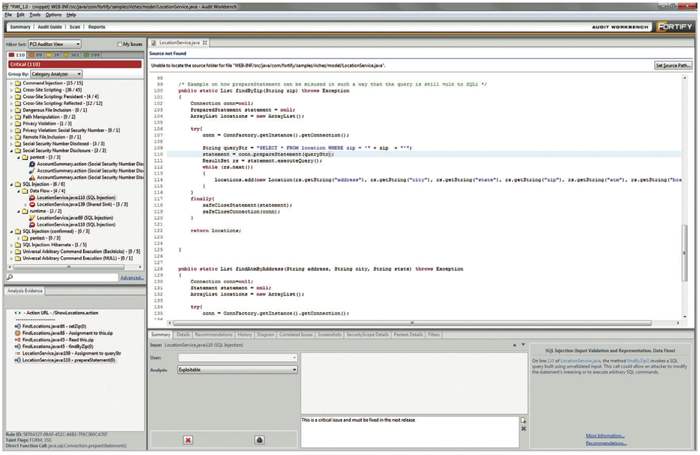
It is more difficult to protect yourself from bookmark programs than from other malicious programs: the antivirus does not see them, and there may be no anomalies in operation. At the same time, bookmarks can be detected using specialized source code analyzers. In particular, they are at the disposal of government agencies and private companies that carry out software certification, so in the case of an increased risk of the presence of someone else's bookmarks, checking for foreign code and undocumented functions is mandatory.
Most of the malicious programs (viruses, rootkits, keyloggers) are introduced to users' computers from the outside, overcoming protective perimeters; however, there is another way. It is enough to change the files of the legitimate program and add undeclared features to it. Then it will be able to both directly implement the functionality the attacker needs, and deliberately create security flaws, be a kind of backdoor.
The source of such implants and the undeclared capabilities associated with them can be both the creators of various applications and government special services. And if the activities of unscrupulous developers are capable of attracting only limited attention (in the minds of a common user, they are on a par with other hackers), then any messages about bookmarking programs from the special services invariably cause heated discussions.
Intelligence agencies are really interested in unhindered access to computers and smartphones of any users, individuals and organizations, and bookmark programs are one of the best ways to solve this problem.
Classification of undeclared capabilities (implant programs)
Depending on the goals, the implant programs can be divided into several categories:
- Full access to a remote computer or system . In essence, such programs are similar to rootkits and backdoors, except that their functionality is embedded in one of the user's legal programs. They can be used for espionage or disruption of computers, telecommunications equipment and smartphones of commercial and public organizations, and broad groups of citizens.
- Stealing access passwords, i.e. keylogger functions. Having a password for remote access to a computer provides as extensive opportunities as the best backdoor, and access to e-mail and Skype accounts will allow you to track conversations and correspondence even in cases when a person uses other computers for communication that do not have bookmark programs. Stealing passwords is of particular interest when you need access to the entire internal network where the computer with the bookmark is running.
- Unauthorized modification of data and destruction of computer systems. The greatest threat such programs pose in the systems of automated process control systems of critical facilities, control of military or dual-use equipment. The installed software tabs allow, if necessary, to disable the infrastructure and military facilities of a potential enemy.
Objects of implementation of software implants:
- Computers and servers. Access to the contents of hard drives and RAM is the eternal dream of all hackers and intelligence workers. Bookmarking programs can either directly copy and send information, or open access to other spyware.
- Telecommunication equipment. Negotiations of suspicious persons are no less (and sometimes even more) valuable than the contents of their hard drives, since they allow to identify and suppress actual criminal plans, and with the presence of GPS, special services can also track any movements of the object without any external surveillance. Bookmarks in network equipment make it possible to control traffic from large groups of the population.
- Onboard and industrial computers. Now almost any serious technology is equipped with, if not a full-fledged computer, then at least a microprocessor. By introducing bookmarking programs into it, special services will be able to receive information about the periods and modes of operation of equipment, as well as, if necessary, easily disable it.
Sources of threat
In theory, a bookmark can be embedded in any program code. However, in some scenarios, the likelihood of undeclared opportunities and the associated risks is significantly higher.
- Programs developed directly in government departments or on their order. Having received an order from higher authorities, the developers will include any, including undocumented, functionality in them.
- Programs subject to state certification. First of all, these include products for information security. If there is appropriate access, by order of the special services, code fragments can be modified in them and additional modules can be introduced.
- Messenger programs, especially those of average popularity. Listening to other people's conversations is one of the most important interests of the special services, and the presence of bookmarks in the programs that are used for communication is the easiest way to gain access to the communications of citizens.
- Software for military and dual-use equipment. Due to their importance, such developments are of particular interest and are the most likely object for the introduction of bookmarks. In addition, almost all arms manufacturers, if not directly owned by the state, are at least focused primarily on orders from the national defense ministry, and therefore are very vulnerable to pressure from government agencies.
Risk analysis
The danger of getting a bookmark depends on the reliability and decency of the developers of the program, the interest from the special services, as well as measures to analyze the source code and search for undeclared features.
The widespread programs used by millions of people are of great interest to the intelligence services. As a rule, when developing software, its creators use other people's libraries and open source software, in which open vulnerabilities may exist. One of such incidents is described in the article " NSA used a vulnerability in OpenSSL to gather information ." Unpopular products, due to the small number of users, usually do not attract the attention of law enforcement agencies. If there are bookmarks in such programs, then the authors have introduced them not for the sake of state needs.
Among citizens and organizations, the greatest interest of the special services is caused by representatives of extreme political and religious movements, persons engaged in various kinds of illegal activities, as well as persons associated with them. Various types of surveillance are established for such people, their activities and communications are eavesdropped and videotaped, and bookmark programs and other spyware are installed on their computers.
State-owned companies, manufacturers of military equipment, as well as enterprises of strategically important industries can become objects of attention of foreign special services.
It is more difficult to protect yourself from bookmark programs than from other malicious programs: the antivirus does not see them, and there may be no anomalies in operation. At the same time, bookmarks can be detected using specialized source code analyzers. In particular, they are at the disposal of government agencies and private companies that carry out software certification, so in the case of an increased risk of the presence of someone else's bookmarks, checking for foreign code and undocumented functions is mandatory.
