


Carding Forum
Professional
- Messages
- 2,788
- Reaction score
- 1,322
- Points
- 113
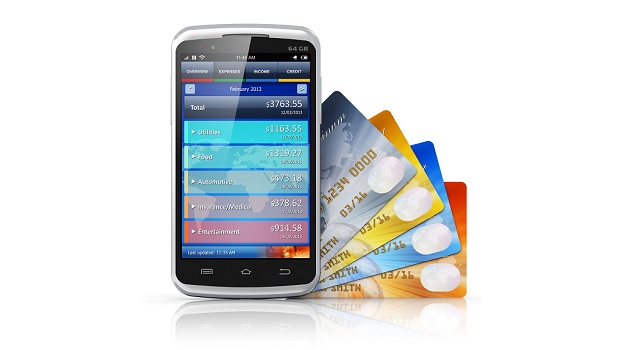
Traditionally, in December, experts sum up the results of the outgoing year and make forecasts for the next. This is especially true in the field of payments and finance, because during the year there are many events that predetermine the further development of the industry. Company PPRO Group is, a European provider of financial solutions for international e-payments, presented the main predictions for 2016 in the field of payments.
1. Mobile payments.
2016 will be a pivotal year for mobile payment providers. It looks like Apple Pay is planning a massive European expansion - and this will have a huge impact on the mobile payments market. If it is not yet possible to create a single global payment system, then Apple Pay will at least make every effort to move this process forward. Especially considering that its competitor - Google - is also striving to take the lead in mobile payments.
In 2016, we will also see mobile payments become less dependent on smartphones. Devices such as smart watches, bracelets and even rings will become payment instruments.
2. Security.
In 2016, tokenization and biometric identification will have a strong impact on the payments industry. Tokenization is an extremely interesting method of protecting credit card data. Its essence is to replace the payment card number with a token - as long as the card number is securely stored on the tokenization server, the token is used throughout the entire payment process. Even if the token is stolen, the user and his finances cannot be harmed, which makes the payment process safe.
Due to the lack of tokenization standards, this technology is still in its infancy. However, already in 2016 a shift is expected in the market.
If we talk about user authentication when making a payment transaction, then several popular methods are used here, including pin codes, passwords, fingerprints, which, however, do not provide complete security. Therefore, in 2016, two-factor authentication will increasingly be used to improve security. In addition, convenient and innovative methods such as voice recognition, palm and vein scans, heart rate recognition, and more will continue to gain popularity.
3. International e-commerce.
Merchants who want to be successful in the e-commerce market need to develop an international strategy. Expanding its trading activities outside the country includes not only website translation and the creation of efficient logistics. It is also important that merchants offer customers their preferred local payment methods. Asia, Eastern Europe and Latin America are currently the most interesting markets for European online retailers. Since the penetration of cards in these regions is lower, it is necessary to focus on alternative payment methods.
4. Regulatory changes.
The first regulatory document regulating the payment services market in the EU was adopted in 2007 and is called the Payment Services Directive (PSD). It provides, for example, that payments must be completed no more than one day after the receipt of the payment order. After two years of tough negotiations, a second directive (PSD2) was adopted in the EU.
The new document sets several priorities, including tightening security requirements for online payments by improving customer authentication. PSD2 will also provide a legal framework to stimulate competition, which will facilitate the entry of new providers and enable the development of innovative mobile and online payment methods. In addition, the document forces banks to provide payment providers with access to their main value - accounts. The European Banking Authority (EBA) plans to develop more detailed guidelines and regulatory standards for the application of the directive. Despite the fact that the adaptation of the directive to the national legislation of all EU countries will take another 2 years, participants in the payment industry should start preparing for this already in 2016.
5. Cash withdrawal.
Many experts are confident that the end of cash payments is nearing. Some European countries are indeed cutting back on the use of cash. In Sweden, for example, it is almost impossible to use cash to pay for bus tickets. Popular payment methods are customer cards, credit cards, payments from smartphones. Even traditional bakeries, which previously always accepted cash, put up posters asking them to use non-cash payment methods even for small check amounts. The situation in Denmark is similar: the government is now discussing whether to oblige small merchants to accept cash as a method of payment.
However, the death of cash payments remains more of a theory. In Germany, for example, 80% of retail transactions are still in cash. However, the share of such calculations is constantly decreasing, and this trend will continue in 2016. Cash is gradually giving way to alternative payment methods.


