

CarderPlanet
Professional
- Messages
- 2,549
- Reaction score
- 732
- Points
- 113
An underwater drone uses the ocean to collect data and explore the depths.
The agency DARPA (Defense Advanced Research Projects Agency) in the framework of the Manta Ray program conducted the first tests of an unmanned underwater vehicle (Unmanned Undersea Vehicle, UUV) of long action. The experiment was aimed at testing the capabilities of a marine drone. The development belongs to PacMar Technologies and Northrop Grumman, each of which creates its own prototype UUV.
DARPA noted that the testing provided important data for future full-scale tests on the high seas and confirmed the correctness of previous assumptions and models. The "entering the water" stage is a significant step for the underwater program.
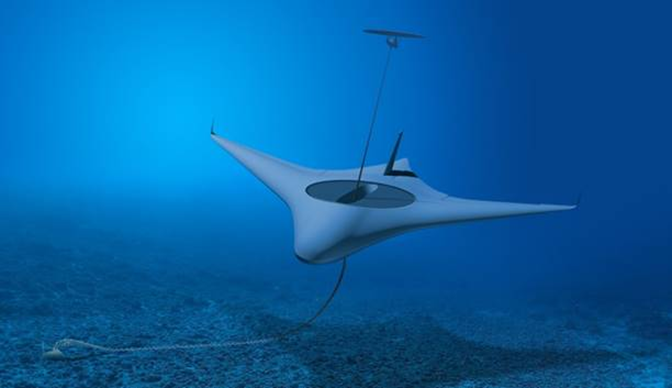
DARPA Manta Ray drone
At the time of testing, the drone conducted a series of basic checks in the harbor of Oahu, Hawaii, including activating engines and measuring buoyancy, which distinguishes the drone from previous US Navy unmanned underwater vehicles limited by short battery life due to battery power.
The Manta Ray program was launched by DARPA 4 years ago with the goal of creating an underwater vehicle that can function for a long time without the need for logistical support and human maintenance.
DARPA's Manta Ray is aimed at creating an autonomous underwater vehicle that can function for a long time without human intervention. Key goals include developing energy management technologies for harvesting energy from the marine environment, creating autonomous control and navigation systems, new methods for detecting and classifying underwater threats, and methods for combating biofouling and corrosion for long-term missions. Manta Ray can support military and scientific missions, performing tasks in the field of exploration, monitoring of ocean conditions and data collection.
The main effort is focused on developing energy management technologies that allow the drone to collect energy at " operationally significant depths." DARPA mentions several possible methods of generating energy: using the energy of ocean waves, currents, and ocean temperature gradients.
It is also worth noting that Northrop Grumman plans to conduct water tests of its UUV only next year, while DARPA expects to conduct full-scale tests at sea within the next 1.5 years.
The agency DARPA (Defense Advanced Research Projects Agency) in the framework of the Manta Ray program conducted the first tests of an unmanned underwater vehicle (Unmanned Undersea Vehicle, UUV) of long action. The experiment was aimed at testing the capabilities of a marine drone. The development belongs to PacMar Technologies and Northrop Grumman, each of which creates its own prototype UUV.
DARPA noted that the testing provided important data for future full-scale tests on the high seas and confirmed the correctness of previous assumptions and models. The "entering the water" stage is a significant step for the underwater program.
DARPA Manta Ray drone
At the time of testing, the drone conducted a series of basic checks in the harbor of Oahu, Hawaii, including activating engines and measuring buoyancy, which distinguishes the drone from previous US Navy unmanned underwater vehicles limited by short battery life due to battery power.
The Manta Ray program was launched by DARPA 4 years ago with the goal of creating an underwater vehicle that can function for a long time without the need for logistical support and human maintenance.
DARPA's Manta Ray is aimed at creating an autonomous underwater vehicle that can function for a long time without human intervention. Key goals include developing energy management technologies for harvesting energy from the marine environment, creating autonomous control and navigation systems, new methods for detecting and classifying underwater threats, and methods for combating biofouling and corrosion for long-term missions. Manta Ray can support military and scientific missions, performing tasks in the field of exploration, monitoring of ocean conditions and data collection.
The main effort is focused on developing energy management technologies that allow the drone to collect energy at " operationally significant depths." DARPA mentions several possible methods of generating energy: using the energy of ocean waves, currents, and ocean temperature gradients.
It is also worth noting that Northrop Grumman plans to conduct water tests of its UUV only next year, while DARPA expects to conduct full-scale tests at sea within the next 1.5 years.
