


Brother
Professional
- Messages
- 2,590
- Reaction score
- 533
- Points
- 113
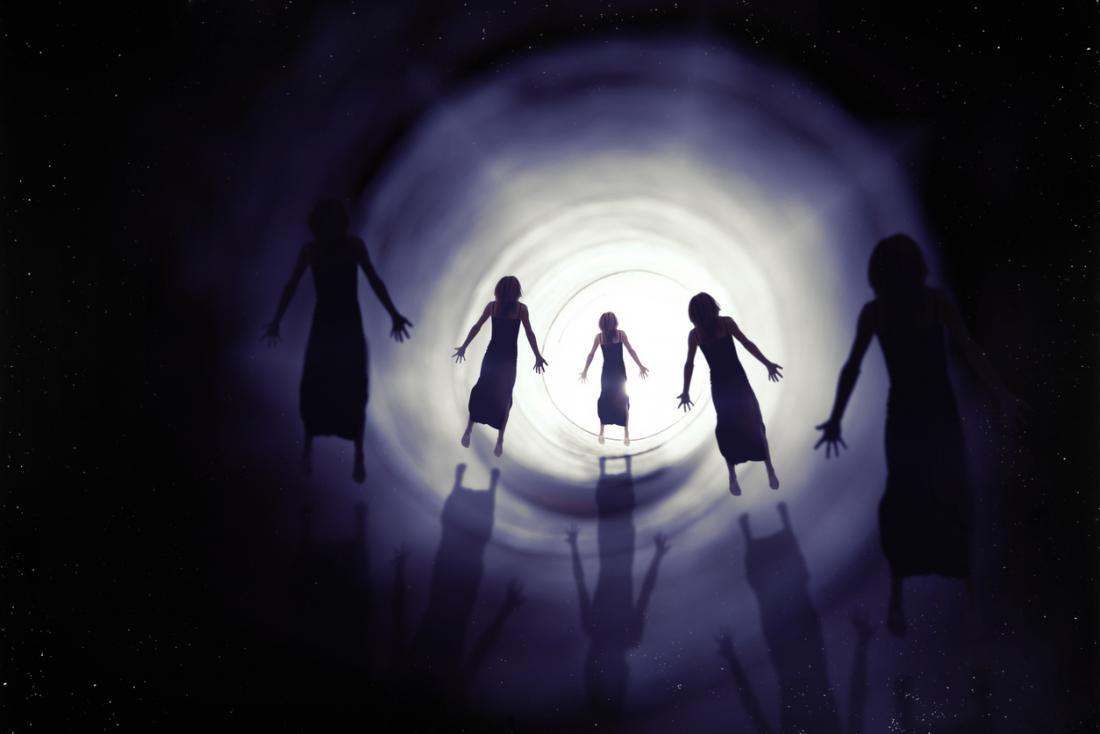
Near-death experiences (NDE) is the general name for various subjective experiences of a person that can occur during life-threatening events after which a person survived.One in ten of us have had near-death experiences, a recent survey suggests. This condition does not always occur in life-threatening situations.
These experiences arise in an altered state of consciousness and can include such elements as a feeling of leaving the physical body, euphoria, mystical visions, a sense of the disappearance of the ego, going beyond space and time, a rapid stream of thoughts, and even meeting with angels and demons.
However, this condition does not always occur in life-threatening situations. In some cases, near-death experiences are associated with REM sleep, scientists say.
Some see the light at the end of a dark tunnel, while others experience the sensation that they are leaving their body. There is a lot of fascinating data about so-called near-death experiences. They are often provided by patients who have experienced a life-threatening situation and who, for example, have recovered from cardiac arrest. But even in everyday conditions, consciousness can undergo unique changes - for example, during an epileptic seizure or meditation.
How this experience can be explained in terms of neurology or medicine is still unclear. It is also unclear how common NDEs are. To answer this question, Daniel Kondziella of the University of Copenhagen and his colleagues surveyed 1,034 people from 35 countries.
Study participants were recruited through a crowdsourcing platform and asked if they had a near-death experience. Subjects who answered affirmatively to this question then talked about their experiences in more detail by filling out a standardized questionnaire.
Analysis of the answers showed that 289 out of about 1000 respondents gave an approving answer to the question about the existence of such an experience. After detailed questioning, 106 of them were found to have reported cases that met the criteria for true near-death experiences.
That is, one in ten of the sample has already experienced such an abnormal state of consciousness.
Previous studies in Australia and Germany yielded slightly lower rates, ranging from 8% to 4%, but they only focused on cardiac arrest survivors.
The subjects reported very different experiences. Most often, it was about an abnormal sense of time - time either accelerates or slows down. Extreme acceleration of thought processes, heightened senses, and out-of-body experiences were also often described. In addition, many participants reported feelings of peace and complete peace, others heard voices or felt the presence of other beings.
Contrary to popular belief, not all near-death experiences were positive. For some of the study participants, they meant unpleasant or frightening sensations. For example, one participant said that sometimes she wakes up at night and sees a line on her chest. “I cannot move or speak. I mentally count to three and close my eyes. Sometimes it helps, ”the woman said.
These near-death experiences occur in the transitional phase from sleep to wakefulness. According to scientists, they may be associated with REM sleep. In it, the brain is very active, dreams are extremely plausible, and sleep paralysis usually occurs - a short-term numbness of the skeletal muscles. Some people wake up and return to this phase of sleep several times, and this is often associated with near-death experiences.


