

Lord777
Professional
- Messages
- 2,576
- Reaction score
- 1,564
- Points
- 113

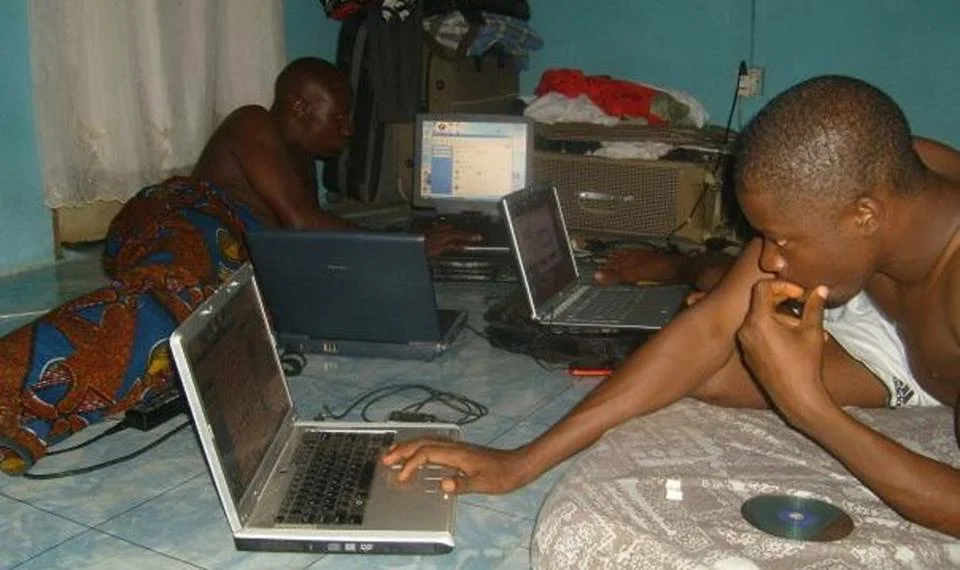
This is an interview with a scammer from Nigeria. Now 23 years old, he served two years for fraud and is currently studying in the UK. No longer does the scam.
- How did you get involved in fraud?
- I come from a poor family in Lagos. We had little money and it was very difficult to find a good job. He began to work for one criminal authority at the age of 15, because he learned English at school and knew how to use computers. This authority offered good money, and I took it as a chance to help the family.
- What exactly did you do as a fraudster?
We informed people about the death of a certain person who left several million in an account, and we need help to get this money out of the country. This is the most successful type of fraud, but I also "earned money" by phishing, trying to steal usernames and passwords for online bank accounts from people.
- How did you find victims?
- First, you need to understand how a group of scammers works. At the bottom of the hierarchy are "spammers" who spend all their time online collecting email addresses and sending out the first email to get people interested. If they receive a response, the victim is passed along the chain further, to the one who knows English better, so that he can receive copies of the documents of the potential victim - a passport or a driver's license.
Then, when they are ready to ask for money, the victim is passed on to people who are even one step higher - they play the role of a lawyer or agent, explaining to the victim that she needs to pay a certain amount or bribe the right person so that the money can be taken out of the country. ... When the money is handed over, the authority picks it up at the Western Union office using false documents, copies of which he received from another victim of the fraud.
- Where do "spammers" get email addresses?
- A lot of people leave their comments in guest books, forums and websites, and indicate their real e-mail addresses. Scammers have special programs that scrape emails so that they can then be used for fraud.
- And what is the percentage of people who responded to these letters?
- Maybe nine or ten out of several thousand. And at the second stage - about one in twenty - this is already a person who is ready to give his money.
- And how much money can you get from a person?
- Average about $ 7.5 thousand, the largest amount known to me was about $ 25 thousand. The money is lured out in small portions, starting from a few hundred, but there are “problems” with the withdrawal of the promised millions, and we need large sums to complete the “deal”. People start paying because their costs are small compared to the amount they hope to receive, they believe in it.
- How much money did you yourself receive from the deceived people?
- In the year before my arrest, I earned about $ 75 thousand. I bought a nice house and a BMW for my family. I had mobile phones, laptops, etc. All this I lost, when I was arrested, my family was forced to leave Lagos, because I called the names of my bosses to mitigate the punishment.
- Did you meet your victims face-to-face or was all communication only by email?
- I have never met deceived people, but I was a participant in several scams such as "Wash-Wash".
- "Wash-Wash"? What is it ?
- We told the victim that we have a suitcase full of money, several million dollars. One of the victims met with my “colleagues” at a hotel in Amsterdam, where he was shown a box full of black paper. The victim was told that it was money that had been dyed black to be smuggled through customs, and the money could be cleared with special chemicals, but it was expensive. My “colleagues” showed how this works with a $ 100 bill on top and a black ink remover.
Of course, all the other “money” in this suitcase was plain black paper, but the victim assumed it was real money. He paid more than $ 27,000 for the chemicals and was asked to return to the hotel the same day, but a little later, and collect the money. Of course, when he returned, there was no one there. He could not tell anyone about what had happened, as he was going to break the law, and he himself would have gotten into trouble.
- Let's talk about how you made your victims trust you
- I acted as a lawyer, agent or bank representative. The first time I had a supervisor who read my mail and offered answers, but this time I had to do everything myself. I had many different documents that I could use to convince the victim that everything was true - including photographs of an official at his workplace, fake IDs, bank statements that allegedly contained money - I used everything to convince the victim of reality. the existence of millions. I slowly and gradually rubbed into their confidence, so that they would not be frightened, did not immediately ask for large sums of money.
- What did you do if the victim had already sent money and could not send more or "froze" the relationship?
- I still used the "need more money" tactic. I sent fake letters and documents that could lead victims to believe that the account could be opened by a bank or seized by the state at any time, and that the money is needed very urgently to remove the last obstacles to their receipt of millions.
I persuaded them to take a loan or borrow from friends, I warned them not to tell anyone about our deal so that there would be no information leakage. I promised that all expenses would be reimbursed to them in excess of the promised share.
- When the victim ran out of money and she could not send you more, was that the end? Or did you come back to her later?
- We had one such method, which we called "approach recovery." A few months later, we contacted the victim, allegedly on behalf of the FBI or the Nigerian authorities. We reported that the scammers were caught, and thanks to the captured data, it was possible to identify the victims, and it became possible to return the money. A specific fee must be paid for refunds. And the victims very often paid again, hoping to get their money back.
- Tell us about corruption in Nigeria. Did you pay bribes to officials?
- That's what I can't say, a lot of people make money in Nigeria, and not all of them are scammers. Everyone has their own reasons.
