

Carding
Professional
- Messages
- 2,870
- Reaction score
- 2,522
- Points
- 113
Italy has come up with a new way to combat food fraud.
Parmesan is one of the most popular and expensive cheeses in the world, but also one of the most counterfeited. To distinguish real Parmigiano Reggiano from cheap imitations, Italian producers have come up with a new method: embed edible microchips in cheese.
These microchips - about the size of a grain of sand - are pasted onto 40-kilogram cheese heads along with a QR code. Chips equipped with blockchain technology contain a unique identification number that allows you to track the origin and quality of cheese. Consumers can scan the QR code on their smartphones and find out everything about cheese: where and when it was produced, what ingredients were used, how it was stored and transported.
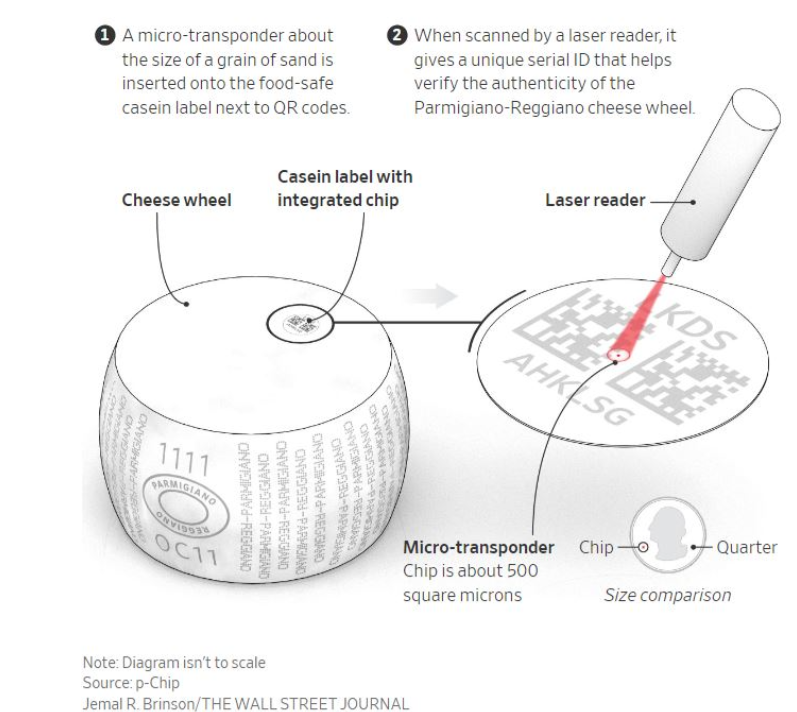
Microchips are safe to consume, but are unlikely to be eaten, as they are found in a hard cheese crust that is not normally eaten.
Parmesan isn't the only food item that suffers from counterfeiting. In the European Union, more than 3,500 products have been granted protected status, which ensures that they are produced in a particular region using traditional methods. Among them are Greek feta cheese, French champagne and Italian Parma ham. The market for these products is estimated at almost 80 billion euros per year.
Parmesan is one of the most popular and expensive cheeses in the world, but also one of the most counterfeited. To distinguish real Parmigiano Reggiano from cheap imitations, Italian producers have come up with a new method: embed edible microchips in cheese.
These microchips - about the size of a grain of sand - are pasted onto 40-kilogram cheese heads along with a QR code. Chips equipped with blockchain technology contain a unique identification number that allows you to track the origin and quality of cheese. Consumers can scan the QR code on their smartphones and find out everything about cheese: where and when it was produced, what ingredients were used, how it was stored and transported.
Microchips are safe to consume, but are unlikely to be eaten, as they are found in a hard cheese crust that is not normally eaten.
Parmesan isn't the only food item that suffers from counterfeiting. In the European Union, more than 3,500 products have been granted protected status, which ensures that they are produced in a particular region using traditional methods. Among them are Greek feta cheese, French champagne and Italian Parma ham. The market for these products is estimated at almost 80 billion euros per year.
