


Brother
Professional
- Messages
- 2,590
- Reaction score
- 533
- Points
- 113

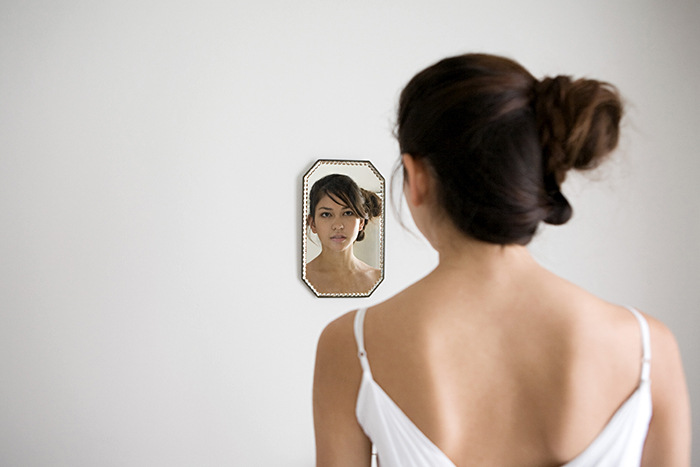
You consider yourself a professional, stay up late at work, in the end, bring money to the company - and suddenly you realize that most of your colleagues and even your boss do not notice this. Unfortunately, we often do not know what others think of us, because we cannot look at ourselves objectively. Body language expert Patty Wood offers several effective ways of introspection that can help you build an objective image of yourself, make a good impression on colleagues, and use your idols for continuous self-improvement.
Exercise: Analyze Yourself
Take a piece of paper and divide it into three columns. The first column is entitled “My self-image” (“Self-perception”), the second column is “Visible behaviors” and the last column is “Opinions of other people”.1) In the first column, indicate the parameters of your self-perception, which, in your opinion, make up your true appearance. What are the main qualities of your personality? What are your main character traits?
If you work for a business owner, list all the qualities that you think accurately characterize you as an employee, manager, or colleague. Assessing myself, I would write: “Professional, workaholic, great speaker, team player,” etc.
Then, in the same column, describe how you see yourself in your personal life - as a spouse, parent, and friend. The list should contain adjectives that describe your opinion of yourself, for example: happy, strong, bossy, level-headed, friendly, and shy.
2) In the second column, list your visible behaviors - everything you say and do in front of others. Typically, this column includes everything that you do when you communicate with friends, colleagues, romantic partners, customers or customers face-to-face, by phone, via email and SMS - everything that they pay attention to. Here you must show maximum honesty towards yourself. For example, my list included overly loose dressing, lack of attention to hair, unwillingness to say hello to colleagues, clutter in the workplace, and a childhood habit of getting into a chair with my legs during meetings (on the rare occasions when I showed up). List only the behaviors themselves, that is, what other people see and hear, not what you think they mean. In the list of behavioral characteristics, you need to include all your actions, that your team members see. Don't write down what you do behind closed doors or what you tell them about - this list should only include what they see with their own eyes. For example, I could not include in it the thunderous ovations that my listeners gave me and the rave reviews that my clients sent me. My colleagues did not see this and, in truth, they didn’t care about it.
When making a list of the elements of non-verbal behavior, use specific descriptions, like the entries in a laboratory journal that a scientist would do when researching your life. For example, instead of the adjective “friendly” that you added to your self-perception list, use the description of the visible behavior: “They see that when I come to the office, they always smile and always say hello to everyone in a cheerful voice.” Instead of “business”, write: “They see me sitting down at my computer with a displeased and gloomy look and do not break away from it until the coffee break” or “They see that I don’t stop to smile at someone or wave my hand, and immediately go to my computer and start working. " Instead of “workaholic,” you can write, “They see long, confusing emails, sent by me at two o'clock in the morning "or" They see me always hurrying somewhere with a cup of coffee in my hand or, bowing my head, typing SMS texts. " When describing your behavior at work, pay particular attention to the following points:
- In what form and at what time do you come to work every day? (Remember that the timing of the action plays a decisive role in non-verbal communication.) What non-verbal actions do you perform? With what words do you greet people, if at all? List what you say in the parking lot, in the elevator, in the hallway. What is the first form of your behavior that your colleagues see when they meet you in the morning? If you're working on the first impression you make on customers, visitors, potential romantic partners, friends, or family members, think about this first visual interaction in a specific context and list your behaviors.
- How do you usually dress? List all the details, including clothing, shoes, jewelry, glasses, watches, wallet, cell phone, purse and accessories, using descriptive adjectives such as carefully ironed, wrinkled, old, cramped, baggy, stylish, old-fashioned, shabby, worn , etc. etc.
- What does your office look like, especially your desk?
- What are your typical non-verbal facial expressions and speech patterns?
- How often do you work in your booth or anywhere else where other people can watch you?
- Do you usually sit with your back to the entrance to your office?
- How do you sit? What is your usual posture when you work and when not?
- What do you do when other people enter your office or work area?
- Do you go to your colleagues' offices? If so, what signals of non-verbal behavior do you display?
- How do you answer phone calls, emails and SMS: fast, slow, never, jerky?
- How do you answer your personal phone and how long do you talk?
- How do you behave during lunch and in the break room? Where do you sit and how do you eat? With whom do you willingly talk, and with whom do you not communicate?
- How do you behave in meetings? When do you come and where do you sit down?
- How do you behave during one-on-one meetings and in large gatherings? Are you listening, talking or thinking about something else?
- Are you quick to fulfill requests? (The speed of response is one of the important elements of non-verbal communication.)
- How do you deal with different people: colleagues, boss, clients and visitors?
- How and at what time do you usually leave work? Are you saying goodbye to your colleagues?
- Do you hang out with colleagues after work? If so, what are you doing?
4) Now compare the first column with the third. Does your self-image match the way other people think of you? Do you look like who you think you are? Are you who you want to be?
5) Finally, make a list of the actions that you are willing to change, if necessary, and the behaviors that you should maintain, if they help you create the impression you want. In order to change the impression, you may have to let other people know about your invisible behaviors, such as the extraordinary eloquence that you display in non-work environments, or your sense of humor, which only appears when you relax. Plus, you may have to create opportunities to spend more time with people in a wide variety of situations.
Have frank conversations on sensitive topics. If you're trying to change other people's perceptions of your work, arrange a meeting with your coworkers, your team leader, boss, or clients. Ask them: "What was or remains your first impression of me?", "What specific forms of my behavior led to the creation of this impression?" Remember, truthful feedback can be difficult to achieve.... If they praise you, ask them, "What can I do to please you more than myself?" If they say the impression was normal, or have some other vague or evasive answer, ask, "What exactly do I need to change to make a very good impression?" or "Which of the things I am doing now can be done even better?" No matter what they say to you, listen to everyone without interrupting and say thank you. Don't try to defend yourself or explain your actions. This will be of great service to you. Trust me, there are enough people in your life who are just dying to tell you that you have spinach stuck in your teeth. You just need to ask.
How it works
One of my clients frankly confessed: “I was intrigued by your story that you call all of your clients at the beginning of each year to ask what their first impression was of you and that you manage to get honest answers. After the “Analyze Yourself” exercise, you gave each member of our group homework to have a frank discussion of this topic with our potential and regular clients.I could not believe that you were able to persuade people to tell you the truth. But when I started calling clients and asking them to answer questions, the results were amazing. I found out that I spoke on the phone too quickly, so people had the impression that I was in a hurry, and some even thought that their calls annoyed me. I began to speak more slowly, to devote more time to the exchange of welcome phrases, and this is already yielding noticeable positive results. "
Activity: Creating the perfect role model
Here's another exercise to help you improve the first impression you make on others. Imagine that you have become the wonderful person you want to be. In order to develop the necessary qualities in oneself, it is necessary to find examples to follow. You can then observe these people and note the behaviors that you should copy.Make a list of everyone you admire. These can be people you know personally, famous leaders, celebrities, characters from movies and books. The three people who top my own list are Oprah Winfrey, Ted Clevenger (former Dean of the Department of Communications at Florida State University), and my friend Sarah. If you find it difficult to make a list, let it form in your subconscious mind.
Every night for the next week, ask yourself to dream of people you admire and want to emulate. When the list is ready, indicate in it the main, in your opinion, qualities of each of these wonderful people. This is what my list looked like:
- Oprah is honesty, sincerity and a sense of humor.
- Ted Clevenger - honesty, sincerity, integrity, high intelligence, ability to read people, warmth and compassion.
- My friend Sarah - honesty, high intelligence and warmth.
Now you have a list of ideal forms of behavior and you know exactly what will lead to their successful development. If you actively use them, you will become one of the most wonderful people you know.
What makes a person look selfish and narcissistic
Selfishness manifests itself when someone always and everywhere considers his own emotions more important than the emotions of others - like a child who wants to get another child's toy and takes it away from him. The extreme form of this attitude towards oneself is called narcissism. Hot narcissism robs people of the ability to cope with overwhelming emotions such as anger, grief, and happiness. For example, they can very quickly become furious or euphoric for very little reason and show a complete inability to understand the pain of others. In some cases, they feel an urgent need to consider their emotions more powerful and important than the emotions of those around them.Cold narcissism is characterized by a comparative weakness of emotions, but it also deprives people of the ability to restrain themselves. Because they don't have the same intense emotions that most people do, the desire to feel can make them cravable for other things, such as money, power, drugs, and sex. However, in pursuit of thrills, they do not realize what an instant impression they make on others, how indifferent and cruel they look. They are not able to understand that their actions can ruin someone's life.
Lack of time for face-to-face communication
I am sure you will agree with me that now we communicate live less than ten years ago. When we talk with friends and family on a smartphone, read SMS, play computer games and watch TV, our hearts, heads and even eyes are more often turned to the screen than to each other. What happened to the habit of looking people in the eye?Speaking of eye contact, it should be noted that people who want to enter into a romantic relationship no longer even need to meet each other in person. Of the ten million internet users who were single and looking for partners in 2006, 74% used the internet in some way to satisfy their romantic needs, and 37% just visited dating sites. According to the Pew Research Center, the share of these two groups in the total population of the global network was about 10% that year. To date, the number of users registered on the dating sites Match.com and eHarmony.com has already reached 20 million.
Business colleagues complain that it has become more difficult for them to reach out to potential clients. The consumer visits their website, clicks the "Send me information" virtual button, and then asks for a price list to be sent to him by email. With this type of business interaction, no one even tries to carefully look at the person who does business with him.
However, the brain needs and hopes for other - more important - information received through the channels of facial and voice feedback. As I mentioned earlier,
Neuroscientist Dr. Thomas Lewis believes that instantaneous facial feedback is essential to fuel our brains and empathize with the person we seek to understand. According to him, in today's world, where SMS, Twitter and Facebook reign, "no matter how intensively we use text forms of communication, they still cause stress in the brain."the inability to evaluate people in the process of personal contact negatively affects the work of the brain and, accordingly, the quality of communication.
Numerous studies show that parental face-to-face interaction with children now averages just one hour per week! This means that we only have one hour a week to see signals that let us know how each family member is doing. How can parents find out that they are having some kind of problem with their children in the tiny amount of time they spend on these dates, most of which are in a terrible rush? And how can children receive that instant, non-verbal feedback that makes them feel like they are being seen, heard and understood, and helps them develop their ability to empathize?
There are countless non-verbal clues - a loud slam of a door, a late return home, a love song humming under our breath, a forward tilt of the torso, a touch of an arm, a sigh, averted gaze, a half- eaten dinner - that help us understand and develop social relationships.
I was having dinner the other day with my friends Kevin and Amy. At the table with us were their daughters, six-year-old Shannon and two-year-old Rachel. Kevin raised his voice slightly and said, “Shannon, now is not your turn to speak. Wait until Mom finishes talking. "Amy bent down to her two-year-old daughter's highchair, stroked her cheek affectionately, and said in a stern tone,“ Rachel, don't talk with your mouth full. First chew, and then speak."
Then Kevin and Amy turned in their chairs, leaned over to Shannon, turning their full attention to her, and Kevin asked, "Tell us what you did in school today." Shannon's face broke into a smile the size of a hunk of watermelon, and she began to talk about the assignment she had completed in the art class. Her parents nodded their heads with interest and asked clarifying questions. They didn't even touch the food until Shannon held up her hands and said, "That's it!"
Kevin turned to me and asked where I went. Florida, I replied. Little Shannon turned in her chair, made direct eye contact with me and asked loudly, "Did you swim a lot?" I replied, “Yes,” surprised that a six-year-old girl knows how to keep the conversation going with questions, and mimicked my excitement by nodding my head and repeating my expression as I described how I swam and swayed on the ocean waves on an inflatable mattress.
But what impressed me most was my parents' constant use of subtle corrective and reassuring gestures. I had noticed this before, when I dined with them every month, but that evening I started counting how many times they used the non-verbal coaching techniques I usually use during my research and consultations. When the number of instructive statements and non-verbal corrective gestures I noted (such as a reproachful raised eyebrow and a nod of approval) exceeded two dozen, I stopped counting.
You may have heard of research that has shown a strong link between an increase in the number of teenagers dropping out of school and becoming drug addicts and a decrease in the number of family dinners. Such a seemingly small thing as non-verbal communication is actually a very important and complex language. To master it well in childhood, children must imitate adults, follow their instructions, and constantly practice using it. Among other things, scientists have found that to achieve good body language proficiency, children must take part in family dinners at least three times a week for eighteen years. This will allow them to create and anchor neural pathways to the communication centers of their brains and, accordingly, develop interpersonal skills.
For many years I have been conducting surveys of listeners and keeping a record of their answers to various questions. When I say, “Let those of you who ate dinner with the whole family as a child raise their hands,” not a single hand is raised in some classrooms where people under the age of twenty-five predominate. And we still wonder why those who are under twenty-five prefer to send SMS and not talk to us! It takes eighteen years of so-called direct interpersonal interaction with adults to learn all the intricacies of non-verbal language.
Source: Patty Wood SNAP: How to Create Instant Sympathy with Body Language and Charisma

