


Lord777
Professional
- Messages
- 2,577
- Reaction score
- 1,556
- Points
- 113
Chili peppers climbed higher, so that the harvest was even in late autumn.
Scientists from the University of Colorado are conducting a non-standard experiment on growing crops in urban environments. On the roof of one of the academic buildings, they laid out a real garden with vegetable beds and herb crops, above which solar panels are installed.
"We aim to combine the cultivation of useful agricultural crops with the production of renewable energy to make urban buildings more environmentally friendly and autonomous," explains project manager Jennifer Busselo.
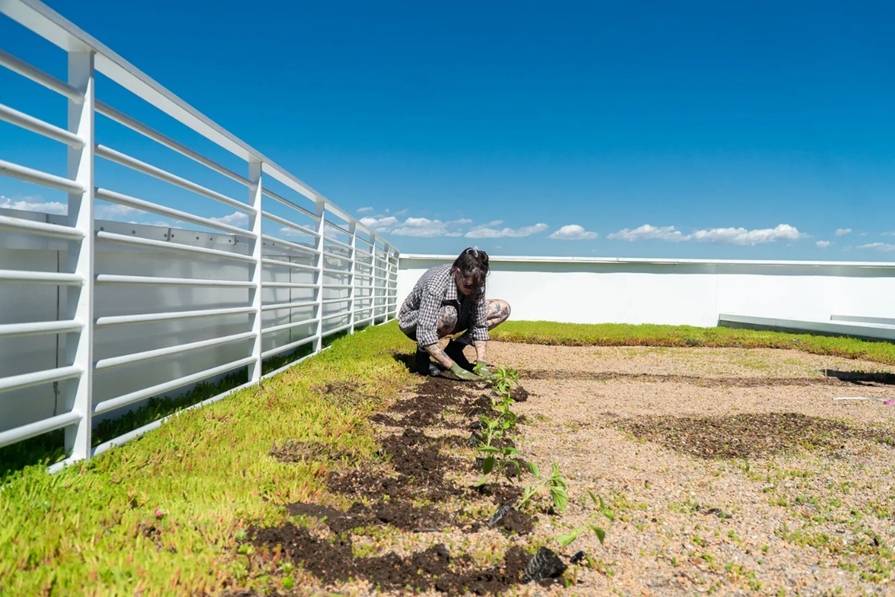
In summer, solar panels, like tree crowns, create the necessary shade for plants and protect them from overheating. And the moisture that evaporates from the ground and leaves cools the batteries, increasing their efficiency.
"Green roof" improves the thermal insulation of buildings and reduces the need for air conditioning. This is especially true for dealing with "heat islands" that occur in large cities due to the large accumulation of concrete and asphalt.
Growing plants on roofs can also save up to a third of your irrigation water compared to the amount needed to maintain land-based farms, Bousselot said. Since crops are shaded from direct sunlight, less moisture evaporates from their surface.
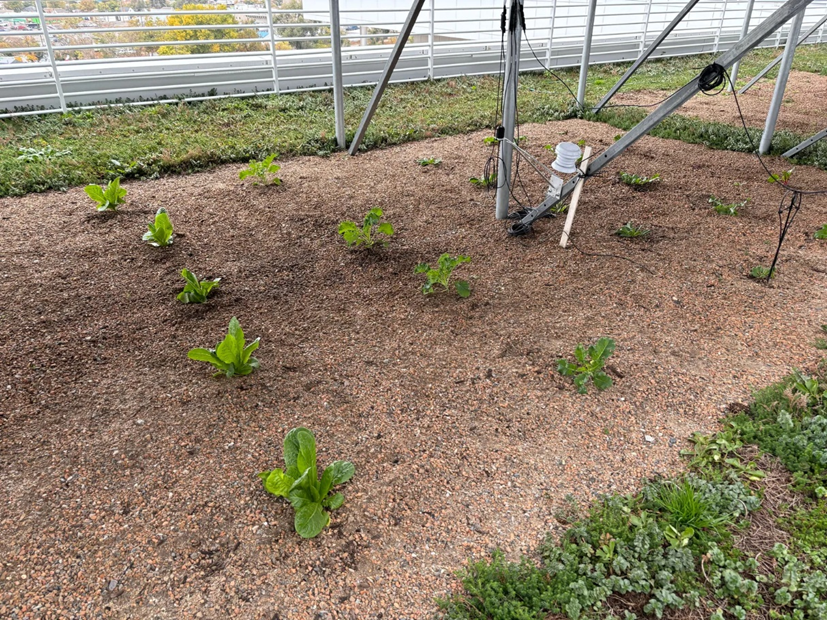
Many types, such as cabbage, lettuce and spices, feel great at a height of several floors. Chili pepper showed particularly good results — these heat-loving plants give an excellent harvest on the roof even in late autumn. Referring to this, scientists hope that urban farms will provide growing megacities with fresh food, if the project is developed further.
It is also worth noting the advantages for the urban environment. Birds began to appear on the roof of the farm-probably, the green roof serves as a stopover for them during seasonal migrations. Pollinators such as bees, butterflies and even hummingbirds are also willing to settle near flowering plants.
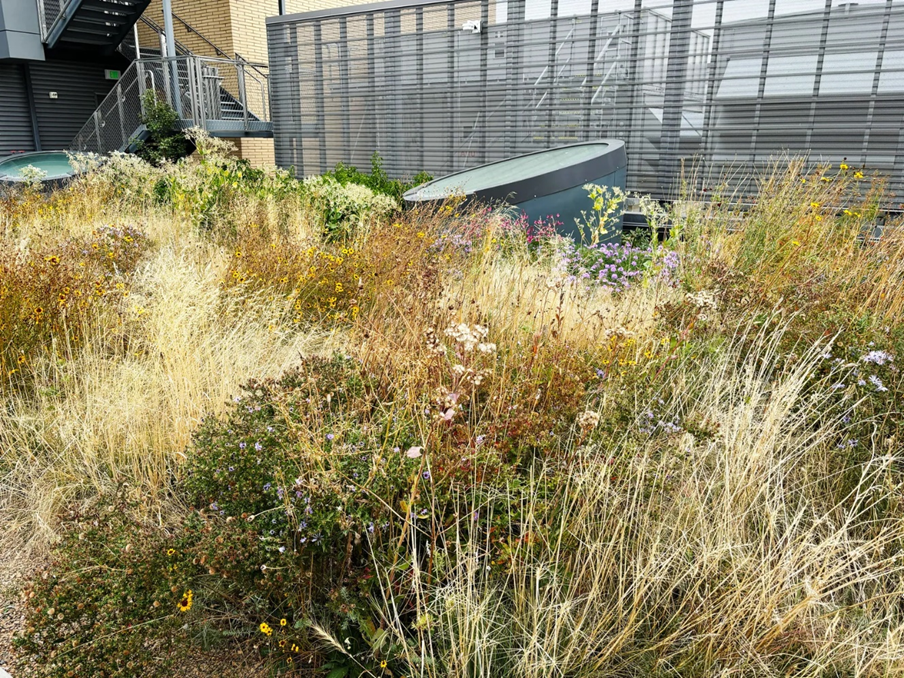
"In the future, rooftop plant complexes will be able to combine isolated urban landscapes into a single ecosystem for seasonal movement of useful fauna species," Busselo believes.
The scale of high-rise greenhouses is still small. But scientists believe that over time, such objects will help to economically spend limited resources, even in large megacities.
Similar agricultural experiments are already being conducted in other countries. But the University of Colorado project is one of the largest and most successful to date. Sensors for monitoring temperature, humidity and light are installed here. The equipment allows you to study all the features of growing crops in unusual conditions and choose the best agricultural solutions.
Scientists from the University of Colorado are conducting a non-standard experiment on growing crops in urban environments. On the roof of one of the academic buildings, they laid out a real garden with vegetable beds and herb crops, above which solar panels are installed.
"We aim to combine the cultivation of useful agricultural crops with the production of renewable energy to make urban buildings more environmentally friendly and autonomous," explains project manager Jennifer Busselo.
In summer, solar panels, like tree crowns, create the necessary shade for plants and protect them from overheating. And the moisture that evaporates from the ground and leaves cools the batteries, increasing their efficiency.
"Green roof" improves the thermal insulation of buildings and reduces the need for air conditioning. This is especially true for dealing with "heat islands" that occur in large cities due to the large accumulation of concrete and asphalt.
Growing plants on roofs can also save up to a third of your irrigation water compared to the amount needed to maintain land-based farms, Bousselot said. Since crops are shaded from direct sunlight, less moisture evaporates from their surface.
Many types, such as cabbage, lettuce and spices, feel great at a height of several floors. Chili pepper showed particularly good results — these heat-loving plants give an excellent harvest on the roof even in late autumn. Referring to this, scientists hope that urban farms will provide growing megacities with fresh food, if the project is developed further.
It is also worth noting the advantages for the urban environment. Birds began to appear on the roof of the farm-probably, the green roof serves as a stopover for them during seasonal migrations. Pollinators such as bees, butterflies and even hummingbirds are also willing to settle near flowering plants.
"In the future, rooftop plant complexes will be able to combine isolated urban landscapes into a single ecosystem for seasonal movement of useful fauna species," Busselo believes.
The scale of high-rise greenhouses is still small. But scientists believe that over time, such objects will help to economically spend limited resources, even in large megacities.
Similar agricultural experiments are already being conducted in other countries. But the University of Colorado project is one of the largest and most successful to date. Sensors for monitoring temperature, humidity and light are installed here. The equipment allows you to study all the features of growing crops in unusual conditions and choose the best agricultural solutions.
