


Brother
Professional
- Messages
- 2,590
- Reaction score
- 533
- Points
- 113
Why did a children's toy make the United States worry about national security?
Official documents have become available online confirming that in the late 90s, the NSA was concerned about the Furby toy. This toy, equipped with an artificial intelligence chip and able to repeat phrases heard, was extremely popular at the time. The NSA feared that Furby might pose a security risk.
According to 404 Media, the documents were released in response to a freedom of information request filed by X user @dakotathecat, who was curious to find out if there was any official confirmation of the story published by the Washington Post in 1999.
According to the story, the NSA allegedly banned employees from bringing Furby toys into the office because of concerns that the toy could be used as an espionage tool. The NSA was concerned that people would take the toy home, and Furby would start divulging classified information that he had heard in the office. Media outlets around the world, including the BBC, The Guardian, CNN and others, have spread information about the alleged ban.
When humans first brought Furby home, the robot pets first spoke and sang in "Furbish," a completely fictional language. But over time, the toys began to speak English. It was this supposed learning ability that led to the ban on the use of Furby on NSA facilities. Officials believed that the robots potentially had devices built into them that could record and repeat sensitive information.
The response to the @dakotathecat request contained 60 pages of documents, including employee discussions about the potential security threat from Furby, an internal memo trying to manage the story's distribution to the media after the Washington Post was published, and a list of all media outlets that covered the story.
A key link in the story is the NSA policy memo, originally published in late 1998, which includes a question from an alarmed individual who noticed a pair of Furbys walking around the NSA office, prompting him to request official guidance from management.
One of the requests from an NSA employee said :" I am concerned that a new toy on the market contains an artificial intelligence chip. These soft creatures learn speech patterns nearby. It seems like this might be a security issue, as they can pick up any conversation and repeat it."
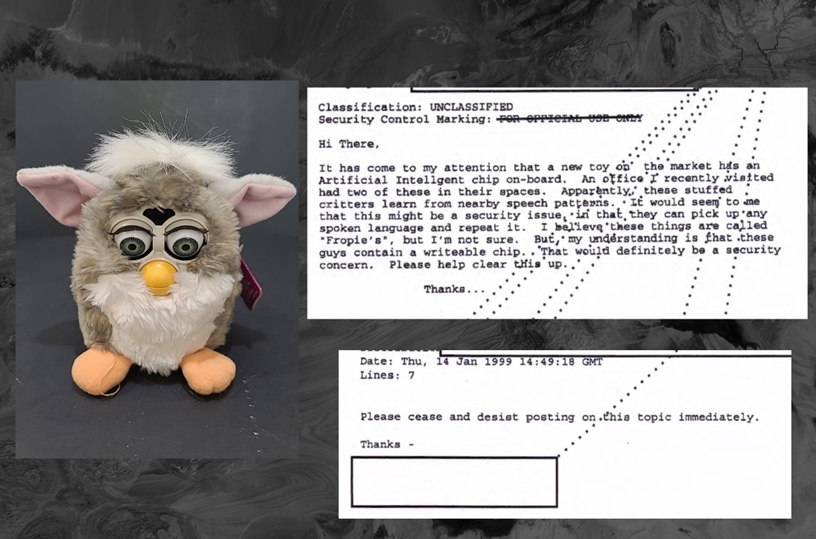
Request from an NSA employee expressing their concerns about the toy
The official response was less secretive. It simply noted that " personal photo, video and audio recording devices are prohibited items. This includes toys like Furby, " without explicitly mentioning artificial intelligence.
Some NSA employees did express concern. One of them suggested that " the toy's IR port can store signals from any classified wireless systems nearby." Nearby Furbys communicate with each other using an infrared port between their eyes.
Others reacted to the situation more calmly. One of the employees suggested: "Most speech processing systems record audio samples for statistics. Does Furby clear these buffers? How much information does the sample contain? We could start a study to find out, but asking people to leave them at home seems easier."
However, according to the toy's patent, Furby didn't actually learn the new information. Instead, the toy was pre-programmed with an English dictionary, which eventually became available to owners during the game. Also, the patent did not mention the recording devices contained inside the toy.
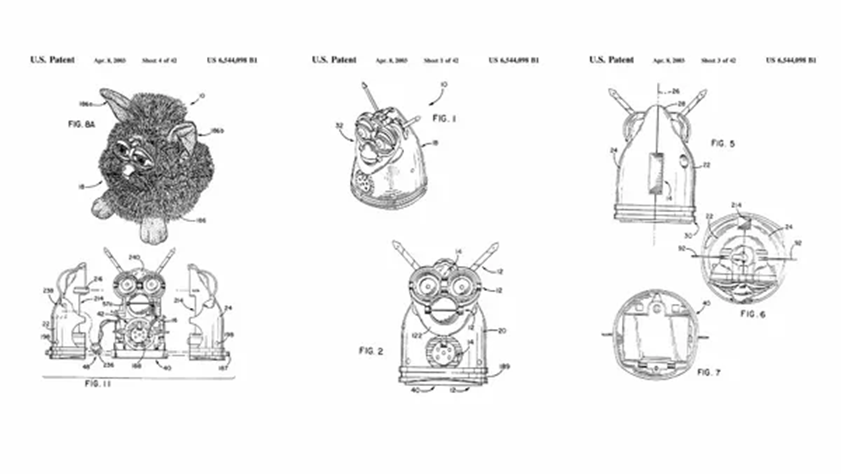
Furby scheme from the patent
In addition, Tiger Electronics, a subsidiary of Hasbro, denied NSA claims that the toy can record or repeat classified information. According to the company, the toys simply repeated pre-programmed information.
According to a 2019 IEEE Spectrum article, Furby's source code was written by computer engineers David Hampton and Wayne Schultz to run on a variation of the 6502 microprocessor, an 8 — bit chip used in the Apple II, Commodore 64, and BBC Micro.
Thus, in the late 90s, the NSA was really concerned about the potential security threat associated with an inexpensive toy equipped with artificial intelligence.
Official documents have become available online confirming that in the late 90s, the NSA was concerned about the Furby toy. This toy, equipped with an artificial intelligence chip and able to repeat phrases heard, was extremely popular at the time. The NSA feared that Furby might pose a security risk.
According to 404 Media, the documents were released in response to a freedom of information request filed by X user @dakotathecat, who was curious to find out if there was any official confirmation of the story published by the Washington Post in 1999.
According to the story, the NSA allegedly banned employees from bringing Furby toys into the office because of concerns that the toy could be used as an espionage tool. The NSA was concerned that people would take the toy home, and Furby would start divulging classified information that he had heard in the office. Media outlets around the world, including the BBC, The Guardian, CNN and others, have spread information about the alleged ban.
When humans first brought Furby home, the robot pets first spoke and sang in "Furbish," a completely fictional language. But over time, the toys began to speak English. It was this supposed learning ability that led to the ban on the use of Furby on NSA facilities. Officials believed that the robots potentially had devices built into them that could record and repeat sensitive information.
The response to the @dakotathecat request contained 60 pages of documents, including employee discussions about the potential security threat from Furby, an internal memo trying to manage the story's distribution to the media after the Washington Post was published, and a list of all media outlets that covered the story.
A key link in the story is the NSA policy memo, originally published in late 1998, which includes a question from an alarmed individual who noticed a pair of Furbys walking around the NSA office, prompting him to request official guidance from management.
One of the requests from an NSA employee said :" I am concerned that a new toy on the market contains an artificial intelligence chip. These soft creatures learn speech patterns nearby. It seems like this might be a security issue, as they can pick up any conversation and repeat it."
Request from an NSA employee expressing their concerns about the toy
The official response was less secretive. It simply noted that " personal photo, video and audio recording devices are prohibited items. This includes toys like Furby, " without explicitly mentioning artificial intelligence.
Some NSA employees did express concern. One of them suggested that " the toy's IR port can store signals from any classified wireless systems nearby." Nearby Furbys communicate with each other using an infrared port between their eyes.
Others reacted to the situation more calmly. One of the employees suggested: "Most speech processing systems record audio samples for statistics. Does Furby clear these buffers? How much information does the sample contain? We could start a study to find out, but asking people to leave them at home seems easier."
However, according to the toy's patent, Furby didn't actually learn the new information. Instead, the toy was pre-programmed with an English dictionary, which eventually became available to owners during the game. Also, the patent did not mention the recording devices contained inside the toy.
Furby scheme from the patent
In addition, Tiger Electronics, a subsidiary of Hasbro, denied NSA claims that the toy can record or repeat classified information. According to the company, the toys simply repeated pre-programmed information.
According to a 2019 IEEE Spectrum article, Furby's source code was written by computer engineers David Hampton and Wayne Schultz to run on a variation of the 6502 microprocessor, an 8 — bit chip used in the Apple II, Commodore 64, and BBC Micro.
Thus, in the late 90s, the NSA was really concerned about the potential security threat associated with an inexpensive toy equipped with artificial intelligence.


