


Carding Forum
Professional
- Messages
- 2,788
- Reaction score
- 1,322
- Points
- 113
The study showed the attitude of residents of different countries to the abandonment of cash

Over the past decade, the number of people who prefer non-cash payments has increased significantly. The coronavirus pandemic also played an important role in this. According to various sources, the UK will become a cashless society by 2026. But Britain is not alone in ditching cash. Alternative electronic forms of money such as debit and credit cards, Apple Pay and Google Pay, mobile money transfer applications are becoming more widespread around the world.
The research, conducted by MoneyTransfers, analyzed data collected by the international YouGov company in 21 countries of the world. A survey of 25,823 residents from these countries gave a clear idea of which regions are most ready for the transition to a cashless economy.
Malaysia is in second place. 65% of its residents surveyed are sure that cashless payments are the best option. The United Arab Emirates and Indonesia are not far behind, where 63% of the people surveyed welcome the idea of using exclusively electronic forms of money.
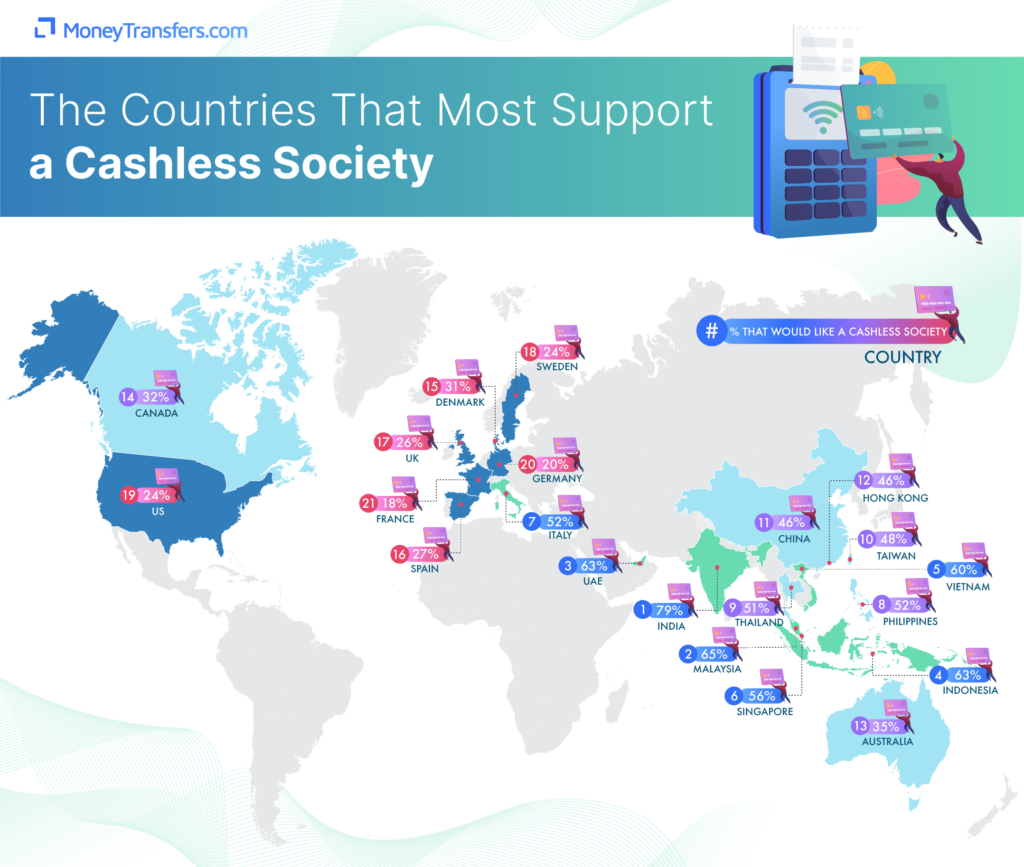
Of the rest of the top 10 countries, more than half of those surveyed in Vietnam, Singapore, Italy, the Philippines and Thailand will choose a credit card, mobile wallet or other non-cash method when making a very expensive purchase, such as buying a new electronic device.
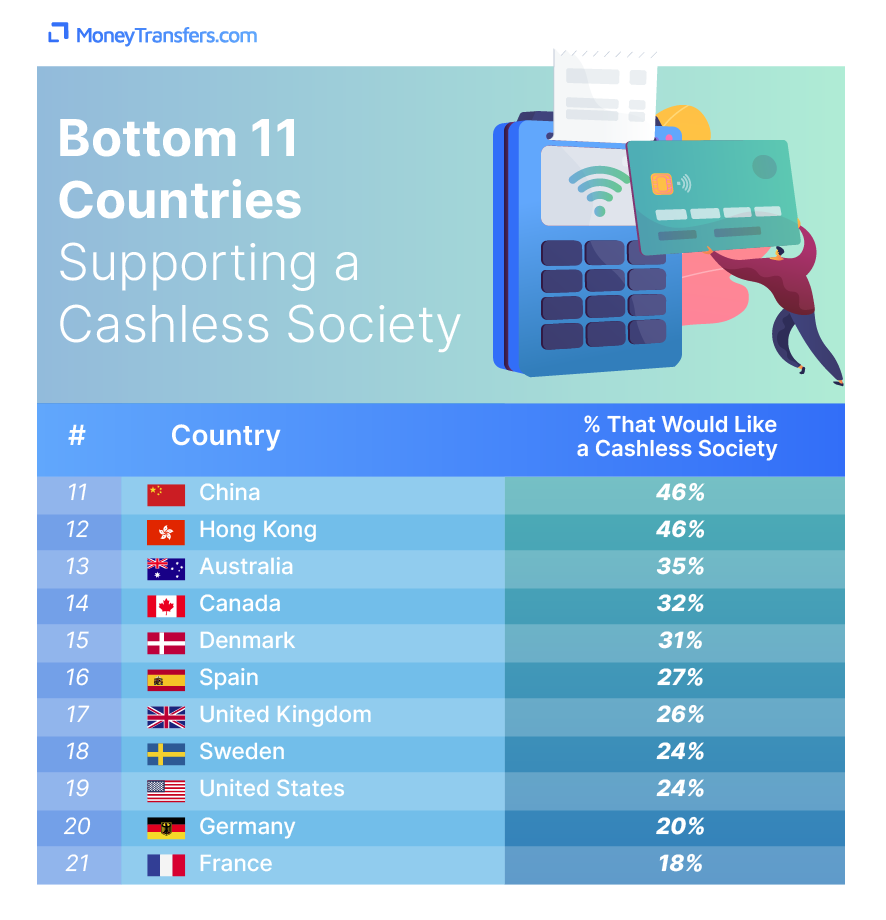
In particular, less than half of respondents (46%) from China and Hong Kong said they were positive about the country's gradual movement towards a cashless economy. In Australia and Canada, there are even fewer of them - 35% and 32%, respectively. They are followed by Denmark, Spain and the United Kingdom, where only 31%, 27% and 26% of respondents are satisfied with the phasing out of cash. And at the bottom of the list were France (18% are enthusiastic about the idea of switching to electronic payment methods), Germany (20%) and the USA (24%).
In fairness, it is necessary to mention the disadvantages of a cashless society:
The study interviewed respondents from countries that have used less cash since the start of the pandemic.
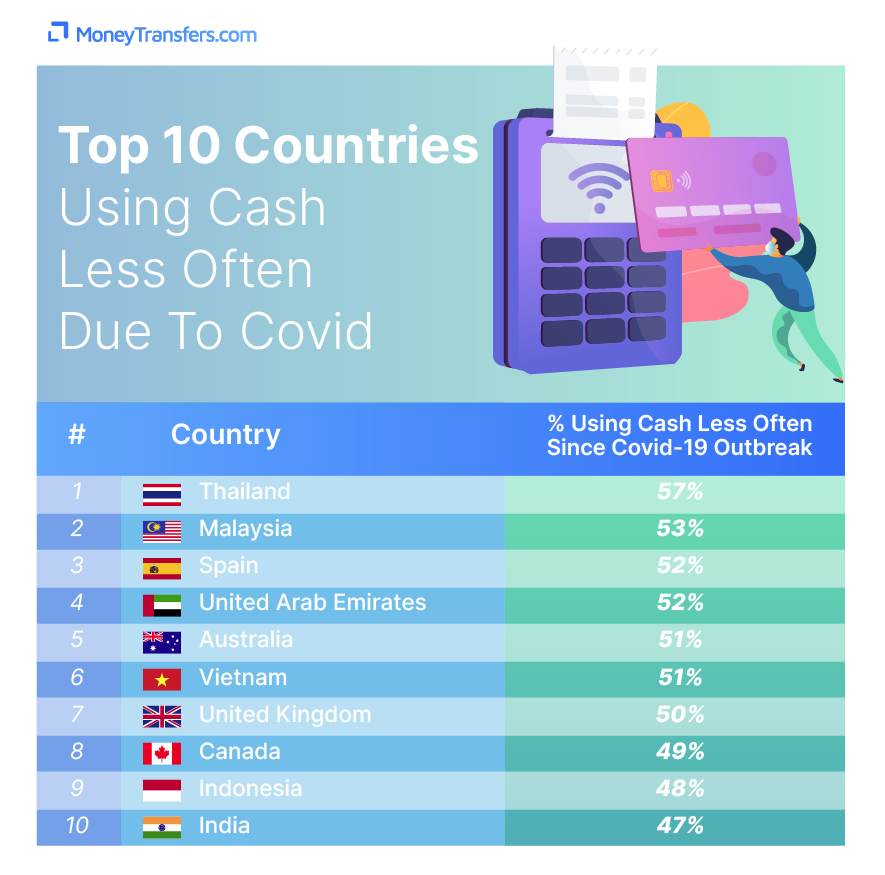
More than half of respondents from the top six countries said they were using less cash following the COVID-19 outbreak. In Thailand, for example, 57% of those surveyed chose to abandon traditional payments for security reasons. In the United Kingdom, about 50% said they feared dealing with cash since the start of the pandemic. In India, 47% of those surveyed in 2020 preferred cashless payments.
Residents of Denmark, Taiwan and the United States surveyed were least likely to change their payment habits due to COVID-19. Only 29%, 27% and 25%, respectively, of those surveyed in these countries preferred cashless payments. At the bottom of the list is Sweden with 11%, but knowing that the country is already striving to become the first cashless society, such a low percentage is not surprising.
In a rapidly changing digital world, a gradual shift towards predominantly digital forms of payment seems inevitable. Understanding the position of different countries on this issue, we can foresee in which territories the full transition to non-cash payments is most likely to occur in the near future. Socio-economic factors determine the reasons for the demonstrated willingness or resistance to the introduction of electronic forms of payment, and for obvious reasons this differs from country to country.
Over the past decade, the number of people who prefer non-cash payments has increased significantly. The coronavirus pandemic also played an important role in this. According to various sources, the UK will become a cashless society by 2026. But Britain is not alone in ditching cash. Alternative electronic forms of money such as debit and credit cards, Apple Pay and Google Pay, mobile money transfer applications are becoming more widespread around the world.
The research, conducted by MoneyTransfers, analyzed data collected by the international YouGov company in 21 countries of the world. A survey of 25,823 residents from these countries gave a clear idea of which regions are most ready for the transition to a cashless economy.
TOP 10 countries supporting the transition to cashless
India is ranked first on the list of countries most likely to support a completely cashless society. 79% of respondents from this country have a positive attitude towards this movement, and 21% of them said that they use cashless payments even for small purchases, such as buying a pack of chewing gum.Malaysia is in second place. 65% of its residents surveyed are sure that cashless payments are the best option. The United Arab Emirates and Indonesia are not far behind, where 63% of the people surveyed welcome the idea of using exclusively electronic forms of money.
Of the rest of the top 10 countries, more than half of those surveyed in Vietnam, Singapore, Italy, the Philippines and Thailand will choose a credit card, mobile wallet or other non-cash method when making a very expensive purchase, such as buying a new electronic device.
Which countries prefer traditional cash over cashless payments?
Despite the global movement towards eliminating cash, not all countries support a cashless society. Many respondents in the global YouGov survey said they would only ditch the traditional currency when they made a very expensive purchase.In particular, less than half of respondents (46%) from China and Hong Kong said they were positive about the country's gradual movement towards a cashless economy. In Australia and Canada, there are even fewer of them - 35% and 32%, respectively. They are followed by Denmark, Spain and the United Kingdom, where only 31%, 27% and 26% of respondents are satisfied with the phasing out of cash. And at the bottom of the list were France (18% are enthusiastic about the idea of switching to electronic payment methods), Germany (20%) and the USA (24%).
Benefits of a Cashless Society
To support or not support the idea of a cashless society, you need to be aware of its advantages and disadvantages. Cashless benefits:- good for the environment - less resources are spent on making money;
- cashless payments - fast and convenient, and do not require any contacts;
- you can easily keep track of your expenses, track any problems or lack of money;
- the constant use of non-cash payment instruments can increase your credit rating, which is necessary for obtaining loans and obtaining mortgages;
- Reducing Crime - Cash cannot be tracked and is therefore a significant driver of crime. Less cash in users' wallets - less robberies, etc .;
- cheaper for countries - maintaining existing infrastructure is costly for countries.
In fairness, it is necessary to mention the disadvantages of a cashless society:
- digital finance is prone to IT disruptions and cyber attacks;
- cashless payments encourage consumers to spend more.
How has COVID-19 affected cash flow?
COVID-19 has affected almost every area of our lives, and the payments industry is no exception. Due to the emergence of the coronavirus, cashless payments are the preferred payment option for both legal entities and individuals, since the transfer of banknotes can lead to an accelerated spread of the virus.The study interviewed respondents from countries that have used less cash since the start of the pandemic.
More than half of respondents from the top six countries said they were using less cash following the COVID-19 outbreak. In Thailand, for example, 57% of those surveyed chose to abandon traditional payments for security reasons. In the United Kingdom, about 50% said they feared dealing with cash since the start of the pandemic. In India, 47% of those surveyed in 2020 preferred cashless payments.
Residents of Denmark, Taiwan and the United States surveyed were least likely to change their payment habits due to COVID-19. Only 29%, 27% and 25%, respectively, of those surveyed in these countries preferred cashless payments. At the bottom of the list is Sweden with 11%, but knowing that the country is already striving to become the first cashless society, such a low percentage is not surprising.
In a rapidly changing digital world, a gradual shift towards predominantly digital forms of payment seems inevitable. Understanding the position of different countries on this issue, we can foresee in which territories the full transition to non-cash payments is most likely to occur in the near future. Socio-economic factors determine the reasons for the demonstrated willingness or resistance to the introduction of electronic forms of payment, and for obvious reasons this differs from country to country.


