


Brother
Professional
- Messages
- 2,590
- Reaction score
- 533
- Points
- 113
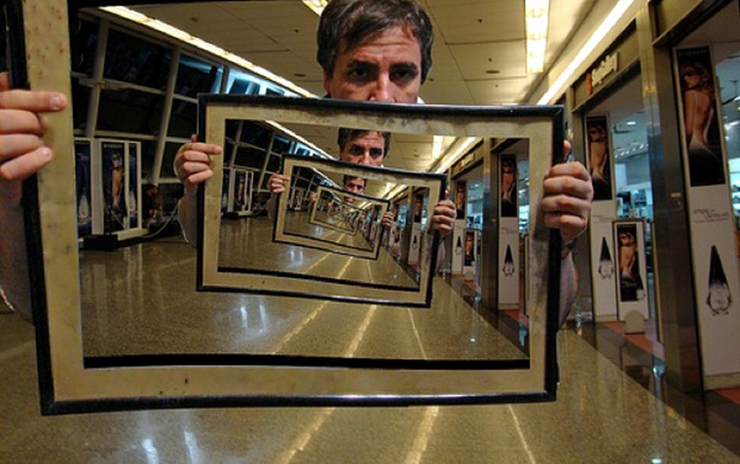
An unpleasant meeting that leaves us with a heavy residue. The conversation, which we continue mentally, having long since parted with the interlocutor ... The "Mirror" technique helps to look at the situation from different angles and independently change the attitude towards it.
How to use
1. Sit on a chair in a quiet, calm place so that no one distracts you.
2. Designate a "stage" in front of you. This can be a small space on the floor or on a table with delineated boundaries. The easiest option is to put a sheet of A4 paper or a string that marks a circle.
3. Mentally replay the disturbing situation in front of you on stage. You are now an outside observer and are looking at the action in miniature. It can be an unpleasant meeting, a conversation with someone, and so on.
4. Write down your thoughts, feelings, sensations that appear when observing.
5. Now place the chair away from the "stage". Replay the situation mentally.
6. Answer the following questions in writing:
What's new I noticed in this situation?
What happened to my tension?
How do I feel about what happened now?
What can I do to minimize collisions with a similar unpleasant situation in the future?
If the answers to the questions come easily, then it is enough to change the point of view once or twice.
If it is difficult to answer (for example, there is confusion in thoughts, anxiety ...), change the position of the viewer four or five times (taking positions at different points in the room) in order to literally evaluate what happened from different angles.
Result
You better understand how you feel, why you react this way and not otherwise. Your feelings become more aware, the tension decreases or goes away.
You may have noticed that although the technique is called Mirror, it is about a scene. Here's the point. This technique brings us back to that stage of childhood development, which Jacob Moreno, the creator of the psychodrama method, called “the stage of knowing“ You, ”that is, another person. At this time, for the first time in our life, we begin to realize our difference from others, we notice our "I". This is the very period when the child sees himself in the mirror and begins to guess that it is he himself, and not some other boy or girl.
So in the proposed technique, we look at ourselves as in a mirror - from the side. And we can see ourselves not from the inside, as it happens when we are included in the situation, but from the side, through the eyes of an unbiased viewer.
Thanks to this, we can better understand both our own feelings and the experiences of other participants in the scene. Often this is enough to change our feelings, and sometimes - to understand what we would like to do differently next time.
The proposed technique can be used not only to work with what has already happened, but also to play upcoming events if they cause anxiety. For example, talking with your boss about a salary increase or passing an exam. This rehearsal can help reduce anxiety and see the potential for a favorable outcome.

