


Father
Professional
- Messages
- 2,602
- Reaction score
- 837
- Points
- 113
Microsoft uses clever methods to promote Edge.
In the February updates of Windows 10 (KB5034763) and Windows 11 (KB5034765), Microsoft introduced an innovation that caused discussions among users and IT professionals. The company has implemented a Windows driver that prevents changes to the default browser settings in the operating system registry.
The change was first noticed by IT consultant Christoph Kolbitz when his SetUserFTA and SetDefaultBrowser programs, designed to change file associations and set the default browser via the command line, stopped functioning. This is due to the introduction of registry-level protection that blocks changes to UserChoice keys without using standard Windows settings.
The new User Choice Protection Driver (USPD) prevents direct editing of registry keys associated with the HTTP and HTTPS protocols, as well as PDF file associations. In particular, this applies to the keys "HKCU\Software\Microsoft\Windows\Shell\Associations\URLAssociations\http\UserChoice" and others related to the choice of a program for opening links and files.
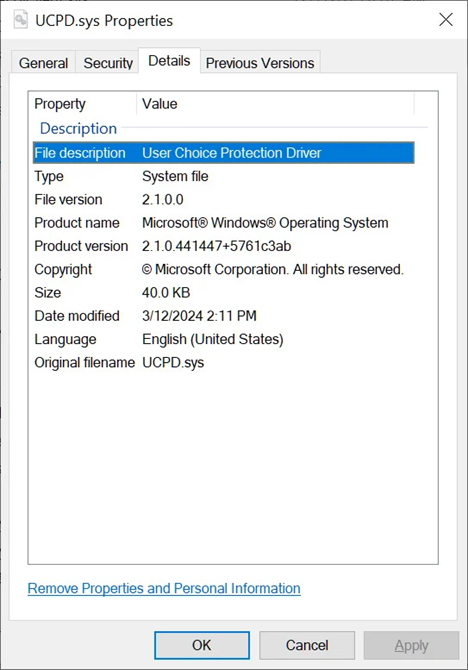
DescriptionUCPD.sys
According to the results of Kolbitz's research, there is a method to bypass protection by disabling the driver manually through the registry, but this method requires administrator rights and a system reboot. In addition, a special scheduler task in Windows can automatically restore the service if it has been disabled.
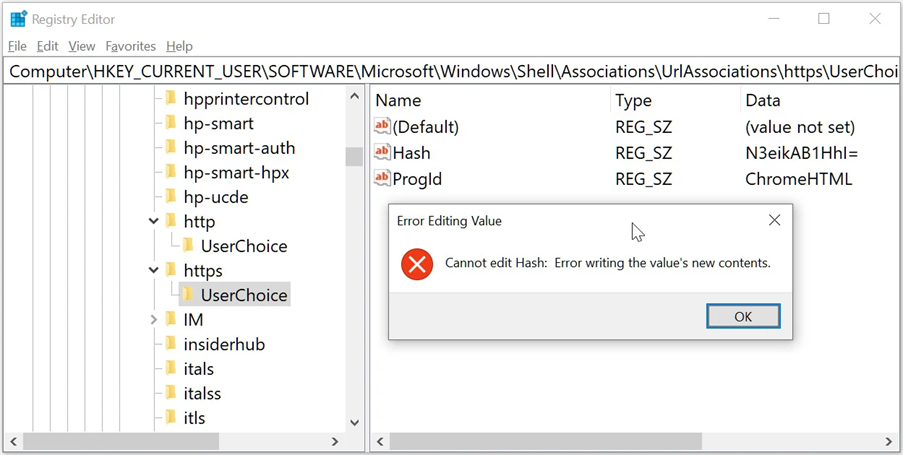
Blocking editing of UserChoice registry keys
Microsoft's motivation for introducing such an update is presumably related to the need to comply with the requirements of the European Digital Markets Act (DMA), which aims to ensure fair competition. The innovation caused controversy, given that it affects users not only in the European Economic Area, but also in the United States, which casts doubt on the hypothesis of DMA compliance.
Despite the changes, Microsoft did not provide any official comments regarding locking registry keys. Also, despite setting Google Chrome as the default browser, in some tests, system links still opened in Microsoft Edge.
The company's decision sparked discussion of possible reasons, including improving system security and preventing malware from being installed as the default browser. However, given the lack of official information, the user community and experts continue to analyze the potential consequences and look for ways to adapt to the new conditions of working with Windows operating systems.
In the February updates of Windows 10 (KB5034763) and Windows 11 (KB5034765), Microsoft introduced an innovation that caused discussions among users and IT professionals. The company has implemented a Windows driver that prevents changes to the default browser settings in the operating system registry.
The change was first noticed by IT consultant Christoph Kolbitz when his SetUserFTA and SetDefaultBrowser programs, designed to change file associations and set the default browser via the command line, stopped functioning. This is due to the introduction of registry-level protection that blocks changes to UserChoice keys without using standard Windows settings.
The new User Choice Protection Driver (USPD) prevents direct editing of registry keys associated with the HTTP and HTTPS protocols, as well as PDF file associations. In particular, this applies to the keys "HKCU\Software\Microsoft\Windows\Shell\Associations\URLAssociations\http\UserChoice" and others related to the choice of a program for opening links and files.
DescriptionUCPD.sys
According to the results of Kolbitz's research, there is a method to bypass protection by disabling the driver manually through the registry, but this method requires administrator rights and a system reboot. In addition, a special scheduler task in Windows can automatically restore the service if it has been disabled.
Blocking editing of UserChoice registry keys
Microsoft's motivation for introducing such an update is presumably related to the need to comply with the requirements of the European Digital Markets Act (DMA), which aims to ensure fair competition. The innovation caused controversy, given that it affects users not only in the European Economic Area, but also in the United States, which casts doubt on the hypothesis of DMA compliance.
Despite the changes, Microsoft did not provide any official comments regarding locking registry keys. Also, despite setting Google Chrome as the default browser, in some tests, system links still opened in Microsoft Edge.
The company's decision sparked discussion of possible reasons, including improving system security and preventing malware from being installed as the default browser. However, given the lack of official information, the user community and experts continue to analyze the potential consequences and look for ways to adapt to the new conditions of working with Windows operating systems.

