


Teacher
Professional
- Messages
- 2,669
- Reaction score
- 819
- Points
- 113
More and more interesting details are being created around the new architecture.
In an era when energy efficiency is becoming a critical aspect of microchip development, new startup Efficient Computer promises a revolution with the Fabric processor architecture.
According to Efficient Computer Fabric, it provides equal performance to current processors with significantly lower power consumption. According to the company, Fabric is 100 times more efficient than the best embedded processors based on the von Neumann architecture, and 1,000 times more economical than the most power-intensive GPUs.
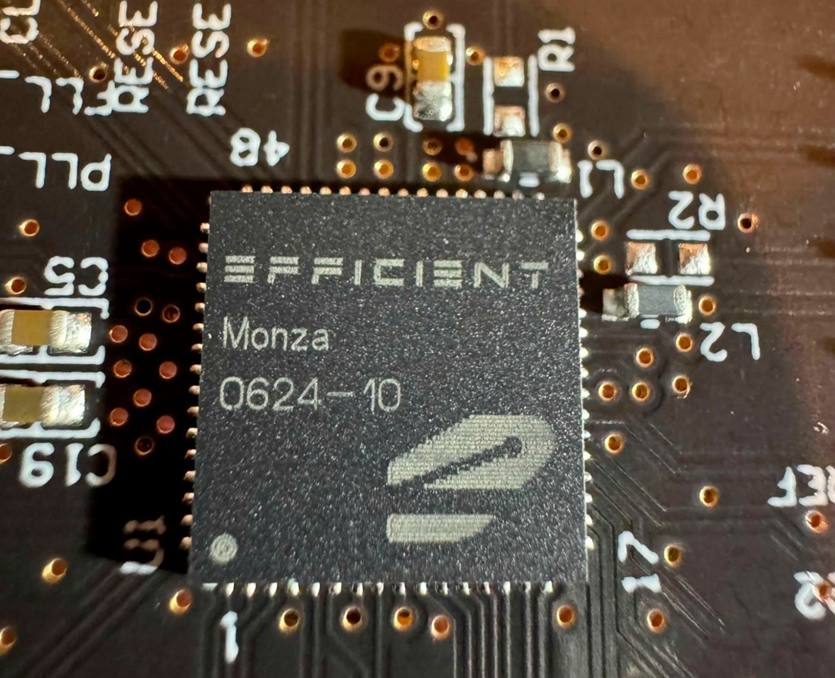
Processor Efficient Computer on the Fabric architecture
The groundbreaking development is based on seven years of research at Carnegie Mellon University and is an architecture optimized for concurrency "from scratch". At the heart of Fabric is a simplified, reconfigurable data flow architecture that allows you to run code simultaneously on multiple parallel computing elements.
The advantages of this approach are that parallelism is the key to improving performance while maintaining low power consumption. An efficient network inside the chip connects parallel computing elements, ensuring high processor performance.
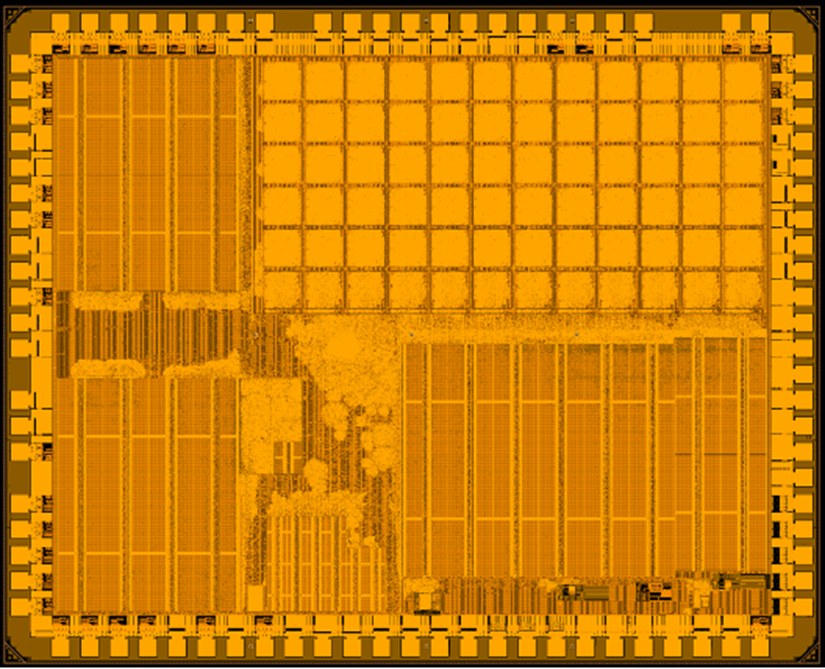
The design of the architecture is implemented in a test system on a Monza chip
Efficient Computer has also adapted its software stack to major embedded programming languages, including C, C++, the TensorFlow framework, and some Rust-based applications, allowing application developers to quickly recompile their code for the Fabric architecture. However, the need to recompile the software may be an obstacle to widespread adoption, especially in the consumer sector.
Initial target markets for Fabric processors include specialized sectors such as medical devices, civil infrastructure monitoring, satellites, defense, and security, where energy efficiency is the most valuable metric.
The project is already backed by $16 million in funding from Eclipse Ventures, which is likely aimed at launching the first Fabric chips. The startup announces that it has signed agreements with unspecified partners and plans to start delivering products in early 2025. Efficient Computer, without revealing all the details of the new architecture, promises a new era in energy-efficient computing, which can radically change many industries, from information technology to the space industry.
In an era when energy efficiency is becoming a critical aspect of microchip development, new startup Efficient Computer promises a revolution with the Fabric processor architecture.
According to Efficient Computer Fabric, it provides equal performance to current processors with significantly lower power consumption. According to the company, Fabric is 100 times more efficient than the best embedded processors based on the von Neumann architecture, and 1,000 times more economical than the most power-intensive GPUs.
Processor Efficient Computer on the Fabric architecture
The groundbreaking development is based on seven years of research at Carnegie Mellon University and is an architecture optimized for concurrency "from scratch". At the heart of Fabric is a simplified, reconfigurable data flow architecture that allows you to run code simultaneously on multiple parallel computing elements.
The advantages of this approach are that parallelism is the key to improving performance while maintaining low power consumption. An efficient network inside the chip connects parallel computing elements, ensuring high processor performance.
The design of the architecture is implemented in a test system on a Monza chip
Efficient Computer has also adapted its software stack to major embedded programming languages, including C, C++, the TensorFlow framework, and some Rust-based applications, allowing application developers to quickly recompile their code for the Fabric architecture. However, the need to recompile the software may be an obstacle to widespread adoption, especially in the consumer sector.
Initial target markets for Fabric processors include specialized sectors such as medical devices, civil infrastructure monitoring, satellites, defense, and security, where energy efficiency is the most valuable metric.
The project is already backed by $16 million in funding from Eclipse Ventures, which is likely aimed at launching the first Fabric chips. The startup announces that it has signed agreements with unspecified partners and plans to start delivering products in early 2025. Efficient Computer, without revealing all the details of the new architecture, promises a new era in energy-efficient computing, which can radically change many industries, from information technology to the space industry.

