


Brother
Professional
- Messages
- 2,590
- Reaction score
- 533
- Points
- 113
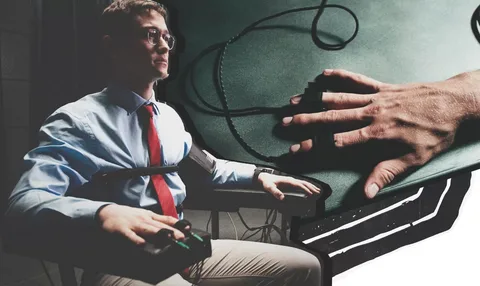
The need to reveal lies arose from the moment when a person began to unite in communities. This task, as a rule, was solved by the wisest members of the community - leaders, elders, judges. It is known from history that different peoples have developed various special techniques and rituals for recognizing deception and exposing a liar. Already in those distant times, it was noticed that a person who committed a crime, due to fear of possible exposure, undergoes various changes in physiological functions.

For example, in ancient China, a suspect in a crime was subjected to a rice test: he had to take a handful of dry rice in his mouth and listen to the accusation. It was believed that if the rice remained dry in the mouth (for fear of exposure, salivation was suspended), the suspect's guilt was proven.
In ancient India, when a suspect was called neutral and critical words related to the details of a crime, he had to answer the first word that came to his mind and at the same time quietly bang the gong. As a rule, the response to a critical word was accompanied by a stronger blow.
In Africa, the sorcerer suggested that the suspects pick up a small bird's egg, its shell was very delicate, and at the slightest pressure, the egg could be crushed. The suspects were asked to pass the egg to each other - it was assumed that the culprit would not pass the test and crush the egg and thereby expose himself.
The history of instrumental lie detection dates back to the work of the Italian physiologist Angelo Mosso, who in 1877, using a plethysmograph (a device for measuring vascular blood filling and pulse changes), established that the presentation of fearful images to a subject is reflected in the heart rate.
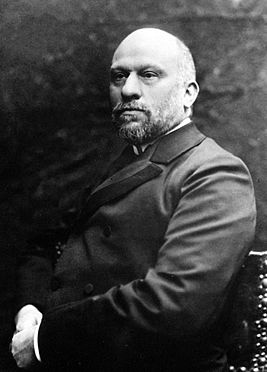
The first practical experience of using such tools in order to detect lies belongs to the famous Italian criminalist Cesare Lombroso . Already in 1881, when interrogating suspects in committing crimes, he used a hydrosphygmograph - a device with which changes in the blood pressure of the interrogated were recorded on a diagram (graph), which made it possible to carry out their detailed analysis in the future ...
In 1895, in his book "The Criminal Man", Cesare Lombroso described the positive practical experience of using a hydrosphygmograph in the course of checking a defendant in a criminal robbery case. After conducting the study, he did not record visible changes in the dynamics of blood pressure in response to the presentation of stimuli associated with the investigated robbery, and at the same time, he found a drop in blood pressure in response to questions in another case related to the theft of passports, which was later confirmed ...
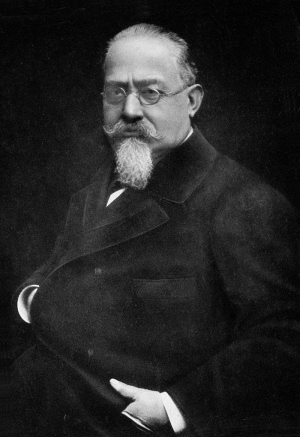
In 1902, Ch. Lombroso was involved in the investigation of a criminal case on the rape and murder of a girl, and during the interrogation of the suspect, he again used a hydroplethisiograph. Analyzing the data obtained, Lombroso found slight changes in the pulse of the interrogated, when he did various mathematical calculations in his mind. However, when the suspect was presented with images of the injured children, the recorded pulse did not show any sudden changes, including the photograph of the murdered girl. The results of the subsequent investigation convincingly proved that the suspect was innocent of the crime.
A. Mosso, working together with C. Lombroso, also discovered that the breathing pattern changes in response to the presentation of various stimuli. In 1914, a professor at the Austrian University in Graz, Italian Vittorio Benussi, who studies the problems of psychophysics, published data from his research on the dynamics of the breathing process, showing that the frequency and depth of respiratory cycles and the ratio of the duration of inhalation to the duration of exhalation change when the subject lies.
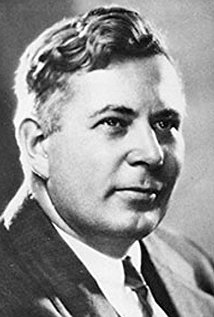
However, the inventor of the polygraph is considered to be William Marston (Marston, William). After graduating from the University, William Marston enters graduate school at Harvard, where he decides to devote himself to the study of human behavior and its relationship with physiological processes in the body. As part of the study of human behavior, he is developing a test to determine the lie according to the indications of systolic blood pressure (this was the topic of his doctoral dissertation). William Marston develops a test and a research device that will later be called a polygraph.
Marston chooses a thesis topic related to the creation of a psychological test to determine the falsity of statements and the connection of human emotions with physiological processes taking place inside the body. For this he needs research.
To create the test and equipment, Marston takes out a loan. Marston's wife Elizabeth helps her husband take the test by throwing up the idea that "When she gets angry or agitated, her blood pressure rises." After William Marston took out a loan, he organized a laboratory, where his wife also works with him (there is a family photograph in the laboratory for 1920). With the money taken on credit, Marston creates a polygraph (lie detector). His polygraph initially resembled a cardiograph, as it recorded blood pressure. Subsequently, the polygraph became the prototype of the "lasso of truth" in his comics "Wonder Woman" and the creation of the theory of feminism.
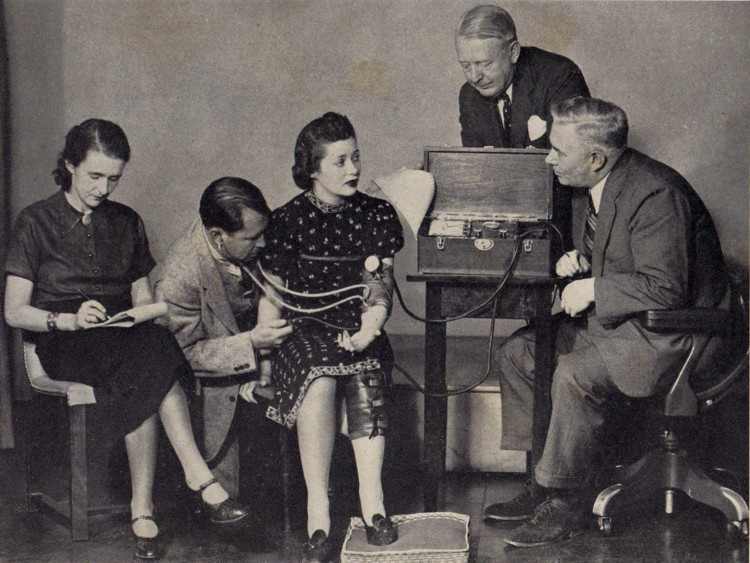
There is also an opinion that the first prototype of the modern polygraph was designed in 1921 by a California police officer, John Larson. Larson's apparatus simultaneously recorded changes in the dynamics of blood pressure, pulse and respiration and was systematically used by him in the investigation of crimes.
In 1933, Leonard Keeler, a student of D. Larson and an employee of the laboratory for scientific methods of solving crimes at Northwestern University, designed a field portable polygraph, in the design of which a channel for measuring skin resistance was added. Later L. Keeler organized the serial production of such polygraphs.
In Russia, the method of instrumental lie detection using a polygraph was practiced mainly in the 30th KGB laboratory, which at that time was headed by Yuri Konstantinovich Azarov .
In 1979, in the USSR, at most ten people were professionally and officially engaged in lie detection. There was no one to get fundamental knowledge, so experience was gained by trial and error. Currently, the leading polygraph examiners of the Russian Federation are people from this laboratory - they are Valery Vladimirovich Korovin, Alexander Petrovich Soshnikov, Leonid Georgievich Alekseev and Viktor Nikolaevich Fedorenko. Currently, each of the polygraph examiners is the head of his own school, the origins of which go back to the times of the KGB of the USSR.
