


Tomcat
Professional
- Messages
- 2,687
- Reaction score
- 1,038
- Points
- 113
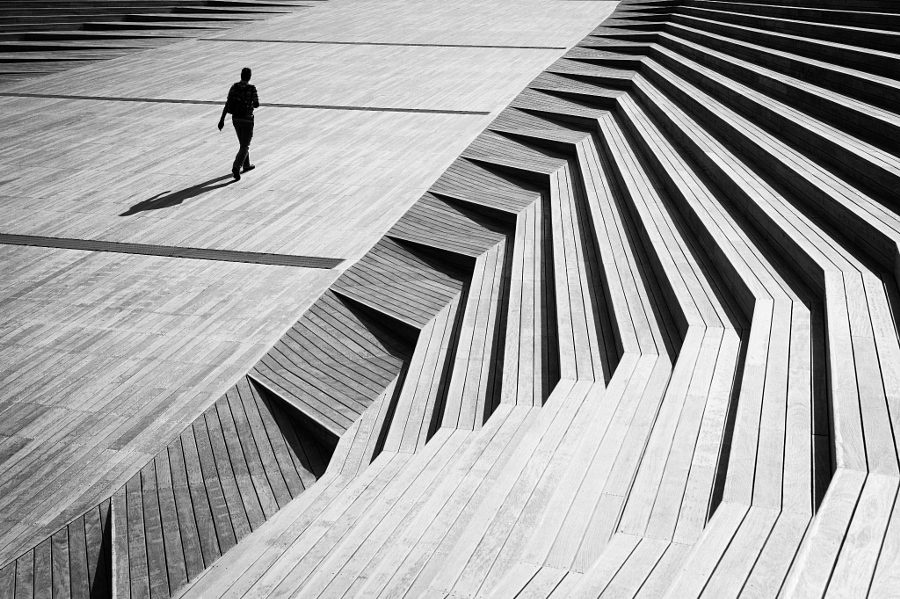
All photos are memento mori. Taking a picture means partaking in the mortality of another person (or object), in his vulnerability, susceptibility to change. Capturing the moment and freezing, each photograph testifies to the inexorable melting of time.We are publishing excerpts from Susan Sontag's book "On Photography", where a philosopher reflects on why collecting photographs is an attempt to collect the world, how and when photography suggested, and then began to impose a new ethic of vision, expanding and changing our ideas about what and how it is worth watching, why exactly the camera is the ideal instrument of the acquisition-minded consciousness, what new attitude of a person to the world generates the process of photographing, how photodependence develops and why modern societies "add" their citizens to pictures.
Since 1973, an essay by Susan Sontag, the most influential and provocative thinker of the 20th century, has begun to appear in The New York Review of Books, "the most intelligent literary magazine". All of them were devoted to photography, but behind this topic were much more serious questions - about modern man, his sense of self, consciousness, relations with culture and himself. Reflecting on the widespread use of photography, Sontag comes to the conclusion that this situation leads to the establishment between man and the world of a special relationship of "chronic voyeurism", within which everything that happens begins to be located on the same level, acquiring the same meaning and losing its value. That was in the 70s, what would she say now?
Sontag was ahead of her time, so it is not surprising that her collection of essays "On Photography" (published in 1977) became a reference book not only for those who are interested in the history and theory of photography, but for people who are interested in the issues of contemporary culture and psychology of the inhabitants of the XX century. Here are a few thoughts by Susan Sontag on photography, the person, and their relationship with the world.

Susan Sontag "About Photography"
Humanity still remains in the Plato's cave and, according to the age-old habit, amuses itself only with shadows, images of truth. But photography teaches differently from older, more man-made images. First, there are many more images that claim our attention. The inventory began in 1839, and it seems that almost everything has been photographed since then. This very gluttony of the photographic eye changes the conditions of confinement in a cave - in our world. By teaching us a new visual code, photographs change and expand our understanding of what is worth looking at and what we are entitled to observe. They are grammar and, more importantly, ethics of vision. And finally, the most ambitious result of photographic activity: it gives us the feeling that we can keep the whole world in our head - as an anthology of images.
Collecting photographs is collecting the world. Movies (whether film or television) throw light on the walls, flicker and flicker. A still photograph is an object that is easy and cheap to make; they are easy to carry, accumulate, store. In Godard's Carabinieri (1963), two languid lumpen peasants are tempted to join the army, promising that they can rob, rape, kill, do whatever they want with their enemies - and get rich with impunity. But in a suitcase with trophies, which is solemnly dragged to the wives of Michelangelo and Ulysses, there are only hundreds of postcards with Monuments, Department Stores, Mammals, Natural Wonders, Types of Transport, Works of Art and other treasures of the Earth. Godard's joke vividly parodies the ambiguous magic of the photographic image. Photos are perhaps the most mysterious of all objects, creating and condensing an environment that we value as modern. Photography is a recorded experience, and the camera is the ideal instrument of the acquisition-minded consciousness.
<…>
The emergence of photography has significantly expanded the limits of our perception of reality - primarily due to the inherent, or seeming, omnivorousness of the photographic eye - the lens. Soon after its birth, photography proposed and then began to impose its own new ethic of vision, expanding and changing our ideas about what can and what is worth looking at. In this she especially succeeded due to the fact that she provided each of us with the opportunity to create in our minds a complete "anthology of images of the world" or, even more simply, to collect collections of photographs. The photographic worldview does not recognize the sequence and interconnection between phenomena and at the same time gives each moment or phenomenon a certain mystery and meaning. The greatest wisdom in the photographic image tells us: “This is the surface, and now think, feel, comprehend with the help of intuition what lies beyond it. Calculate what the reality should be in this superficial guise. "
Thus, without explaining anything themselves, photographs serve as an inexhaustible source of thought and fantasy. To the extent that understanding of a phenomenon is rooted in the ability not to mistake appearances for reality, photography, strictly speaking, does not contribute in the least to our understanding of reality. Recognizing, on the one hand, that photography, of course, fills in many gaps in our mental vision, ideas about how this or that phenomenon looked, we must realize, on the other hand, that each photograph hides more than it shows. Brecht said that the photograph of the Krupp factory does not say, in fact, absolutely nothing about this organization. Our knowledge based on photographic images can have a certain influence on our consciousness, conscience; but photographic knowledge is doomed to always be of a sentimental character - humanistic or cynical. Cognition based on photography is the semblance of knowledge, wisdom, just like the process of photographing is the semblance of acquisition, pseudo-possession of the imprinted thing, phenomenon, or person. The process of photographing is comparable to purchasing items; moreover, photographing gives rise to a certain new attitude of a person to the world as to an object, and an attitude that evokes in the photographer a feeling akin to knowledge.
Unlike verbal descriptions, paintings and drawings, a photographic image is perceived not so much as an expression of an opinion about this reality, but as a particle of reality itself, a fragment of the world that everyone can make on their own or, at worst , simply acquire.
The photographs provide irrefutable proof that the events or people they depict existed, occurred or continue to exist and are happening. We perceive any photograph as the most accurate representation of the facts of visible reality in comparison with any other image. Meanwhile, the relationship between photography and reality is analogous to the relationship between art and truth in general. Even when photographers strive for the most accurate reproduction of life phenomena, they are certainly guided - consciously or unconsciously - by considerations of taste and the imperatives of their conscience. Even the choice of a particular exposure submits the subject of the photograph to the standards inherent in a particular way of seeing.
Claims that photographs are interpretations of reality to the same extent as is characteristic of paintings are not refuted by examples obtained when shooting an almost illegible, passive. But it is precisely this passivity, combined with omnipresence, that constitutes the most characteristic feature of the mission undertaken by photography, its “aggressiveness”. Since its inception, photography has fostered the ubiquity of a new kind of consciousness, thinking - treating the world as a collection of potential photographs. Even in the hands of such early artists as David Octavius Hill and Julia Cameron, the camera announced the truly imperial plans of photography - to capture, capture everything possible.
<…>In recent years, photography has become almost as popular a form of entertainment as sex or dancing, which means that, like any mainstream art form, most people do not do it for artistic purposes. It is mainly a social ritual, protection from anxiety, and a tool for self-affirmation.
With the help of photographs, the family creates its portrait story - a set of images that testifies to its unity. It is not so important what activities she was photographed in - it is important that she was photographed and valued. Photography becomes a ritual of family life precisely when, in the industrialized countries of Europe and America, the very institution of the family is subjected to radical surgery. When a closed family unit was cut out of a large kinship community, a photograph appeared to perpetuate the memory of the disappearing ties of a large family, to symbolically confirm the threatening continuity. These ghostly footprints - photographs - symbolically make up for the absence of scattered relatives. A family photo album is usually dedicated to a large family, and often this is the only thing left of it.
Just as photographs create the illusion of owning a past that does not exist, they help people to own a space where they do not feel confident. Thus, photography is developing in tandem with another of the most typical modern occupations - tourism. For the first time in history, people in large numbers briefly leave their homes. And it seems unnatural for them to travel for fun without taking a camera with them. Photos will be irrefutable proof that the trip took place, that the program was completed, that we had fun. The photographs document the consumption process that took place outside the field of vision of family, friends, neighbors. The dependence on the camera as a device that gives reality to the experience does not diminish even when people begin to travel more and more. Filming satisfies the need and cosmopolitan equally,
This activity itself calms, weakens the feeling of disorientation, which is often exacerbated during the trip. Most tourists feel the need to place a camera between themselves and what they find great. Unsure of their reaction, they take a picture. This gives the experienced form: he stopped, took off, went on. This system is especially attractive to people who submit themselves to a ruthless work ethic - Germans, Japanese, Americans. Camera manipulation alleviates the anxiety a work-obsessed person has on vacation about not working and having to have fun. And so he does something that pleasantly resembles work - takes pictures.Photographing validates experience and at the same time narrows it down - by limiting it to the search for the photogenic, turning the experience into an image, into a souvenir. Travel is becoming a way of collecting photos.
<…>
Photography has become one of the main mediators in the perception of reality, moreover, creating the appearance of participation. The full-page ad shows a bunch of people looking at the reader, and all but one look stunned, worried, upset. Only one is in control of himself, almost smiling - the one who raised the camera to his eye. The rest are passive, clearly disturbed spectators; the camera made the same an active voyeur; he alone controls the situation. What did these people see? We do not know. It doesn't matter. It is an Event, something deserving to be seen - and therefore photographed. The text of the advertisement in the lower third of the page, in white letters on a dark background, consists of only six words, abrupt, like news from a teletype tape: "... Prague ... Woodstock ... Vietnam. .. Sapporo ... Londonderry ... " LEIKA "". Lost hopes
The process of photographing actually excludes the possibility for the photographer to take part in this or that event in his primary human quality. Consider examples of photojournalism such as a shot of a Vietnamese bonza reaching out for a can of gasoline, or a guerrilla in Bengal piercing his bound victim with a bayonet. And, nevertheless, through the event-shooting, the photographer nevertheless takes part in what is happening to some extent: after all, shooting presupposes the presence of interest in what is happening. The photographer is interested in what is happening, even if his interest is limited only by the desire to extend the event until he succeeds in taking a “good shot”; he is interested in everything that gives the event he is filming "photogenic", including pain or unhappiness experienced by his model.The photography established a chronic voyeuristic attitude towards the world, equalizing the meaning of all events.
<…>As in the case of sexual voyeurism, the eavesdropper indirectly, if not explicitly, encourages the situation to develop on its own.
Photographing people involves exploiting their appearance. The photographer sees and captures his model in the form in which the model never has the opportunity to see himself. He is able to learn about her that the model cannot know. A snapshot turns a person into a kind of object, gives the possibility of symbolic possession of him.
The fact that photography is capable of awakening various desires in the audience is obvious and well known. But photography can also evoke a range of moral attitudes. However, if the mechanism for arousing desires through photography is simple and direct, the impact of photographs on moral attitudes is much more complex. In the first case, photography is sufficient to be just an abstract archetype, while in the second, the degree of its impact is the greater, the more concrete, historical the image it represents. A photo reportage about tragic events is capable of evoking a public response only when society is ready to respond to the stimulus stimulated by these photographs. The horrors of the American Civil War, captured in photographs by Matthew Bradley and his colleagues, in particular, photographs of emaciated Southern prisoners of war, only whipped up the anti-southern sentiments of the northerners. Hence the conclusion: photography cannot create a moral attitude, but it can greatly contribute to the strengthening of an already developed or emerging moral position.Photography is an elegiac, twilight art. Almost all objects of photography are marked with some tragedy for the very reason that they became its objects. Each photograph is a "death memo" - ("memento mori"). Taking pictures of a person, the photographer becomes a witness of his defenselessness in the face of unforgiving time.
Photography has transformed the concept of information. It represents a slice, a "piece" of both space and time. Thanks to photography, the boundaries of phenomena have blurred, become arbitrary - from now on, any sequence of photographic images can be presented in any order. The gap between events, and equally their proximity, proximity can be set in advance and arbitrarily. Photography asserts a nominalistic worldview, a nominalistic view of social reality as a phenomenon consisting of an infinite number of tiny links, like an infinite number of photographs that capture it.
<…>
Industrial societies get their citizens hooked on pictures. This is the most insurmountable form of mental pollution. An acute need for beauty, a reluctance to explore what is under the surface, intoxication with the bodily world - all these components of an erotic feeling are manifested in the pleasure that we receive from photography. But this pleasure has a downside, alien to freedom. It is no exaggeration to say that people develop photodependence: the need to turn experience into a way of seeing. Ultimately, the impression becomes synonymous with photographing, and participation in a public event - the equivalent of viewing the latter in the image. Mallarmé, the most logical esthete of the 19th century, said that everything in the world exists in order to end up in a book. Today everything exists forThe desire to confirm reality and expand the experience with photography is the aesthetic consumerism that everyone is infected with today.
Source: Susan Sontag "About Photography"


