


Brother
Professional
- Messages
- 2,590
- Reaction score
- 533
- Points
- 113
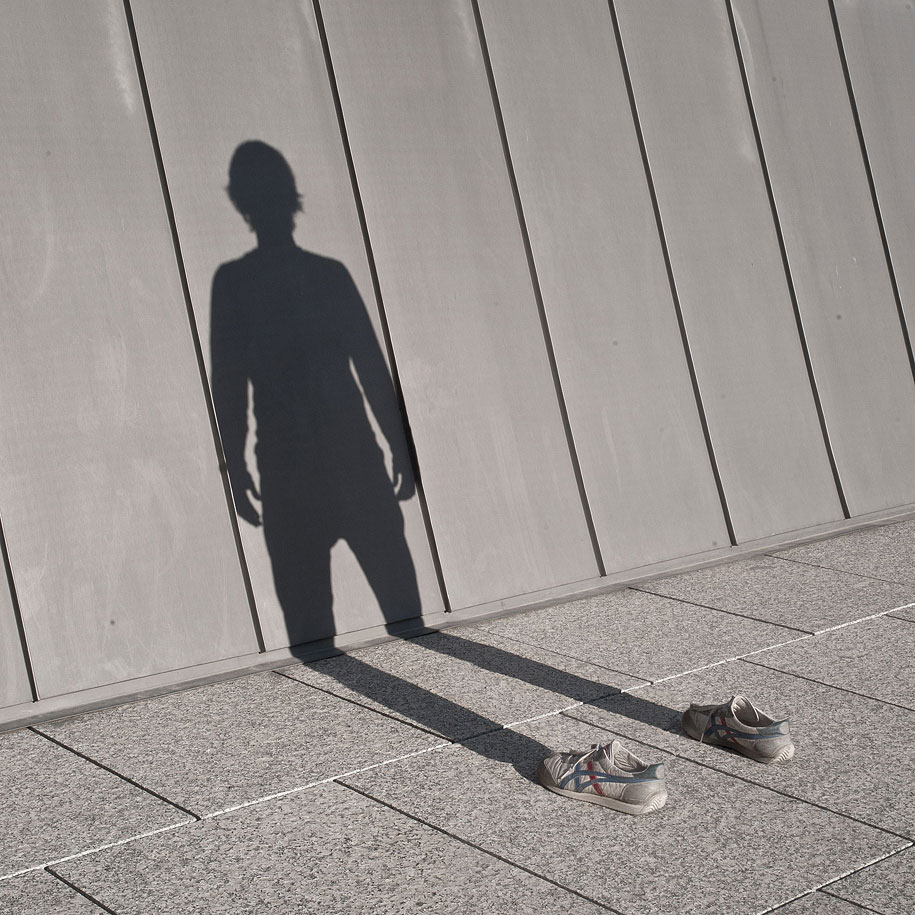
Like most people, you probably have general ideas about your desires, values, and beliefs. You choose a "personal code" that dictates how to behave in order to be a "good" person. You think you know who you are.
What if you're wrong?
What if most of what you know about yourself, your morals and what drives you is not exactly who you really are? After all, has it happened to you impulsively to say or do something terrible, and then bitterly regret it?
“How could I do this? Why?" - you torment yourself afterwards.
This “why” is the “blank spot”. It is possible that you were really angry or hurt, but where does this reaction come from? Perhaps the loss of control over yourself indicates the existence of a completely different person who is hiding under a carefully designed image?
If you found this “completely different person” in yourself, congratulations, you have met your Shadow.
Shadow: General Guide
“The shadow is a moral problem that challenges the whole self, no one can recognize its presence without significant moral effort. To realize this, one must acknowledge the existence and reality of the dark sides of man. This act is the very first condition for any kind of self-knowledge "
Carl Jung, Aeon (1951)
"Shadow" is a term first coined by the Swiss psychiatrist Carl Jung to describe aspects of personality that we all reject and suppress. For one reason or another, each of us has those parts of our “I” that we do not like, or, as we believe, will not be accepted in society, so we drive them deep into the unconscious. It is all this that Jung called our Shadow.
The problem is that often we are not always aware of the part of ourselves that we reject. According to Jung's theory, we psychologically distance ourselves from behaviors, emotions, and thoughts that seem terrible and dangerous to us.
An interesting thing happens: instead of confronting what we don't like, our mind pretends it doesn't. Aggressive impulses, tabu-mental images, shameful experiences, immoral urges, fears, irrational desires, unacceptable sexual desires - this is not a complete list of the shadow aspects that people carry in themselves, but are afraid to admit.
Here are some examples of the manifestation of the dark sides of a person:
The habit of harshly judging other people, often impulsively. You probably more than once caught yourself telling your friend for some reason that his costume was ridiculous and ridiculous. Deep down, you hate to stand out that way, but you felt an urgent need to hear that you are witty. What for? In order not to look funny like someone else.
Point out the faults of others because of your own insecurity. The easiest way to do this is on the Internet, hiding behind fictitious nicknames. Read the comments section and you will find a whole army of trolls there who call others "stupid", "mediocre", "idiots", etc. Oddly enough, Internet trolls are the most insecure people.
Abrupt communication with those who are lower in status. I noticed this phenomenon when I was working as a cashier. This is the curse of all service workers. People very harshly, and often rudely, communicate with those who are unable to answer them. Thus, they try to compensate for their own helplessness.
Pretend to be a victim. Instead of admitting that they have committed a violation, people begin to "paint" themselves as a poor, unfortunate person who has nothing to do with it.
Go over their heads in order to achieve their own goals. People are very proud of success, not admitting to themselves that they have cheated others more than once in order to achieve it. This manifests itself both at the micro level, when they try to circumvent others, and at the macro level, when entire corporations receive ordinary people in order to reduce taxes.
Prejudice and prejudice. People form their ideas about others based solely on how they look. Sometimes this can be helpful because it warns of danger, but more often than not, these are typical and harmful biases. To prevent “no one from thinking that,” they prefer to pretend that they do not have racist, homophobic, xenophobic or sexist inclinations. And all this - instead of destroying stereotypes in oneself.
The messiah complex. Some people think they are so great that they are never wrong. They explain all their actions by the fact that they are trying to "save" other people, to open their eyes. In fact, this is another manifestation of the Shadow.
Projection: we notice our dark side in others
“If only it were that easy! - that somewhere there are black people, maliciously doing black deeds, and you just need to distinguish them from the rest and destroy. But the line dividing good and evil crosses the heart of every person. And who will destroy a piece of his heart? "-
Alexander Solzhenitsyn.
It is very difficult to see the shadow inside yourself, so rarely does anyone do it. Another thing is in others! In truth, we just enjoy it. Discuss the unsightly qualities of others - what could be "sweeter". This, by the way, is the basis of the entire industry of gossip and rumors about celebrities.
To see in others what we do not notice in ourselves - this phenomenon Jung called "projection." Since our mind refuses to recognize our dark sides, and they do not go anywhere from the inside, we project them onto other people. First we reject and then we project.
And all because it is very difficult for us to admit to ourselves that we are wrong.
When I was 7 years old, I had the idea to run away from home with my younger brother. We had a normal family, no problems, but I decided to do it, and that's it. When my brother asked me why we are doing this, I replied, "Because all children do it."
We packed our toys, cookies and juice in a suitcase. They opened the bedroom window on the first floor, threw the suitcase down. I told my brother to jump, which he did. It's my turn. I put my foot behind the frame and found myself between the world of our safe bedroom and the outside ... I looked down at the cars that passed by, and suddenly realized which line we were about to cross. On one side of the window, I was safe, because my mother was always there, who knew where I was and what I was doing. On the other hand, the rules changed. If she finds out that we ran away without permission, she will definitely kill us. That's what I thought then.
This moment of panic forced me to retreat to safety. I called my brother, said that I had forgotten something and instead of returning, I rushed to tell my mother that my brother had decided to run away from home. At that time, he stood in the street and waited for me ... When my mother and I went down to him, in his eyes was read everything that he thought about my betrayal. I seemed to myself such a "savior".
It looked like I was just a shitty sentimental sister (which I was, as I thought of myself). In fact, when I realized how much trouble escaping would bring us, I hurried to devise a way to protect myself from the consequences.
My seven-year-old sister's ego did not allow me to accept that I was wrong. It would humiliate me in the eyes of my brother. Therefore, I projected my mistake onto my brother and ran to my mother. I suspect, subconsciously, I would like to see the consequences of my mistake in order to draw a lesson for the future ... But I did not want to feel the consequences of this experience on myself ...
By projecting deviant behavior onto my poor little brother, whom I almost pampered to death, I avoided facing my dangerous behavior. This is what we all do, believe me ...
Most people don't admit to mistakes because it causes pain and shame. And instead of resisting this desire of theirs, they go to all sorts of tricks to prove that they are right. Even if it hurts others.
Our conscious mind is where our "ego" lives, as others see it every day. Therefore, when you talk about who you are, you mean that part of yourself that you usually encounter.
This is just a part of your personality that is in plain sight. Your awareness is like a light that allows you to observe what is happening inside your mind. Under this “light” there is a whole world of “darkness” containing those qualities of ours that we are even afraid to think about.
Our ego is just the tip of the iceberg floating above the sea. Beneath it is the unconscious mind - a huge mountain of ice hiding under the water. These are our suppressed thoughts, memories, emotions and impulses that we prefer not to even remember. This is our Shadow.
Jung believed that she discreetly controls most of what we think, say, or do.
Origin of the shadow
Society teaches us that certain behaviors, emotions, sexual desires, and lifestyles are simply irrelevant. Anyone who violates these rules and regulations becomes an outcast.
A person is a social being, therefore, in order not to be "expelled", from childhood he does everything possible to "fit" into the established norms and rules.
As soon as we step over the conventional "line" (which we do quite often), we hurt ourselves. Society immediately condemns us. They talk about us, point fingers, gossip.
The only way to avoid this recurring pain is to mask it. We begin to tell stories about ourselves, who we are not and never will be. At the same time, we are carried away so that we ourselves begin to believe in them. As a result, we discard any information that sows doubts in us. In psychology, this is called confirmation bias.
The problem is that we all have qualities that society condemns and rejects. People do not live up to each other's expectations, lash out at others, overly harsh, etc.
The ideal individual in society is the one who meets its unrealistic standards for an ordinary person.
And we have no choice but to pretend to be different! Women put on tons of makeup, men shower themselves with advertised deodorants, we process our photos in Photoshop, post them on social networks ... And all this - with the sole purpose of disguising our flaws and pretending to be "perfect." Jung called the masks we wear "personas."
We prefer not to express unusual ideas in society, pretend to be happy and joyful, because "it is so accepted" ... When we are asked: "How are you?", We invariably smile: "Oh, thank you, wonderful ! "
The irony is that this behavior prevents us from healing and getting rid of our dark sides.
The fact that society in the process of evolution has developed a set of rules and regulations is good. Thus, life has become safer and more enjoyable.
But in its zeal, society has developed a moral code according to which everyone must conform to some ideal. Naturally, none of us can be like that - it is simply impossible.
Explanation: The Shadow Formula
"Until you make the unconscious conscious, it will rule your life, and you call it destiny."
Carl Jung.
Jung proposes to solve this problem by "working on the Shadow." After all, what we suppress in ourselves does not go anywhere, it continues to live in us.
Working with the Shadow is a process of becoming aware of the unconscious. When we understand our unconscious impulses, we can choose how to influence them. In order to start this process, you need to take a step back from the classical model of behavior and look at yourself from the outside. This is much easier to do, by the way, with the help of meditation.
The next step is to ask yourself the question: "Why do I react to this or that event, or to a person, in this way?" This will teach us to return through our emotions to our memories that program our behavior.
Note that it will not be so easy to do this - none of us wants to admit the existence of the Shadow. Therefore, the first task is to overcome the instinctive fear of our shadows.
And the biggest problem that people who meet with the Shadow face is the question: "Am I a bad person?" After all, recognizing the Shadow means recognizing that we all have dark sides that we would not like to remember.
Jung explains that under certain circumstances, absolutely all people have a penchant for terrible and cruel things. Paradoxically, the only way to combat this is to acknowledge that there are dark sides. This alone can guarantee that these tendencies are never actualized. But again, we resist desperately not to think of ourselves as "bad" people.
But why did people decide that taboo thoughts, violent tendencies, and “wrong” desires indicate that they were “bad”? Not at all necessary! Here's what to keep in mind!
Once we realize that there is a trigger for us (and this can be suppressed fear, pain, etc.), we can accept this part of ourselves and heal. We must embrace our Shadows and become stronger by overcoming the fear of them.
Once we start working on the Shadows, we will understand that most of them are the result of the fact that we have been hurt, and we are trying our best to avoid it in the future.
We must accept what happened, admit that we did not deserve this pain and it is not our fault. Only by accepting this part of ourselves will we regain the lost wholeness. For especially severe injuries, work with a psychologist will be required.
If you want to save the world, work on your Shadow
Working on our Shadow helps us to understand ourselves and become better, because the world needs us to embark on this "journey" as early as possible.
After all, there is also a Collective Shadow that unites all the basic instincts of society: greed, hatred, violence. If one person acts on the basis of them, then how much harm will he cause, and if all together?!
It is enough to read the news and look around to assess the scale of the disaster. War, violence, poverty - all this is the result of the manifestation of the darkest sides of human nature.
Each of us has many more opportunities to influence our world than we imagine. We are all responsible for what happens.
After all, every day we build the culture of our society. When we smile at the first person we meet, we affirm the principles of kindness. When we look away and cut ourselves off, we are building a community based on mistrust and hostility.
Our actions go far beyond our small world - they have an impact on society as a whole.
Let me give you an example. New York has a reputation for being a "rough" city. But can a city be rough ?! Of course not. But the people who live there can.
Therefore, everything starts with each of us. Save this world, work on your Shadow.

